

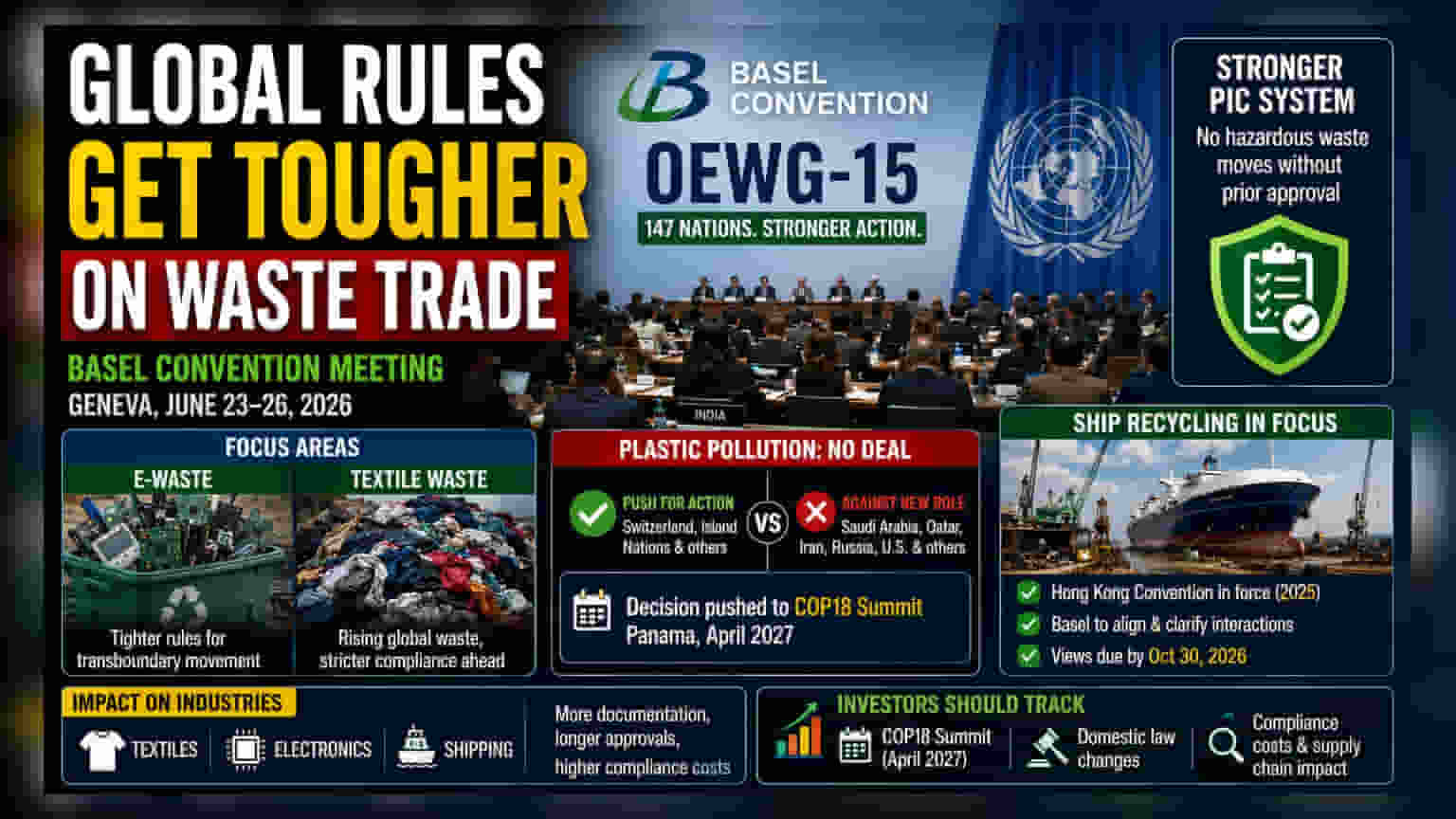
Global delegates at the Basel Convention's recent meeting have moved to update regulations for electronic and textile waste. While new guidance was established to manage these growing waste streams, a disagreement over plastic pollution control was deferred until the next major summit. This regulatory shift signals potential compliance changes for global supply chains.
What Happened
Delegates from 147 nations gathered in Geneva from June 23 to 26, 2026, for the 15th meeting of the Open-ended Working Group (OEWG-15) of the Basel Convention. The convention, which regulates the movement of hazardous waste across international borders, focused on creating stricter guidelines for managing electronic waste (e-waste) and textile waste. A primary outcome was the effort to strengthen the Prior Informed Consent (PIC) system. This system requires that countries must formally approve the import or export of hazardous waste before it crosses their borders, ensuring better control over what enters their territory.
Impact on Textile and Electronics Sectors
For industries, the focus on textile waste is notable. With global clothing production projected to reach 200 billion garments annually by 2030, the amount of waste generated is rising quickly. The consensus reached at the meeting indicates that global regulators are tightening the rules on how this waste moves between countries. Companies in the textile and electronics sectors, particularly those with complex international supply chains or those that export to developing nations, may face increased compliance requirements. This could involve more detailed documentation and stricter wait times for approval when moving waste or secondary materials across borders.
The Plastic Pollution Stalemate
The meeting also highlighted a significant divide regarding plastic waste. Several countries, including Switzerland and various island nations, pushed for the Basel Convention to take a more active role in preventing plastic waste generation. However, a group including Saudi Arabia, Qatar, Iran, Russia, and the United States argued that such discussions might duplicate ongoing global efforts to draft a separate plastics treaty. Because of this disagreement, the issue was not resolved. Instead, the Secretariat was tasked with gathering information on existing plastic waste activities, pushing the actual policy decisions to the COP18 summit in Panama, scheduled for April 2027.
Ship Recycling and Future Compliance
The convention also touched upon ship recycling, acknowledging the Hong Kong International Convention for the Safe and Environmentally Sound Recycling of Ships, which came into force in 2025. This is relevant for global shipping and recycling hubs. As the Basel Convention works to clarify how it interacts with these other international rules, companies involved in global waste and recycling trade should prepare for potential adjustments in their operational standards. The deadline for countries to submit their views on these interactions is October 30, 2026.
What Investors Should Track
Investors with exposure to sectors like textiles, electronics manufacturing, and shipping should monitor how these international guidelines filter down into local regulations. The key monitorable is the upcoming COP18 summit in April 2027, where the unresolved debate on plastic pollution will likely return to the table. Additionally, companies should watch for any changes in domestic waste management laws that align with the Basel Convention's updated PIC system, as these could influence operational costs and supply chain logistics.