

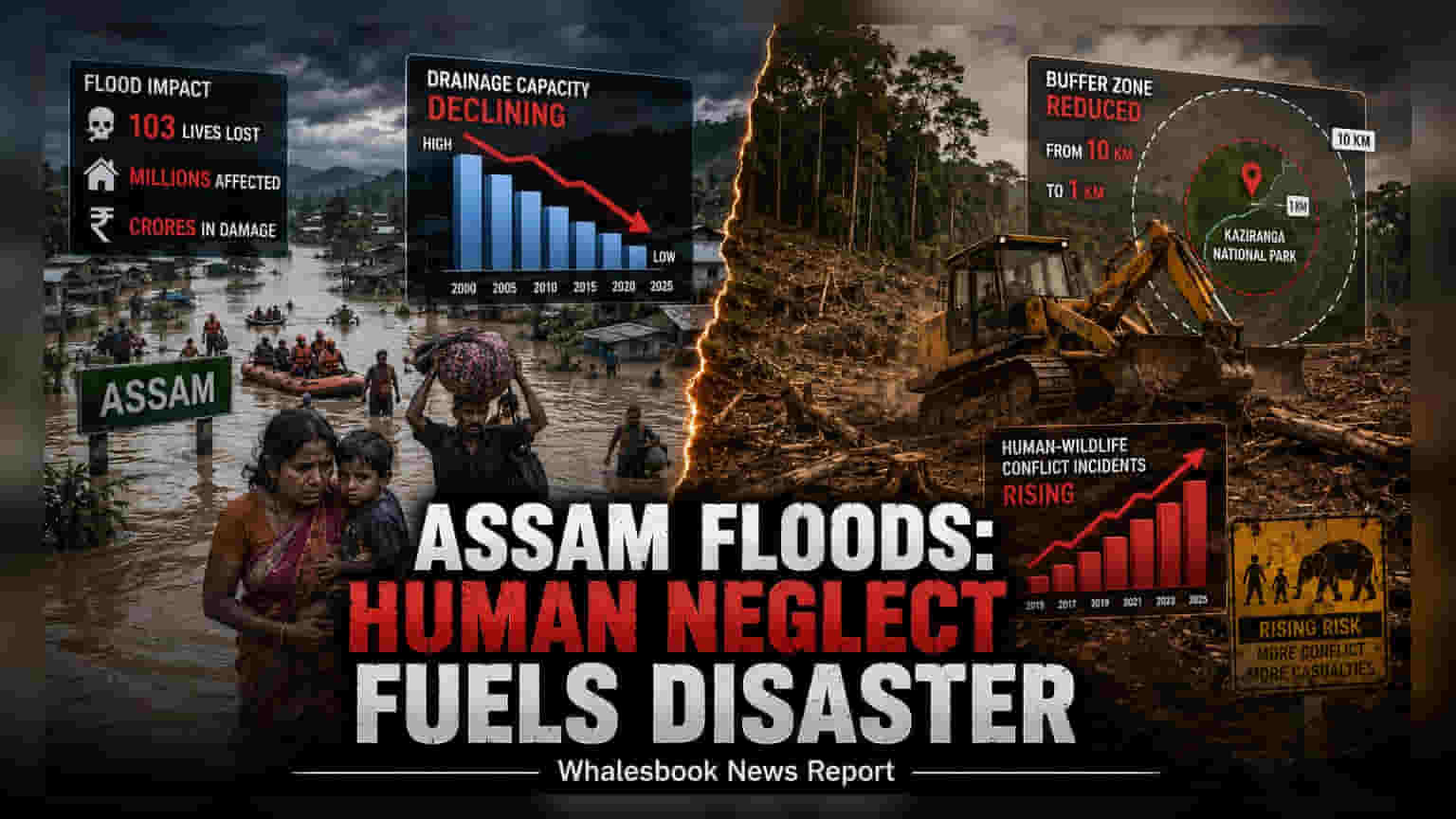
A study by World Weather Attribution reveals that human-led activities like urbanization and poor drainage significantly worsened Assam's August 2026 floods, rather than climate change alone. With 103 lives lost and extensive damage, the Insurance Regulatory and Development Authority (IRDAI) has ordered faster claim settlements, highlighting the financial impact of regional disasters.
The devastating floods in Assam this August have claimed 103 lives and caused significant damage across the state. While monsoonal rainfall is common in the region, a recent study released on August 14, 2026, by World Weather Attribution (WWA) has identified human factors—not just climate change—as the primary drivers behind the severity of the disaster.
Why Infrastructure and Planning Matter
The WWA study found that heavy rainfall levels were within historical norms, meaning the weather was not the sole cause of the catastrophic flooding. Instead, rapid and unplanned urbanization, widespread deforestation, and the destruction of wetlands have crippled the region's natural drainage systems. The report emphasizes that when cities and industries expand without considering natural water flow, the land loses its ability to absorb excess water. For investors and businesses operating in such regions, this highlights a critical risk: infrastructure that ignores environmental limits is more likely to fail, leading to repeated losses and business disruption.
Policy and Environmental Risk
Beyond the immediate flood damage, a policy proposal to reduce the eco-sensitive zone around Kaziranga National Park from 10 kilometers to 1 kilometer has drawn significant attention. Critics argue that shrinking this buffer zone increases the risk of human-animal conflict as wildlife seeks higher, dry ground during flood seasons. For companies and project developers, environmental regulations and social license to operate are becoming increasingly important. Decisions to prioritize commercial development over ecological buffers can lead to long-term litigation, public opposition, and operational delays.
Financial and Insurance Implications
The financial impact of these disasters is already being felt. In early August, the Insurance Regulatory and Development Authority of India (IRDAI) directed insurance companies to expedite the processing of claims for residents and businesses in the worst-affected districts, including Sivasagar, Charaideo, Jorhat, and Golaghat. This directive underscores the financial burden that natural disasters place on the insurance sector and the broader economy.
While there is no evidence of specific, material impacts on the stock prices of listed companies as of late August 2026, the risks to regional supply chains and local economic productivity remain elevated. Investors should monitor how regional infrastructure projects are planned, as continued environmental degradation could lead to higher insurance costs and greater financial vulnerability for local populations and regional businesses. The key monitorable for the coming months will be the government's approach to flood management, environmental compliance, and the settlement status of insurance claims in the affected areas.