

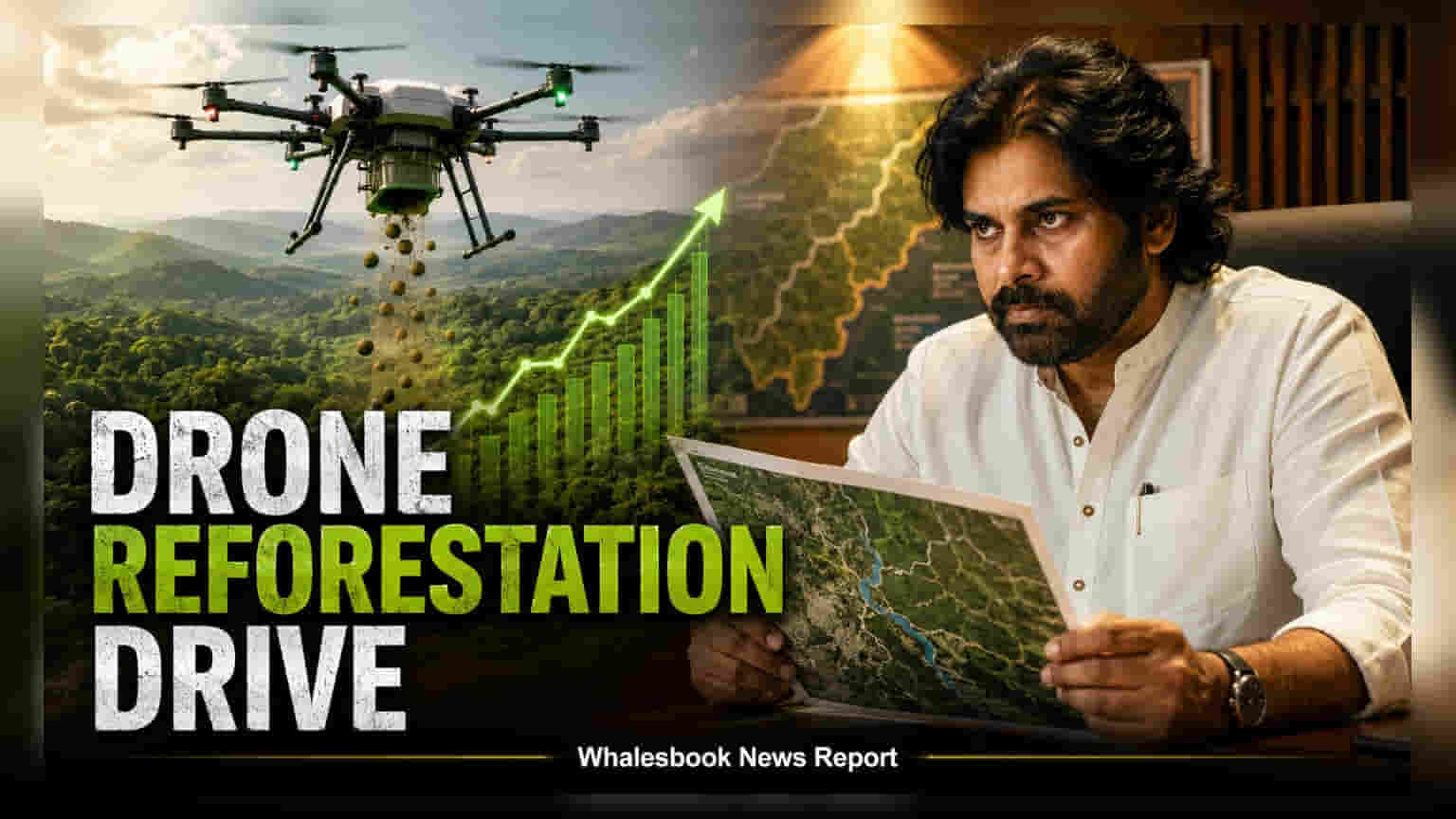
Andhra Pradesh is scaling up its forest restoration drive by using drones to disperse over 30 million seed balls across 30,000 hectares. This technology-led initiative aims to help the state reach its 50% green cover goal, though officials remain cautious about weather-related risks to seed germination.
Detailed Coverage
The Andhra Pradesh government is adopting drone technology to accelerate reforestation across the state. Under the guidance of Deputy Chief Minister and Forest Minister Pawan Kalyan, the Forest Department has set an ambitious target to restore 30,000 hectares of degraded forest land. This move is part of a larger administrative push to achieve a 50% green cover across the state, utilizing aerial dispersal to reach terrain that is traditionally difficult to access.
Scaling Up Seed Ball Distribution
The initiative centers on the use of seed balls, which are clusters of seeds wrapped in soil and organic matter designed to germinate when environmental conditions are right. Official reports indicate that the department has prepared a total of 30 million seed balls for this project. To date, approximately 6.3 million seed balls have been distributed across 6,500 hectares. While manual labor was used for 6,000 hectares, the introduction of drone technology has allowed the department to target remote valleys and inaccessible zones for the remaining areas. Among the regions involved, the Rajamahendravaram Circle has recorded the highest level of distribution, followed by the forest divisions of Visakhapatnam and Kurnool.
Operational Risks and Environmental Factors
While the use of drones improves coverage speed and accessibility, the success of the program depends heavily on biological and climate factors. Minister Pawan Kalyan has highlighted the necessity of aligning dispersal schedules with precise rainfall patterns and soil moisture levels to ensure the seeds take root. A key concern for the department is the potential for dry spells caused by El Niño, which could reduce the germination rate of the distributed seeds. To mitigate the risk of project failure or wasted resources, the state has instructed forest officials to prioritize the ongoing monitoring and protection of these areas to ensure the survival rate of the saplings.
Investors and stakeholders tracking state-led environmental initiatives will be watching the survival rates of these saplings and the overall efficiency of drone-based reforestation compared to traditional methods. The state’s commitment to this technology could influence future public-private partnerships in forestry and environmental management as it works toward its long-term green cover targets.