 Whalesbook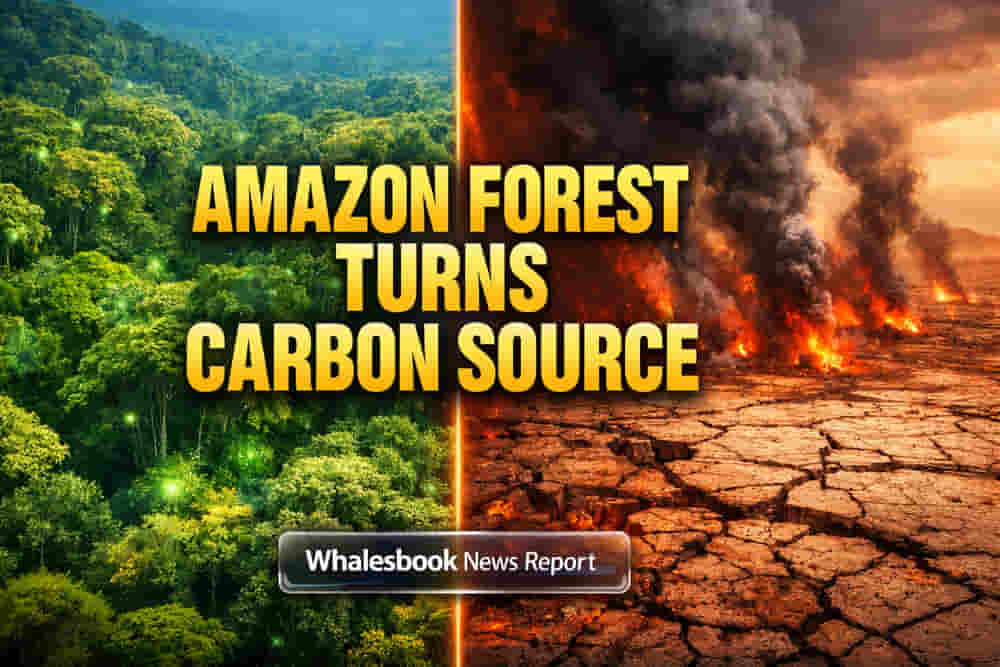


The Seamless Link
The Amazon's recent three-month period as a net carbon source, releasing an estimated 10 to 170 million tonnes of CO2, underscores the escalating financial risks associated with climate tipping points. This scientific finding is not merely an environmental concern; it signals a fundamental shift that will increasingly impact investment strategies, particularly within the environmental, social, and governance (ESG) frameworks, and create new volatility in carbon markets.
The Carbon Market Under Pressure
The global carbon market is navigating significant changes in 2025. While carbon pricing instruments now cover approximately 28% of global greenhouse gas emissions, generating over $100 billion in 2024 revenues, the effectiveness of these mechanisms is being tested by natural systems like the Amazon shifting from sink to source [2, 3]. The voluntary carbon market (VCM) is evolving towards higher-quality removal credits, with a growing demand for integrity and traceability [4, 11]. However, the Amazon's transition to a carbon emitter, exacerbated by ocean warming and drought, introduces a new layer of uncertainty. This event could depress prices for nature-based credits if they are perceived as less reliable or if such emissions become more frequent, while simultaneously increasing demand for more durable carbon removal solutions [9, 10]. The current market sees supply outstripping demand for carbon credits, with a global pool of nearly 1 billion unretired credits in 2024, and prices softening slightly, though premium credits from nature-based removals are still sought [3].
ESG Re-evaluation in a Warming World
The Amazon's shift from carbon sink to source serves as a stark reminder that environmental stability, crucial for ESG considerations, is increasingly precarious. Investors are recognizing that ESG factors, particularly climate change, are financially material and impact long-term valuation [13, 14]. The increasing frequency of extreme weather events, like the drought affecting the Amazon, directly impacts sectors such as agriculture, leading to higher insurance premiums and production costs, which in turn expose financial institutions to significant risk [20, 26]. This trend is pushing agricultural finance institutions to expand sustainability-focused offerings [26]. As the market grapples with these climate realities, ESG funds may need to re-evaluate portfolios, potentially divesting from companies heavily reliant on natural carbon sinks or those exposed to physical climate risks. The focus is shifting towards credits with verified integrity and those that offer carbon removal rather than solely emissions avoidance [4, 15].
Sectoral Impacts and Historical Context
Industries directly reliant on stable climate patterns, such as agriculture and insurance, face immediate and growing threats. Unpredictable weather events driven by ocean warming and amplified by regional climate shifts like those in the Amazon can lead to crop failures and increased insurance claims [21, 25, 26]. In 2023, an "exceptional drought" in the Amazon basin was found to be 30 times more likely due to climate change [34]. Historically, scientific reports highlighting critical climate thresholds, such as those concerning the Amazon's carbon balance, have prompted investor caution and a closer examination of climate-related financial risks, though direct market impact often depends on the perceived immediacy and reversibility of the threat [23, 33]. The transition of parts of the Amazon to a carbon source has been a subject of scientific concern since at least 2021, underscoring a long-term trend that market participants are increasingly forced to acknowledge [23, 32, 34].
⚠️ THE FORENSIC BEAR CASE
The Amazon's temporary reversion to a carbon source, driven by ocean warming and drought, highlights the inherent vulnerability of natural carbon sinks. While historical studies from 2021 indicated parts of the Amazon already acting as a carbon source, the recent event driven by broader ocean temperature anomalies suggests a potentially systemic issue [23, 31]. This development raises significant concerns about the reliability of nature-based solutions for climate mitigation and the potential for cascading tipping points. Scientists warn that crossing climate tipping points, such as Amazon dieback, could double or even triple the economic costs associated with climate change impacts [6, 7]. The risk is not confined to environmental shifts; it directly translates into market volatility. For instance, a carbon price exceeding $20 per ton of CO2 captured would be transformative for Amazon restoration, suggesting that current pricing may be insufficient to incentivize widespread conservation and reversal of emissions [22, 24]. The financial sector is increasingly recognizing climate change as a material risk, with institutions expecting negative impacts on their farmer customers through higher insurance premiums and production costs [26]. Companies that have historically relied on the Amazon's carbon sequestration capacity, or whose business models are predicated on stable environmental conditions, may face significant revaluation as this natural buffer erodes. The increasing complexity and unpredictability of climate dynamics, such as the compounding disturbances projected for up to half of the Amazon by 2050, add a substantial layer of risk to long-term investment planning [34].
The Future Outlook
The Amazon's temporary shift to a carbon source, driven by amplified ocean warming and drought, underscores the growing urgency for global climate action. This event is likely to accelerate the demand for robust, verifiable carbon removal solutions and may prompt a re-evaluation of ESG investment criteria, pushing for greater emphasis on resilience and genuine emissions reductions. As the world moves towards net-zero targets, the financial implications of climate tipping points are becoming undeniable, potentially reshaping investment strategies and regulatory frameworks in the coming years. The trend towards higher-quality credits and a greater focus on removals in the VCM is expected to continue, influenced by such critical environmental events.