 Whalesbook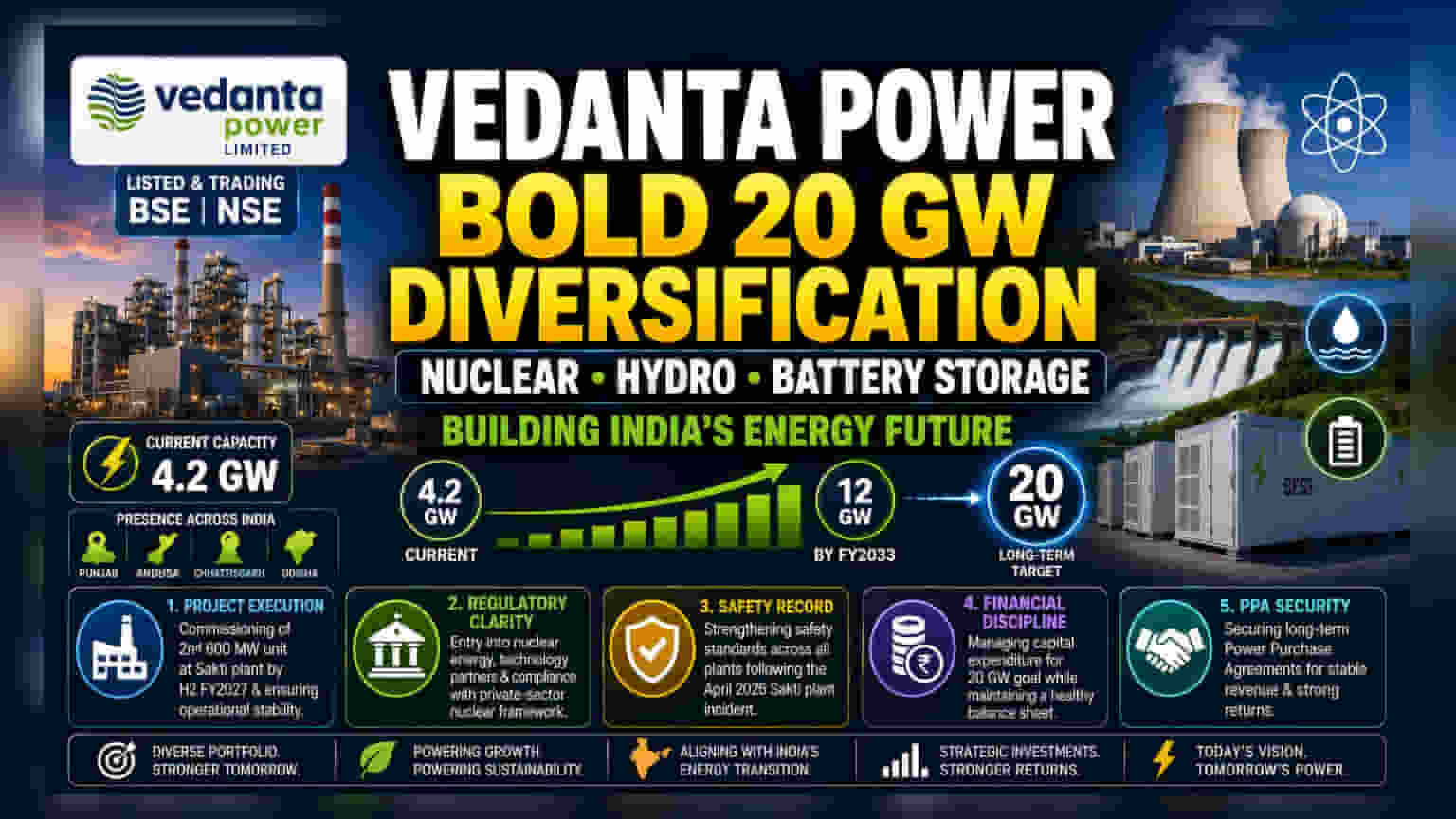


Newly listed Vedanta Power plans to expand into nuclear, hydro, and battery storage, aiming for a 20 GW capacity. Investors should track its long-term roadmap and operational risks.
What Happened
Newly listed Vedanta Power Ltd has announced an ambitious long-term diversification strategy to venture into nuclear energy, hydropower, and battery storage systems. The company, which recently began independent trading on the BSE and NSE on June 15, 2026, aims to scale its total capacity to 20 gigawatts (GW). As part of this roadmap, the company expects to commission the second 600-megawatt (MW) unit at its Sakti plant in Chhattisgarh in the second half of the 2027 fiscal year, with a stated target of reaching 12 GW of capacity by fiscal year 2033.
Why This Strategy Matters
This move marks a shift for Vedanta Power from being a thermal-focused power producer to a more diversified energy company. By entering nuclear and hydro sectors, the company is aligning its portfolio with India's broader energy transition goals, which seek to increase clean energy contributions to the national grid. The shift follows recent legislative changes in India, such as the SHANTI Bill (2025), which has opened the nuclear energy sector to private participation, allowing companies to own and operate nuclear plants for the first time.
Operational Risks and Safety Concerns
Investors evaluating the growth story must also account for operational stability. The company's Sakti plant, a key asset in its thermal portfolio, was the site of a significant boiler explosion in April 2026. The incident resulted in 16 fatalities and raised concerns regarding safety and maintenance protocols at the facility. As the company aggressively pursues its expansion through brownfield projects—which involve upgrading or restarting existing infrastructure—maintaining strict safety and operational standards will be a critical monitorable for shareholders.
Business and Financial Context
Currently, Vedanta Power operates approximately 4.2 GW of thermal power capacity, with assets spread across Punjab, Andhra Pradesh, Chhattisgarh, and Odisha. The company's reliance on thermal power means that its cash flows are currently linked to coal-based generation. A substantial portion of its planned growth is expected to be brownfield, which management believes will allow for faster execution and lower capital costs compared to building entirely new greenfield plants. However, the success of this strategy depends on the company's ability to secure and maintain long-term Power Purchase Agreements (PPAs) and manage the complexities of transitioning into nuclear and hydro, which carry different regulatory and execution timelines than thermal power.
What Investors Should Track
Investors may want to monitor several key areas as the company settles into its status as a newly listed entity:
- Project Execution: Progress on the commissioning of the second 600 MW unit at the Sakti plant and its subsequent operational stability.
- Regulatory Clarity: Updates on the company's entry into nuclear energy, specifically the selection of technology partners and compliance with the evolving private-sector nuclear framework.
- Safety Record: Management's commitment and actions toward strengthening safety standards across all operational plants, particularly given recent industrial incidents.
- Financial Discipline: How the company manages the capital spending required for this 20 GW ambition, particularly in light of the debt often associated with large-scale power infrastructure projects.
- PPA Security: The ability to sign new long-term agreements for its expanded capacity, which ensures stable revenue and return on investment.