 Whalesbook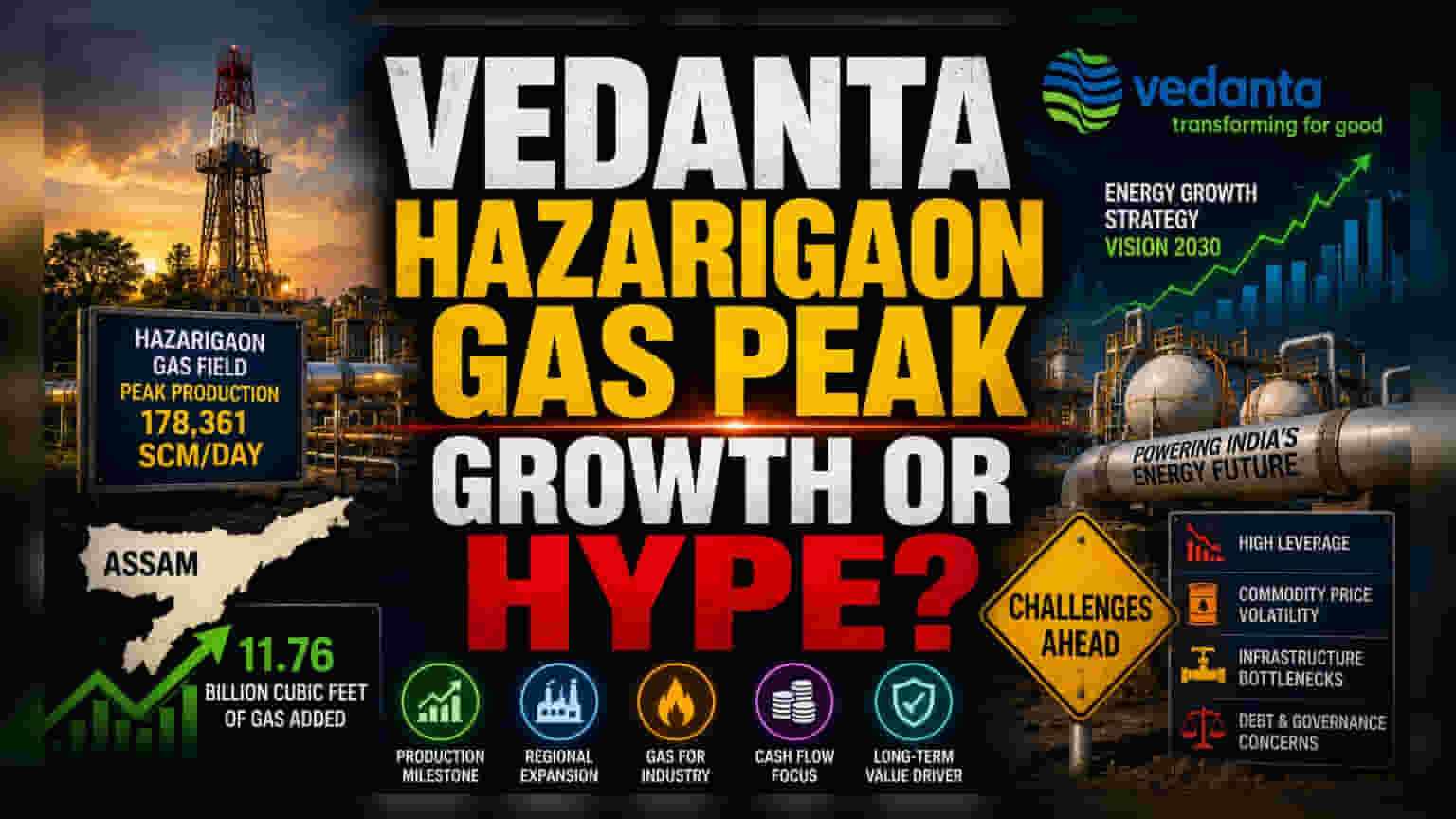


The Valuation of Operational Milestones
The production peak achieved at the Hazarigaon field serves as a operational proof-of-concept rather than a bottom-line transformation. While the reported output of 178,361 scm/day during extended well testing demonstrates successful extraction efficiency, investors must weigh these volume gains against the relatively modest scale of the asset compared to Vedanta’s core Rajasthan portfolio. The company currently trades at a valuation that remains hypersensitive to global oil price fluctuations, where domestic production growth is often neutralized by stagnant or declining commodity cycles that dictate the parent entity's cash flow.
Sector Benchmarking and Regional Constraints
Unlike ONGC, which benefits from massive economies of scale and direct government mandates, Vedanta’s regional expansion in Assam faces unique logistical and infrastructure bottlenecks. The reliance on partnerships with the Assam Gas Company Limited highlights the difficulty of independent distribution in the Northeast. Historically, gas projects in this region have struggled with high capital intensity and the long-term cost of building pipeline networks. While the alignment with the Hydrocarbon Vision 2030 suggests regulatory favor, the incremental volume of 11.76 billion cubic feet of gas—while significant for local industrial users—represents a small fraction of the group's total hydrocarbon reserve base. Market observers should note that the stock’s reaction to such production updates is typically muted compared to significant dividend announcements or major debt restructuring updates.
The Structural Weaknesses
Despite the push into clean energy, Vedanta continues to navigate a high-leverage environment that complicates its capital allocation strategy. The firm's heavy reliance on its oil and gas segment to fund other capital-intensive operations like semiconductor manufacturing and metals creates a feedback loop of risk. Any disruption in global commodity pricing could force the company to tighten exploration budgets, potentially stalling the very operational momentum seen in Assam. Furthermore, the firm has faced historical scrutiny regarding corporate governance and inter-company loans, which often causes institutional investors to apply a persistent discount to its equity regardless of operational successes in upstream energy.
Market Outlook and Capital Allocation
Brokerage consensus remains divided as the company balances its energy transition ambitions against its legacy mining business. While the shift toward gas provides a necessary hedge against coal-heavy revenue streams, the long-term valuation will likely be driven by debt reduction milestones rather than incremental field performance. The current trajectory suggests that management is prioritizing cash flow optimization to service liabilities, meaning that dividend sustainability will remain the primary metric for retail shareholders, whereas debt-to-equity ratios will dictate the sentiment of major institutional stakeholders.