

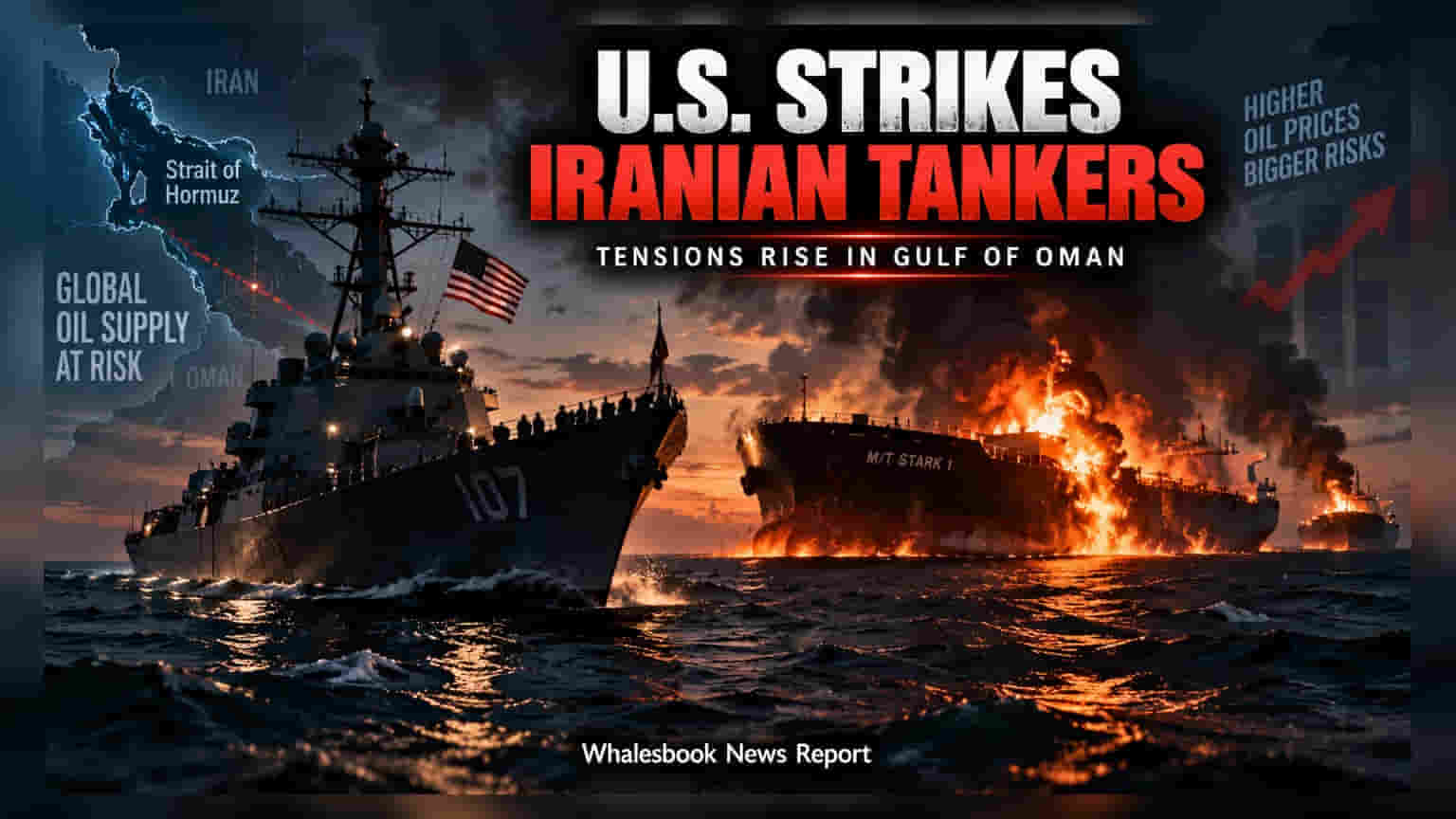
US forces have neutralized three Iranian oil tankers in the Strait of Hormuz after the IRGC launched missile strikes on American warships. The escalation threatens global energy supply chains, increasing the risk of crude oil price volatility. For Indian investors, the situation creates uncertainty for energy-importing sectors and shipping-dependent industries as global markets react to the renewed conflict.
The geopolitical landscape in the Middle East has entered a tense phase following a direct military confrontation in the Strait of Hormuz. On September 5, 2026, United States Central Command forces intercepted and struck three Iranian oil tankers, identifying them as part of a shadow network used to finance the Islamic Revolutionary Guard Corps (IRGC). This action was taken in retaliation for unprovoked ballistic missile attacks launched by the IRGC against two U.S. Navy warships patrolling the region. The U.S. military confirmed that two tankers, identified as M/T Downy and M/T Stark 1, were permanently disabled, while a third unladen tanker, M/T Kylo/Noxen, was destroyed in the Gulf of Oman.
For global energy markets, the Strait of Hormuz serves as a critical maritime chokepoint through which a significant portion of the world's daily oil production passes. The conversion of these key shipping lanes into active combat zones introduces immediate risks to energy supply chains. When transit corridors face such acute security threats, global crude oil benchmarks often experience sharp price movements due to fears of supply disruption or increased transportation and insurance costs. Commercial vessels operating in the region now face elevated war-risk premiums, which can ultimately impact the landed cost of crude oil for major importers, including India.
India remains highly dependent on crude oil imports to meet its domestic energy needs. Any sustained spike in global oil prices typically creates margin pressure for Indian oil marketing companies (OMCs) if they cannot fully pass on the cost increases to consumers. Furthermore, companies with exposure to international trade and shipping logistics may face operational challenges as freight insurance and security requirements tighten in response to the regional instability. The ongoing conflict, which has seen periodic escalations since February 2026, keeps the energy sector sensitive to any reports of supply disruptions or additional sanctions.
Investors often view such geopolitical events as precursors to broader volatility in equity and commodity markets. While the immediate focus is on the impact on oil prices, market participants also track the response of major global powers and the United Nations Security Council, where discussions regarding Iran's nuclear non-compliance and regional behavior are intensifying. The broader risk for shareholders remains that an extended period of conflict could dampen global economic sentiment, weigh on currency valuations, and affect the operating costs of energy-intensive industries.
The most important monitorables for investors in the coming days will be the stability of global crude oil benchmarks, such as Brent and WTI, and the extent of any shipping delays or increased insurance surcharges in the Persian Gulf. Any further military developments or diplomatic shifts will be critical indicators of whether the risk premium on energy supplies will persist or subside in the near term.