

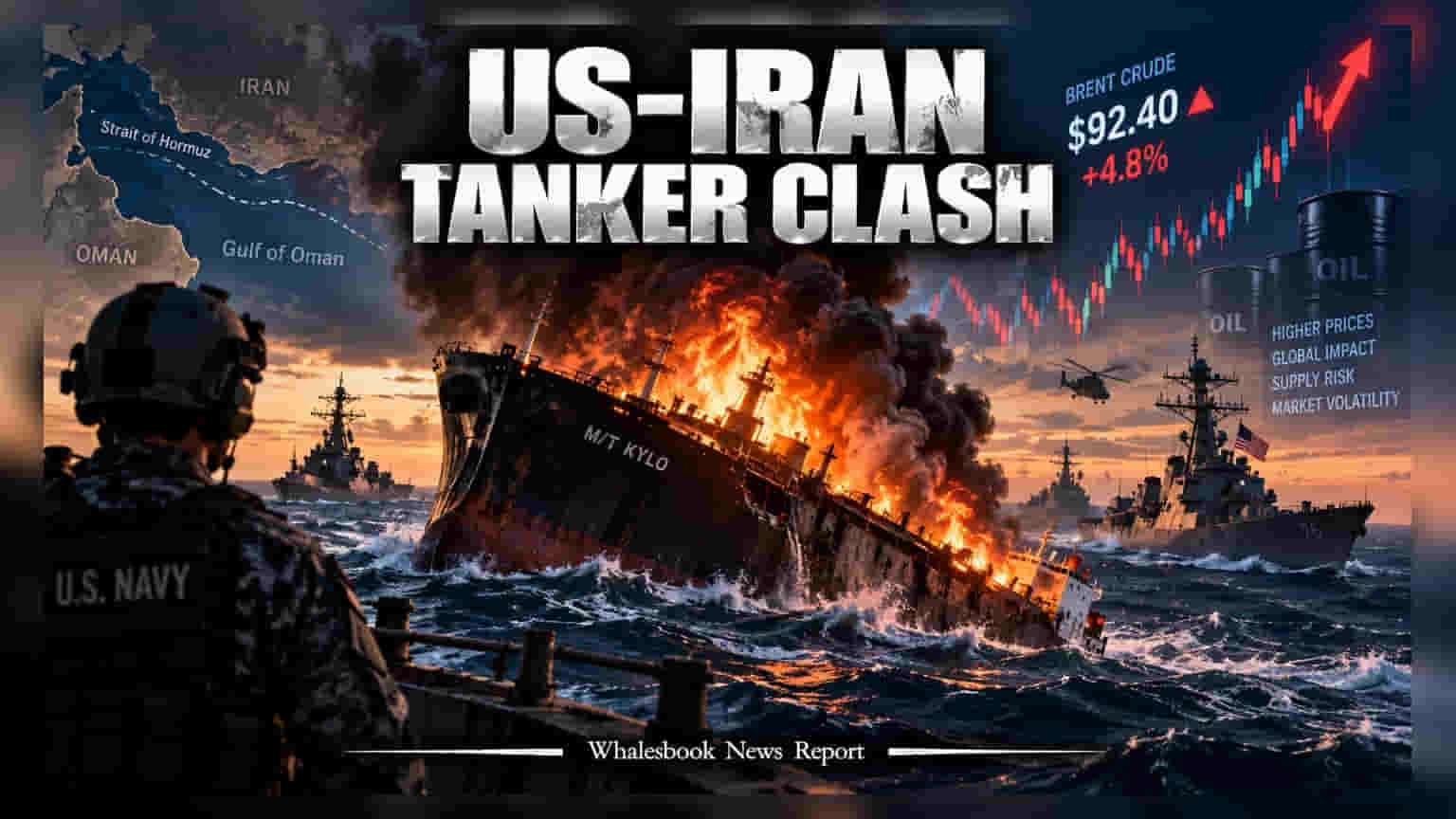
US forces destroyed the Iranian tanker M/T Kylo and disabled two others in the Gulf of Oman on September 5, 2026, following a missile attack on US warships. This escalation threatens critical energy trade routes. Indian investors may track crude oil price volatility, as rising costs often pressure domestic Oil Marketing Companies (OMCs) and aviation stocks sensitive to fuel prices.
On September 5, 2026, United States forces conducted a military operation in the Gulf of Oman, resulting in the destruction of the Iranian oil tanker M/T Kylo. The military action also led to the permanent disabling of two additional vessels, the M/T Downy and M/T Stark 1. The United States Central Command (CENTCOM) confirmed the strike, characterizing it as a direct response to a ballistic missile attack initiated by Iran against two U.S. Navy warships. No casualties were reported among U.S. personnel during this engagement.
Impact on Global Energy Routes
The Gulf of Oman and the nearby Strait of Hormuz serve as essential chokepoints for global energy supplies. A significant portion of the world's daily oil output passes through these waters. The destruction of these tankers and the surrounding military escalation have raised immediate concerns regarding maritime security. In energy markets, such tensions typically introduce a risk premium—an extra cost added to the price of oil—reflecting the increased danger of transporting energy cargoes through the region. Shippers and insurers are likely to reassess the risks of transit, which could lead to higher freight and insurance costs.
Relevance to Indian Investors
For Indian markets, this geopolitical tension is primarily a macro-level concern. India imports the vast majority of its crude oil requirements, making the domestic economy highly sensitive to global price fluctuations. A sharp spike in crude oil prices can have several ripple effects on the Indian market. First, it tends to increase the nation's import bill, which can put pressure on the Indian rupee and the country's trade balance. Second, higher crude oil prices often affect the profitability of Oil Marketing Companies (OMCs). While these companies have pricing mechanisms, they may face margin pressure if they are unable to fully pass on high crude costs to consumers in a volatile environment.
Furthermore, sectors heavily dependent on fuel, such as aviation, are often the first to experience cost pressure when oil prices rise. Airlines, which list fuel costs as a major operating expense, often see their profit margins tighten when crude prices remain elevated for extended periods.
What Investors Should Monitor
Moving forward, market participants will likely monitor the trajectory of Brent crude oil prices and any subsequent diplomatic or military developments in the region. The primary monitorable is whether the confrontation remains localized or spills over, affecting the security of broader shipping lanes. Additionally, investors may look for management commentary from major Indian oil and gas companies and airline operators regarding their fuel hedging strategies and their ability to manage potential cost increases. Any government policy updates or strategic petroleum reserve adjustments in response to the supply uncertainty could also be important factors for the market to consider.