

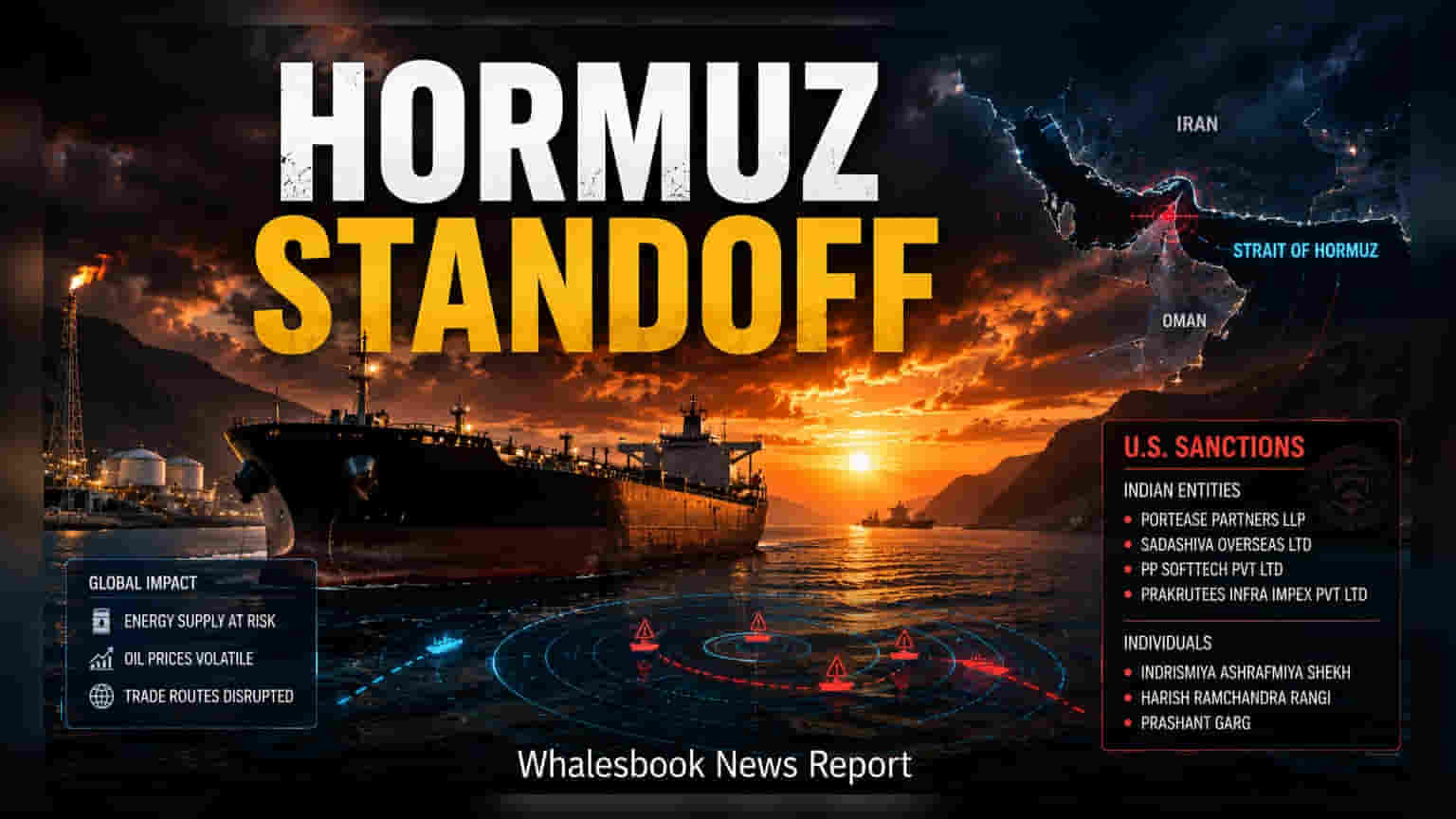
The U.S. has sanctioned four Indian companies and three individuals under 'Operation Economic Outcast' for allegedly facilitating Iranian petroleum trade. This move, combined with the continued closure of the Strait of Hormuz, raises concerns about compliance risks for Indian businesses and potential volatility in global energy markets.
The United States has imposed sanctions on four India-based companies and three individuals, citing their involvement in facilitating Iranian petroleum and petrochemical transactions. This regulatory action is part of the U.S.-led 'Operation Economic Outcast,' a campaign aimed at disrupting Iran's access to international financial networks and reducing its revenue from energy exports.
The companies named in the latest U.S. Treasury and State Department updates include Portease Partners LLP, Sadashiva Overseas Ltd, PP Softtech Pvt Ltd, and Prakrutees Infra Impex Pvt Ltd. U.S. authorities allege these entities were involved in transactions totaling approximately $119 million. The individuals named alongside these firms are Indrismiya Ashrafmiya Shekh, Harish Ramchandra Rangi, and Prashant Garg.
These sanctions arrive at a time of heightened tension in the Persian Gulf. While reports have circulated regarding diplomatic discussions between Iran and Oman concerning the Strait of Hormuz, the waterway remains effectively closed to most commercial traffic. As one of the world's most critical energy transit channels, the prolonged restriction of this route continues to create significant uncertainty for global oil and liquefied natural gas supply chains.
For Indian investors and businesses, the situation introduces two primary monitorables. The first is regulatory compliance. The U.S. has warned international firms that maintaining business ties with entities involved in Iranian trade, or engaging in similar illicit activity, could lead to secondary sanctions. This places the onus on Indian exporters and shipping intermediaries to strengthen their due diligence processes to avoid entanglement in geopolitical enforcement actions.
Second is the broader macroeconomic impact. Persistent disruption at the Strait of Hormuz poses a risk to global energy stability. If the blockage continues or escalates, it could keep crude oil prices volatile, potentially impacting import costs for India, which relies heavily on energy imports. This, in turn, could put pressure on the operating margins of companies in logistics, manufacturing, and energy-intensive sectors.
Investors should track further developments regarding the status of the Indian firms named in the sanctions list and any potential government response or official clarification. Additionally, the operational status of the Strait of Hormuz and its influence on global commodity prices will remain a critical factor for the overall market sentiment.