

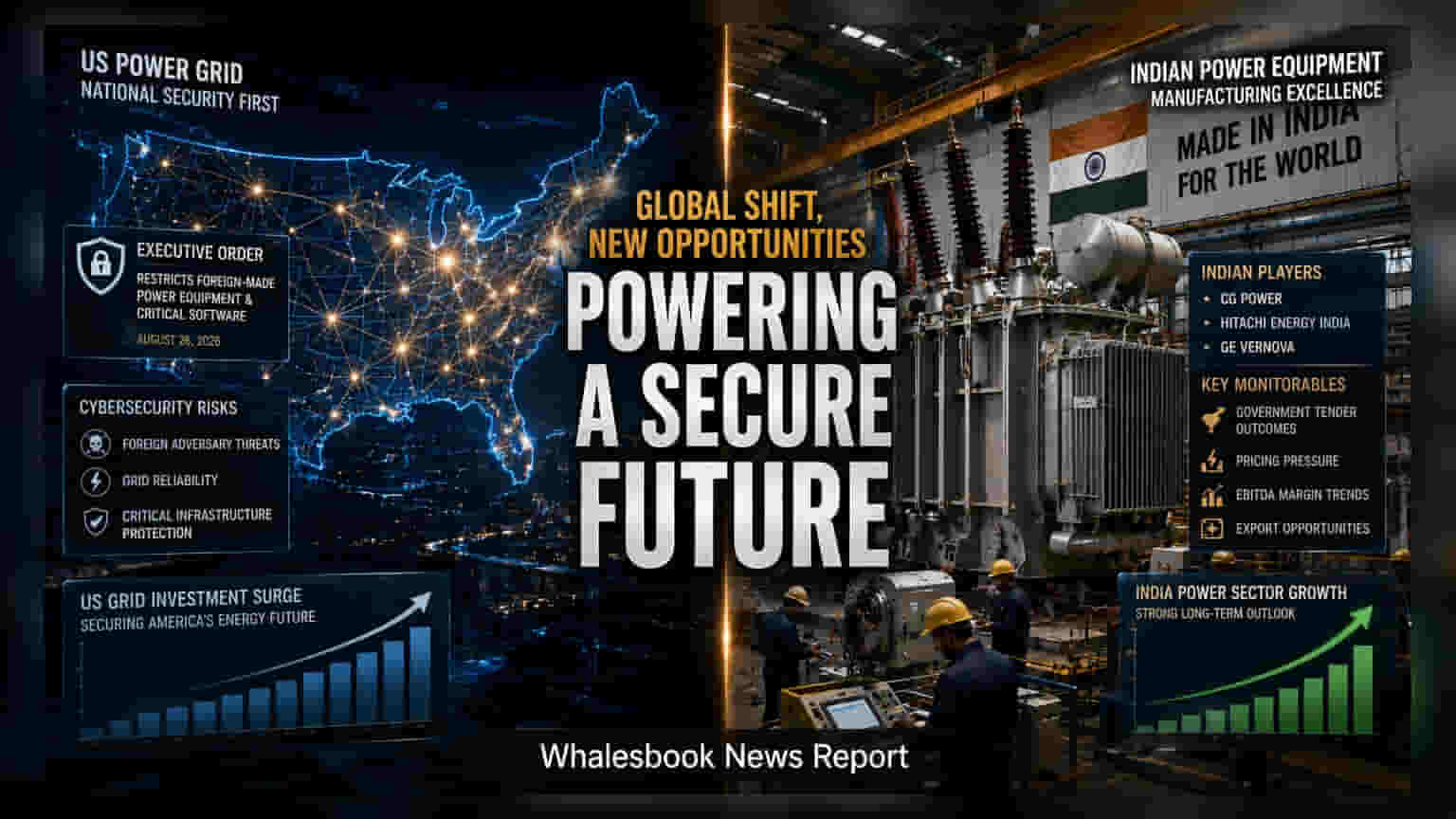
The US President has signed an executive order to restrict certain foreign-made power equipment due to national security and cybersecurity risks. While global supply chains adjust, the Indian power equipment sector currently faces intense domestic competition following a recent policy shift allowing bids from four China-linked manufacturers.
The United States government has taken a significant step to secure its energy infrastructure. On August 26, 2026, the US President signed an executive order declaring a national emergency to restrict the use of certain foreign-made bulk-power system equipment and associated critical software within the US electricity grid. This decision is primarily focused on addressing cybersecurity and operational risks, specifically targeting technologies linked to entities that are considered foreign adversaries.
While this US policy reflects a broader global trend of tightening security protocols in critical infrastructure, the impact on Indian power equipment manufacturers is nuanced. Contrary to some market expectations regarding an immediate export boom, the Indian power equipment sector is currently navigating a distinct domestic environment. Indian manufacturers like CG Power, Hitachi Energy India, and GE Vernova are managing competitive pressures that have evolved significantly over the last few months.
In July 2026, the Indian government provided a two-year procurement exemption that allowed four China-linked companies—TBEA Energy India, Nanjing Electric India, New Northeast Electric India, and Taikai Electric India—to participate in government-run power project tenders. This development changed the competitive landscape for domestic players who were previously operating with fewer low-cost foreign competitors in public projects.
For investors, the primary monitorable is how this competitive shift affects the profit margins of domestic firms. When companies bid for large government tenders, the presence of lower-priced competition can pressure operating margins. While the US move to restrict foreign equipment might eventually create long-term export opportunities for Indian firms that can meet stringent international security standards, the immediate financial impact will likely depend on domestic order execution and pricing strategies.
Investors should closely track the outcome of upcoming government power infrastructure tenders to see if pricing pressure emerges from these exempted companies. Additionally, monitoring the quarterly financial results of Indian power equipment manufacturers for changes in EBITDA margins will provide a clearer picture of how these firms are navigating the current competitive environment.