 Whalesbook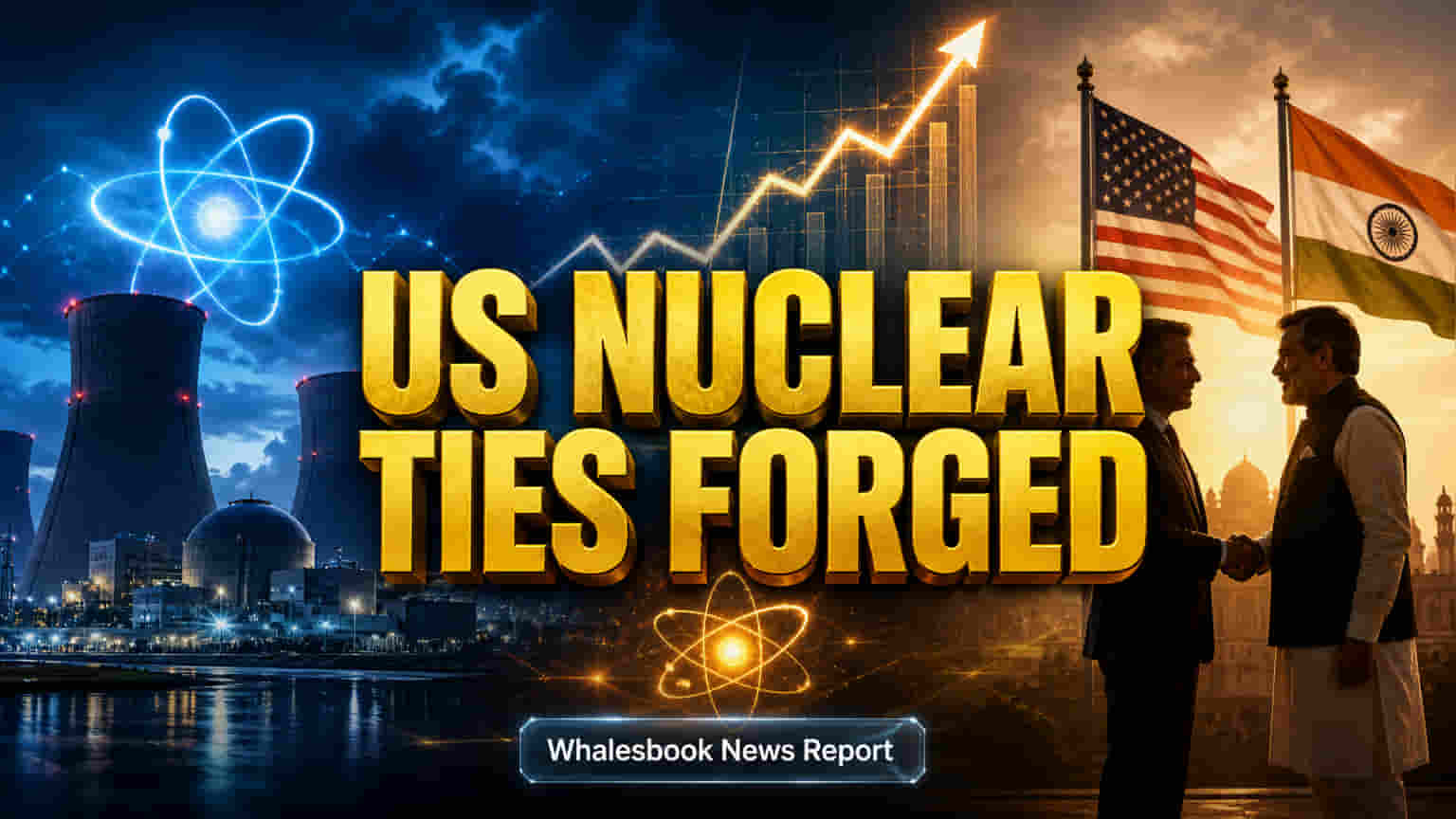


US Executives Arrive to Explore India's Nuclear Market
A U.S. nuclear executive delegation arrives in India this month to assess the nation's nuclear energy sector. The visit follows new legislation enacted less than six months ago that opened the sector to new participants.
SHANTI Act: India Opens Nuclear Power to Private Firms
The Sustainable Harnessing and Advancement of Nuclear Energy for Transforming India (SHANTI) Act, 2025, passed last December, marks a significant shift. For the first time, the Act allows private companies to participate in nuclear power generation and fuel management, areas previously controlled solely by state entities. This legislative overhaul replaces the Atomic Energy Act, 1962, and the Civil Liability for Nuclear Damage Act, 2010.
Focus on Advanced Reactors: LWRs and SMRs
Discussions are expected to focus on imported Light Water Reactor (LWR) projects, potentially with foreign funding, and India's interest in Small Modular Reactors (SMRs). This strategic shift favors technologies that are globally common and potentially simpler to finance and deploy, moving away from India's established Pressurized Heavy Water Reactor (PHWR) technology.
Key Meetings and Companies Involved
The five-day visit, scheduled for May 17-21, includes meetings with top government officials such as the External Affairs Minister and Union Power Minister. The delegation will also meet with heads from the Department of Atomic Energy, NITI Aayog, state-owned Nuclear Power Corporation of India Ltd (NPCIL), and NTPC Ltd. The delegation will also meet with India's major private sector energy firms, including Reliance Industries Ltd, the Adani Group, Tata Power Company Ltd, JSW Energy, Vedanta, Larsen & Toubro Ltd, Tata Consulting Engineers, and Hindalco Industries.
Economic Drivers and Political Pushback
The government is seeking international partnerships to find alternatives to coal for baseload power and to attract much-needed capital. While the SHANTI Act aims to speed up capacity growth and end the state monopoly, opposition parties have voiced concerns about the expanded role of private firms and potential shifts in accident liability rules.