

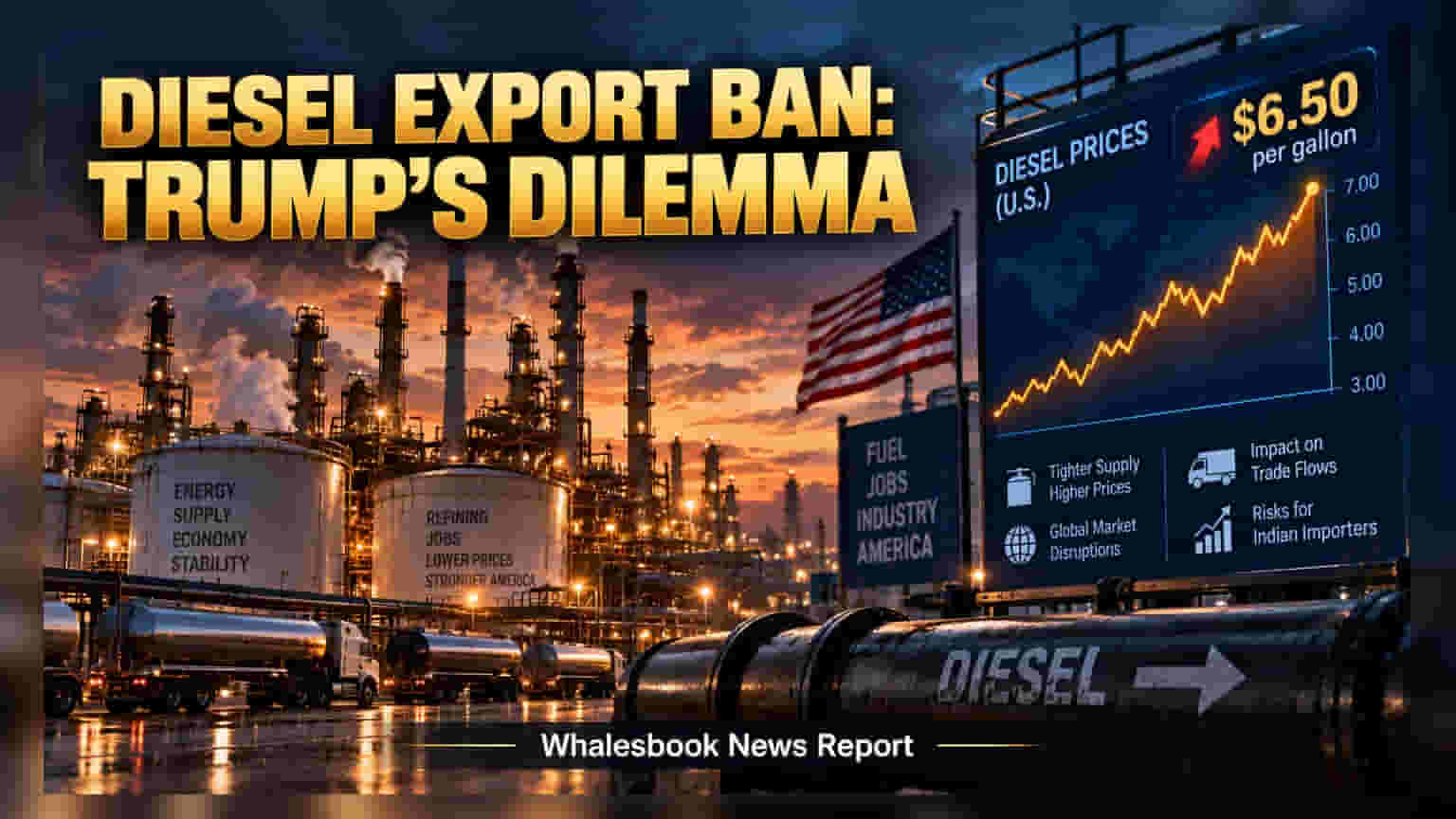
The US administration is considering a ban on diesel exports to address record-high domestic fuel prices of $6.50 per gallon. For Indian investors, this potential policy shift is significant as it could influence global oil prices, increase domestic inflationary pressure, and impact the refining margins of Indian oil marketing companies.
The United States is currently exploring a potential ban on diesel exports in an effort to curb record-high domestic prices, which have climbed to $6.50 per gallon. The proposal aims to keep more fuel within the country to support the trucking, manufacturing, and agricultural sectors. However, the move has drawn caution from analysts, who argue that such a policy could lead to complex disruptions in the global energy market.
Understanding the Refinery Bottleneck
US refineries are highly integrated into global supply chains. They are built to maximize output by balancing demand from both domestic and international customers. If the US government mandates an export ban, refiners would be forced to keep their product within domestic borders. Analysts suggest that this could cause a temporary drop in local prices as storage tanks fill up. However, once those storage facilities reach capacity, refiners would face a logical bottleneck. Without access to international markets to sell their surplus, these companies may be forced to scale back their processing operations, which could lead to a tighter supply of various petroleum products, including gasoline and jet fuel.
Potential Impact on the Indian Energy Sector
For Indian investors, this situation is important because India relies heavily on imported crude oil. A restriction on US diesel exports could contribute to supply volatility in the global energy market, potentially pushing up global fuel prices. Any significant rise in international energy costs usually translates into a higher import bill for India, which can exert upward pressure on domestic inflation.
Indian Oil Marketing Companies (OMCs) such as Indian Oil Corporation, Bharat Petroleum, and Hindustan Petroleum typically face challenges when global crude prices rise sharply while domestic retail fuel prices remain controlled. If the global pricing environment becomes more volatile due to a shift in US policy, it may affect the refining margins and financial stability of these companies. Furthermore, companies with large export-oriented refining capacities, such as Reliance Industries, could also be affected by changing global trade dynamics. Investors may track how these US policy discussions progress, as any final decision will likely influence global energy pricing trends heading into the winter months. The key monitorable for market participants will be any official regulatory announcements from the US government regarding the export of refined products and its subsequent impact on international energy benchmarks.