

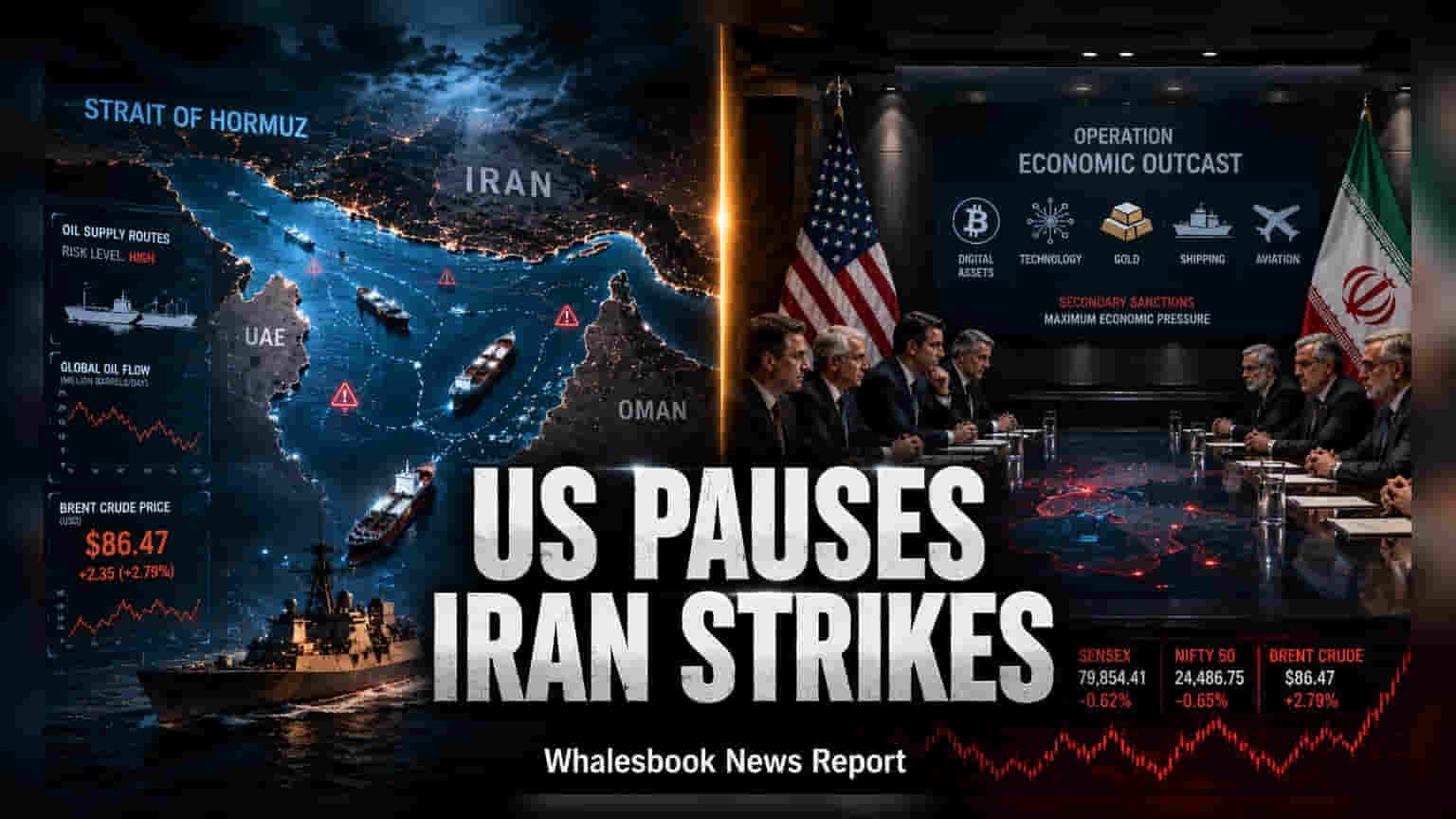
The United States has shifted its approach to Iran by launching 'Operation Economic Outcast,' a major new sanctions regime targeting technology, gold, and shipping sectors. This pivot from direct military strikes to economic blockade aims to isolate Tehran's financial system. For global investors, the move signals potential volatility in energy prices and international trade, with market participants closely monitoring the situation in the Strait of Hormuz.
The United States has formally adopted a new containment strategy against Iran, moving away from immediate military airstrikes toward a comprehensive economic campaign. On August 26, 2026, the U.S. Treasury officially unveiled 'Operation Economic Outcast,' a series of intense sanctions and restrictive measures designed to isolate key sectors of the Iranian economy.
Scope of Operation Economic Outcast
This new strategy targets five primary sectors: digital assets, technology, gold, shipping, and aviation. By implementing an intensified naval blockade and strict secondary sanctions, the U.S. aims to squeeze Tehran's financial lifelines without escalating to large-scale military conflict. While U.S. Treasury Secretary Scott Bessent and other senior officials, including Secretary of State Marco Rubio and Defense Secretary Pete Hegseth, have confirmed that direct military strikes are currently paused, Washington maintains that it reserves the right to use kinetic force if the situation in the Strait of Hormuz deteriorates.
Market Impact and Investor Focus
The geopolitical shift has introduced volatility into global equity markets, including the Indian benchmark indices, Sensex and Nifty. For investors, the primary concern is the potential impact on global energy prices and international trade logistics. The Strait of Hormuz, a vital maritime chokepoint for the world’s oil supply, remains the center of this economic standoff. Any disruption to oil tanker traffic through this corridor could lead to renewed inflationary pressure on energy-importing nations like India, affecting the profit margins of sectors dependent on fuel and transportation.
Furthermore, the introduction of a secondary sanctions regime creates new complexity for global financial institutions and multinational corporations. Companies with international footprints must now navigate heightened compliance risks to avoid potential penalties for engaging with Iranian-linked entities.
Monitoring Global Risks
While the immediate risk of large-scale military conflict has receded, the threat of economic instability remains. Market participants are monitoring the resilience of global supply chains, as Iranian oil exports have already shown a significant decline following these developments. Any sudden price fluctuations in crude oil will be a critical monitorable, as it directly impacts inflation forecasts and industrial input costs. This strategy is expected to remain in place at least through the U.S. midterm elections in November, suggesting that a geopolitical risk premium may continue to influence equity market sentiment in the near term.