 Whalesbook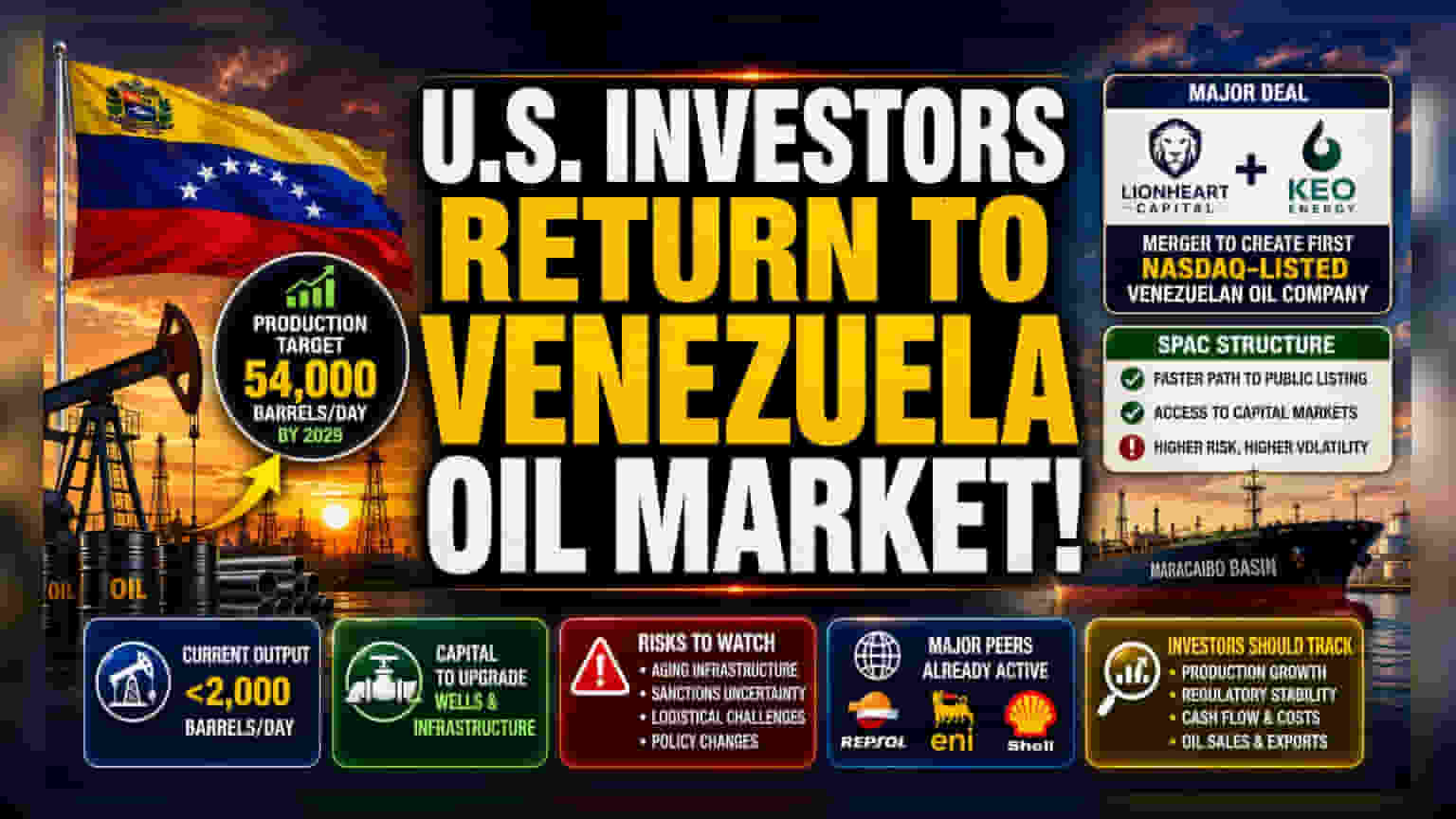


US investment groups are entering Venezuela's oil sector following a shift in sanctions policy and US administrative directives. Lionheart Capital is merging its SPAC with Keo Energy to create a Nasdaq-listed entity, aiming to grow production from 2,000 to 54,000 barrels per day. While the move represents a significant opening for energy infrastructure investment, investors must carefully weigh the high risks associated with both SPAC-based vehicles and the historical instability of Venezuelan oil assets.
What Happened
US-based investment groups are actively moving to re-enter the Venezuelan energy market. The most notable development involves Miami-based Lionheart Capital, which plans to merge its publicly traded affiliate, Lionheart Holdings, with Keo Energy. Keo Energy holds a significant stake in PetroUrdaneta, an entity that manages oilfield assets in the Maracaibo Basin. This merger aims to create the first Nasdaq-listed company providing US investors with direct exposure to Venezuelan oil assets. The move comes alongside a broader policy shift, supported by a US administration directive, to encourage private investment in the country's energy infrastructure.
The Production Goal
PetroUrdaneta’s assets currently produce less than 2,000 barrels of oil per day. The management team for the new entity has set an ambitious target to ramp up production to 54,000 barrels per day by 2029. Achieving this will require significant capital spending to repair and modernize neglected oilfield equipment. The company plans to use this newly raised capital to upgrade wells and infrastructure that have seen limited maintenance for years.
Why The SPAC Structure Matters
Lionheart Holdings is a Special Purpose Acquisition Company (SPAC). These are often referred to as "blank check" companies because they raise money from investors before they have an actual business to acquire. While the SPAC route offers a faster path to a public listing, it carries specific risks that investors should understand. SPAC investments can be volatile, and the ultimate performance of the company depends heavily on its ability to execute its business plan—in this case, reviving long-stagnant oil wells—rather than just the initial capital raised. Investors should look closely at the valuation of the combined entity to determine if the potential for production growth justifies the price.
Risks and Operational Challenges
Investing in Venezuelan oil comes with significant risks that extend beyond typical market volatility. The country’s energy infrastructure has suffered from years of underinvestment, mismanagement, and technical decay. Even with eased sanctions, the logistical challenge of moving equipment, hiring skilled labor, and ensuring security at oilfield sites remains substantial. Additionally, sanctions policy can change. If political conditions shift or if compliance requirements become stricter, companies operating in the region could face abrupt disruptions. The history of Venezuela's energy sector is marked by periods of uncertainty, making it a high-stakes environment for any international company.
Peer and Sector Context
This interest in Venezuela is not limited to smaller investment groups. Major global energy companies, including Repsol, Eni, and Shell, have reportedly already signed agreements to operate in the country. The participation of these large, experienced multinational corporations can provide some level of validation for the sector's potential. However, these majors often have different risk appetites and balance sheets compared to smaller SPAC-backed entities. Competition for resources, services, and regulatory attention could also impact how quickly smaller firms can ramp up their operations.
What Investors Should Track
For those observing this sector, the primary monitorable is the actual production growth. Investors should watch for quarterly updates on barrel-per-day output targets. Any delays in upgrading the Maracaibo Basin infrastructure could lead to cost overruns and lower-than-expected returns. Additionally, market participants should track the stability of the hydrocarbons law and any new US regulatory filings. Management commentary regarding their cash position, the cost of extracting oil, and their ability to sell this oil in international markets will be essential to understanding the company's long-term financial health.