 Whalesbook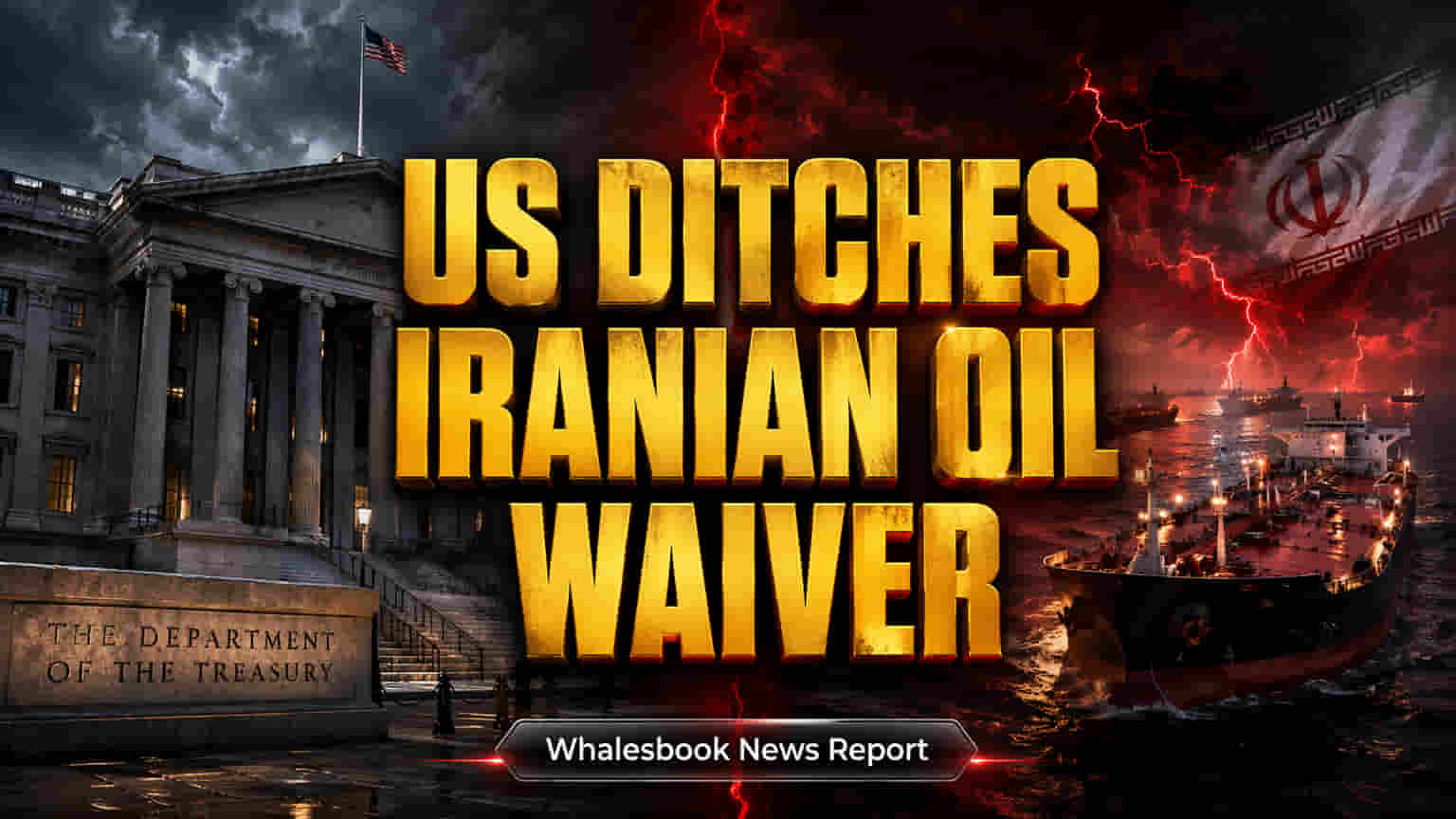


US Ends Key Iran Oil Waiver
The U.S. Treasury Department confirmed it will not extend a sanctions waiver that allowed the sale and delivery of Iranian oil loaded onto vessels before March 20. This authorization, set to expire April 19, offered temporary relief from the U.S. administration's "maximum pressure" policy on Iran. The move signals a shift away from easing energy price pressures amid ongoing geopolitical conflicts. Financial institutions have been warned about the risk of secondary sanctions for supporting Iran's oil trade. The expiring waiver had made about 140 million barrels of Iranian oil available to global markets, easing supply constraints temporarily. The market reacted cautiously, with Brent crude futures hovering near $94.40 per barrel on April 15, 2026, still reflecting geopolitical risk premiums.
India's Imports Face Uncertainty Amid Global Market Shifts
This policy shift comes as India, the world's third-largest crude importer, recently resumed importing Iranian oil after a nearly seven-year break. Two supertankers carrying Iranian crude had docked at Indian ports, a move enabled by earlier sanction relaxations. The waiver's expiry now creates uncertainty for these planned cargoes and India's energy security plans. India has been diversifying its oil imports, sourcing from about 40 countries to build resilience. However, India's strategic petroleum reserves are estimated to cover only around eight weeks of demand, lower than many other major Asian economies.
The Persian Gulf region, supplying nearly a quarter of global oil demand, is critical for energy markets. Ongoing conflicts and disruptions, especially through the Strait of Hormuz, have led to major supply issues. The International Energy Agency (IEA) forecasts global oil demand will contract in 2026 for the first time since 2020, due to high prices affecting consumption. The IEA projects a tight supply-demand balance, with only a marginal surplus of 400,000 barrels per day expected for 2026, a significant drop from earlier estimates. Analyst forecasts vary; J.P. Morgan anticipates Brent crude averaging around $60 per barrel for 2026, citing soft fundamentals but acknowledging geopolitical risks as an uncertainty.
Mounting Market Volatility and Supply Risks
The reinstatement of sanctions and the waiver's expiry introduce significant volatility to an already fragile market. While the U.S. aims to exert maximum pressure, risks of escalation or unexpected outcomes remain high. India's low strategic reserves present a vulnerability; a sustained supply shock could strain its energy security, even with diversified sources. The global market's reliance on the Strait of Hormuz, which handles about 20% of global oil supply, makes it susceptible to geopolitical tensions. The IEA has warned that current prices may not fully reflect the scale of potential disruption. The effectiveness of sanctions in curbing Iranian exports has faced skepticism, as Iran has found ways to navigate shipping constraints, including using a growing "dark fleet". The stricter sanctions could lead to increased compliance scrutiny for international buyers, potentially limiting supply further.
Outlook Cautious Amid Geopolitical Tensions
Energy market analysts and international agencies express caution about the immediate future. The IEA's projection of contracting global demand in 2026 suggests a market where supply disruptions could disproportionately impact prices. The effectiveness of the U.S. "maximum pressure" campaign, along with diplomatic efforts and potential supply shocks, will shape the direction of oil prices. Geopolitical developments, particularly in the Middle East, will continue to be key factors for market sentiment and pricing, with outlooks potentially shifting rapidly.