

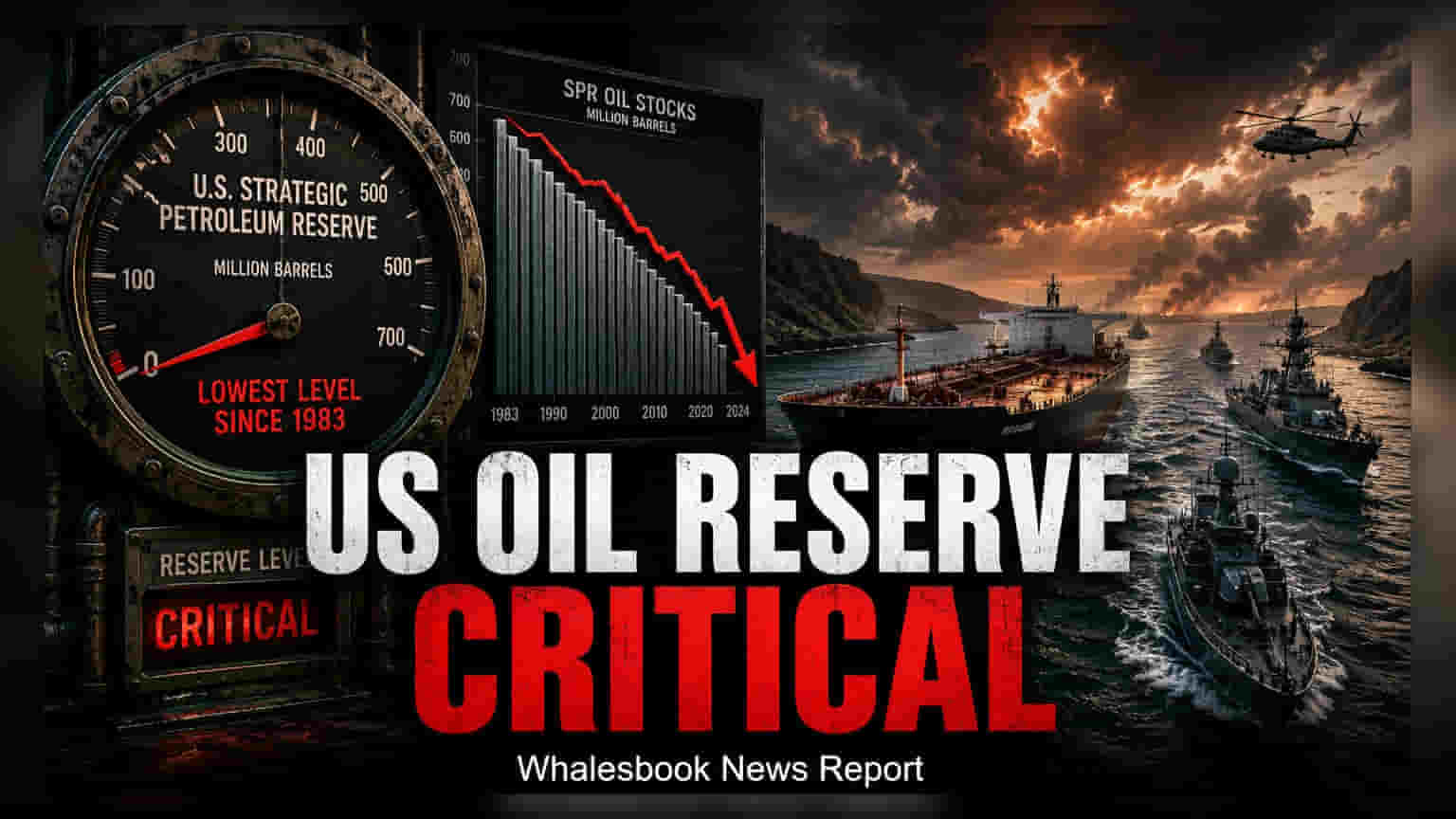
The U.S. Strategic Petroleum Reserve has dropped to 311.4 million barrels, the lowest level since 1983. This government-led release aims to counter energy price volatility caused by ongoing Middle East conflicts. While the U.S. remains a major oil producer, global pricing mechanisms mean these geopolitical disruptions continue to pressure fuel costs and domestic inflation.
Detailed Coverage
The United States has reduced its emergency oil stockpile to its lowest point in over four decades as part of a strategy to combat energy market instability. Recent data indicates the Strategic Petroleum Reserve (SPR) now holds 311.4 million barrels, a level not seen since March 1983. This reduction is a direct consequence of an initiative to release 172 million barrels to mitigate supply shocks linked to escalating tensions in the Middle East.
Impact of Global Pricing on Domestic Costs
Although the U.S. is the world's largest oil producer and a net exporter, it remains deeply connected to global energy pricing mechanisms. Only about 7% of American crude oil consumption travels through the Strait of Hormuz, yet any disruption in this critical transit corridor forces a realignment of global supply chains. As nations compete for alternative oil sources, international benchmark prices for crude oil rise. Refiners across the globe, including those in the U.S., pass these higher input costs to consumers, which explains why domestic fuel prices at the pump often spike regardless of local production levels.
Strategic Role and Historical Context
Established in 1975 following the 1973 Arab oil embargo, the SPR serves as an emergency buffer stored in underground salt caverns along the U.S. Gulf Coast. The reserve has been utilized during past crises, including Hurricane Katrina in 2005 and the onset of the Russia-Ukraine conflict in 2022. The current drawdown follows a series of military actions in the Middle East that began in early 2026. Data from the Department of Energy confirms that over 104 million barrels have been withdrawn since late February to help stabilize energy markets and manage the inflationary pressure caused by higher fuel prices.
Economic Consequences for Consumers
Rising crude oil prices have a wide-reaching effect on the broader economy beyond gasoline. Increased costs for diesel and jet fuel directly influence shipping and logistics expenses. When transport costs rise, the impact typically flows through to the prices of essential consumer goods, including food and household items. Investors often monitor these trends closely, as persistent energy-driven inflation can influence central bank interest rate policies and overall economic growth projections. Moving forward, market participants will likely track the U.S. government's plans for replenishing the reserve, as a return to active buying could introduce new demand dynamics into the global oil market.