

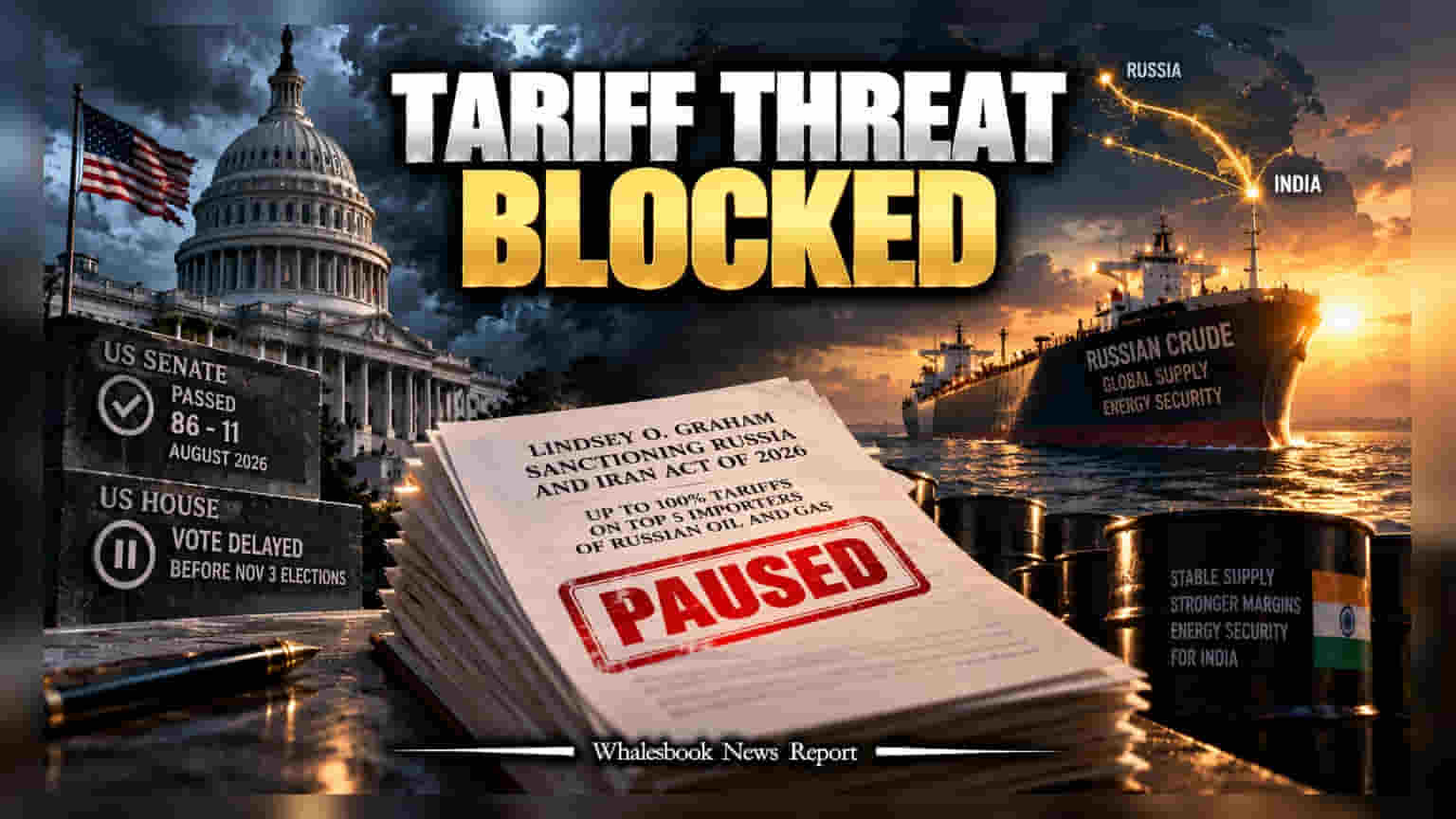
Proposed US legislation seeking to impose 100% tariffs on Russian oil buyers has stalled in the House of Representatives, providing a temporary reprieve for Indian refiners. With Russian crude accounting for nearly 30% to 50% of India's imports, the delay averts an immediate hit to refinery margins. However, investors should remain cautious as the threat remains a long-term risk to energy procurement costs.
A significant legislative hurdle has emerged in the United States, effectively pausing the 'Lindsey O. Graham Sanctioning Russia and Iran Act of 2026.' The bill, which passed the US Senate with a strong 86-11 vote in August, sought to impose up to 100% tariffs on the world’s top five importers of Russian oil and gas, a list that includes India. As of early September, the measure is stalled in the US House of Representatives, with leadership indicating it is unlikely to face a vote before the November 3 midterm elections.
Why This Matters for Indian Refiners
For Indian oil refining companies, this delay is a major relief. Since the global energy shift began, Russian crude has become a cornerstone of India’s import basket, helping domestic refiners maintain favorable profit margins by accessing discounted energy supplies. Estimates suggest that Russian crude currently accounts for approximately 30% to 50% of India's total crude imports. If the proposed 100% tariff had been enacted, it would have fundamentally changed the cost structure for these companies, forcing them to pivot to more expensive suppliers or face severe margin compression.
Political and Economic Resistance in the US
The stalling of the bill is driven largely by domestic concerns within the US. Lawmakers and influential business groups, such as the US Chamber of Commerce, have raised alarms about the legislation's potential to trigger inflation and drive up domestic gasoline prices ahead of the US elections. Critics argue that the bill gives the executive branch too much power to impose trade barriers, which could destabilize global energy markets and lead to retaliatory trade actions. This political caution has effectively prioritized domestic price stability over the enforcement of the new tariff regime.
Long-Term Risks Remain
While this development provides a vital window of stability, it is important for investors to recognize that the threat has not disappeared. The current reprieve is largely tied to the pre-election period in the US. The legislative pause does not remove the long-term risk to India’s energy security. If the political climate in the US shifts post-election, or if the legislation is revived in a different form, the pressure on India’s import strategy could return.
Investors should monitor official updates from the US House of Representatives regarding this legislation, as any movement post-election could signal a change in the procurement environment for Indian refiners. The key monitorable remains whether the companies can continue to navigate global supply chains while managing the potential risk of sudden policy changes in key trade corridors.