

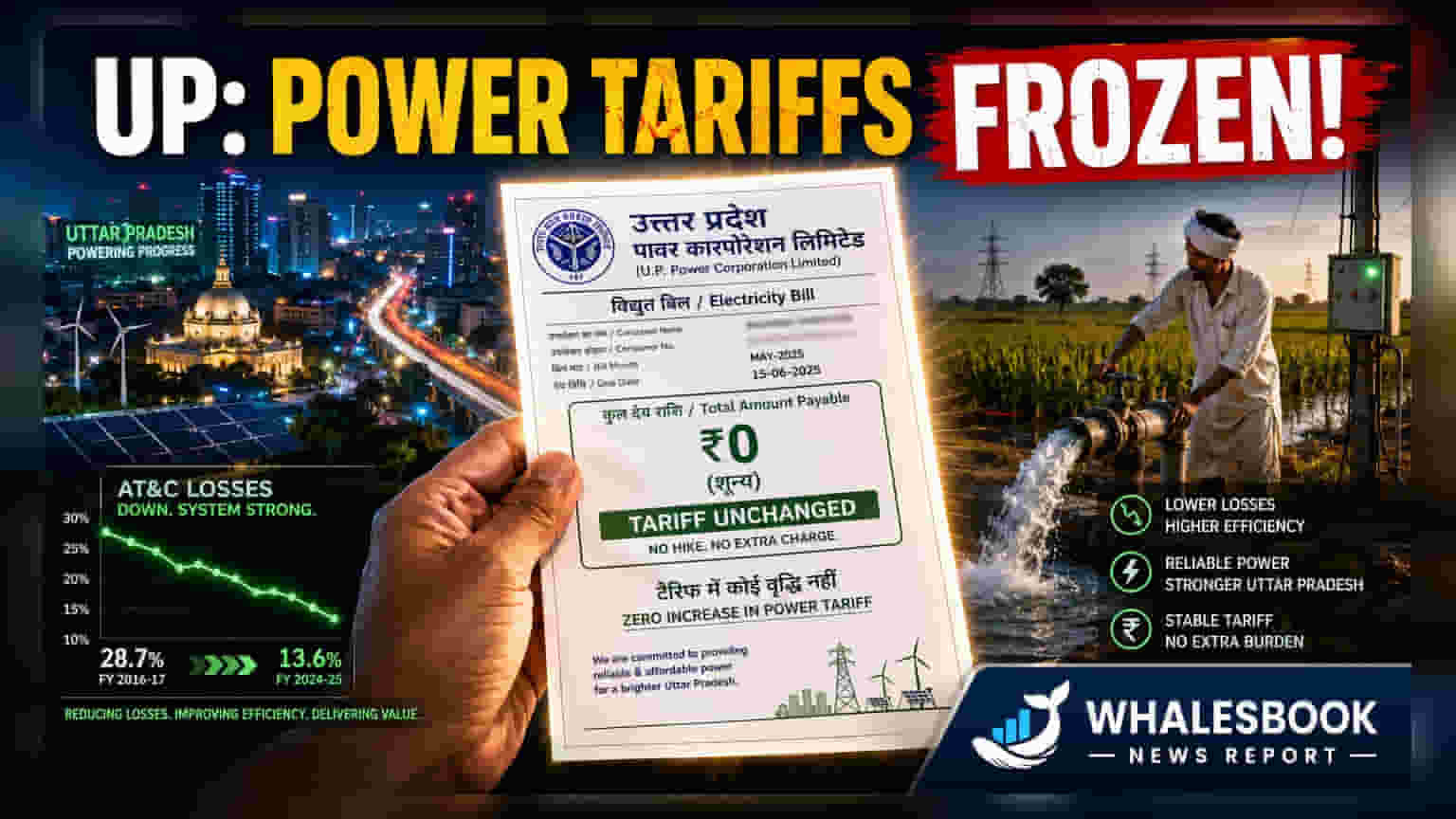
Uttar Pradesh has decided to keep electricity tariffs unchanged for the 2026-27 fiscal year, continuing a seven-year streak of no hikes. To manage this, the state has increased its power subsidy to ₹20,400 crore, up from ₹17,100 crore. Investors should note that while operational improvements at state-owned distribution companies are cited as a reason, the sector remains heavily dependent on these government subsidies to bridge revenue gaps.
What Happened
The Uttar Pradesh government has announced that electricity tariffs will remain unchanged for the fiscal year 2026-27. This marks the seventh consecutive year that consumers in the state will not see an increase in their power bills. To support this freeze, the state has significantly increased its electricity subsidy allocation to ₹20,400 crore, a notable jump from the ₹17,100 crore provided in the previous fiscal year. This decision covers a wide range of consumers, including households, rural poor, and private tube well operators.
The Subsidy and Regulatory Gap
While the tariff freeze is a relief for consumers, it creates a financial challenge for power utilities. The Uttar Pradesh Electricity Regulatory Commission (UPERC) identified a regulatory gap of approximately ₹2,580 crore for the 2026-27 period. A regulatory gap occurs when the cost of supplying electricity is higher than the revenue collected from consumers. In this case, the state government is stepping in to cover this shortfall through the increased subsidy. For investors, this highlights that while tariffs are stable, the state's power distribution companies remain reliant on timely government subsidy payments to maintain financial health.
Operational Improvements
Despite the reliance on subsidies, the state regulator pointed to better operational performance within the Uttar Pradesh Power Corporation Limited (UPPCL) and its distribution companies. The decision to avoid a tariff hike was partially justified by improvements in financial management and efforts to reduce Aggregate Technical and Commercial (AT&C) losses. These losses essentially measure how much power is lost during transmission or stolen, and how much billed revenue remains uncollected. Lowering these losses is a positive sign for the efficiency of the state power sector, even if the system is not yet fully self-sustaining without subsidies.
Green Energy Incentives
The tariff order also introduces specific support for the green energy transition in the state. Notably, there will be a 20% reduction in tariffs for electric vehicle (EV) charging stations when electricity is used between 9 AM and 4 PM. This is intended to encourage EV adoption and support charging infrastructure. Furthermore, the state is continuing existing provisions for green energy, including support for battery swapping stations and Battery as a Service (BaaS) providers. These moves reflect the state's broader effort to push for cleaner energy usage.
What Investors Should Track
Investors monitoring the power sector in Uttar Pradesh should focus on a few key areas. First, the actual release of subsidy funds by the government is critical for the cash flow of distribution companies. Delays in subsidy payments can lead to high debt levels for power utilities. Second, tracking the continued reduction of AT&C losses is essential to see if operational efficiencies can truly minimize the need for future state support. Finally, for those invested in the EV ecosystem, the tariff reduction for charging stations could be a monitorable factor for the viability of charging infrastructure projects in the state.