

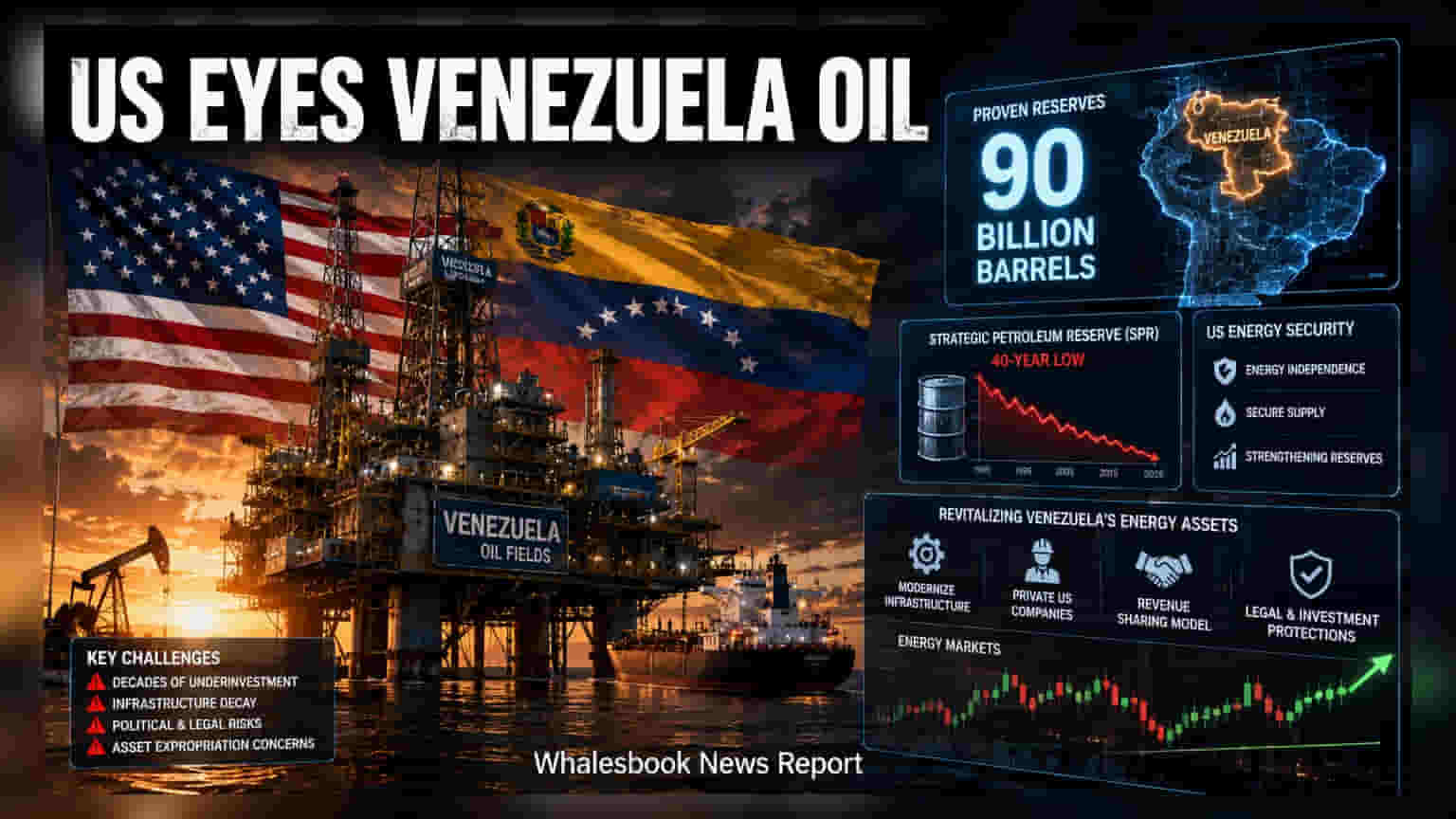
The Trump administration is exploring a plan to secure equity in Venezuelan oil fields, which hold an estimated 90 billion barrels of reserves. The move aims to address low levels in the US Strategic Petroleum Reserve. However, investors are cautious due to the massive cost of fixing decaying infrastructure and the historical risk of asset seizures in the region.
The US government is currently evaluating a proposal to secure formal ownership stakes in over a dozen Venezuelan oil fields. This initiative is part of a broader strategy to address domestic energy security, targeting regions that contain an estimated 90 billion barrels of proven reserves. The proposed model suggests using private American companies to manage and modernize these fields, with a revenue-sharing agreement intended for the Venezuelan government.
This move comes at a time when the United States' Strategic Petroleum Reserve (SPR) has reached a 40-year low. By attempting to gain direct access to these reserves, the administration is seeking to bolster the total energy volume available to the US. While the plan is designed to address the energy deficit, it involves significant complications.
Investors and market analysts are pointing to major operational hurdles. Decades of underinvestment have left much of Venezuela’s energy infrastructure in a state of disrepair. Revitalizing these fields will require massive amounts of money to be spent on equipment repairs and facility upgrades before any meaningful production can be restored.
Furthermore, there is a persistent risk regarding the legal safety of such investments. Historical precedents of asset expropriation—where foreign-owned property or assets are taken over by the local government—remain a primary concern. This history creates a high-risk environment, making many major US energy corporations hesitant to commit without strong, enforceable legal guarantees.
Some companies are already navigating this environment. For example, Chevron Corporation is currently operating in the country and has publicly announced plans to increase its daily production by 50 percent by the end of 2028. Despite this, the broader industry remains cautious. The ultimate success of this plan will depend on the stability of the ongoing political transition in Venezuela and whether the government can provide the necessary security for American private capital.
Moving forward, the primary monitorable for investors will be any formalizing of the deal structure and the specific legal protections provided to US companies. The ability of these firms to navigate the infrastructure decay and the complex political situation in Venezuela will determine the long-term viability of this energy strategy.