

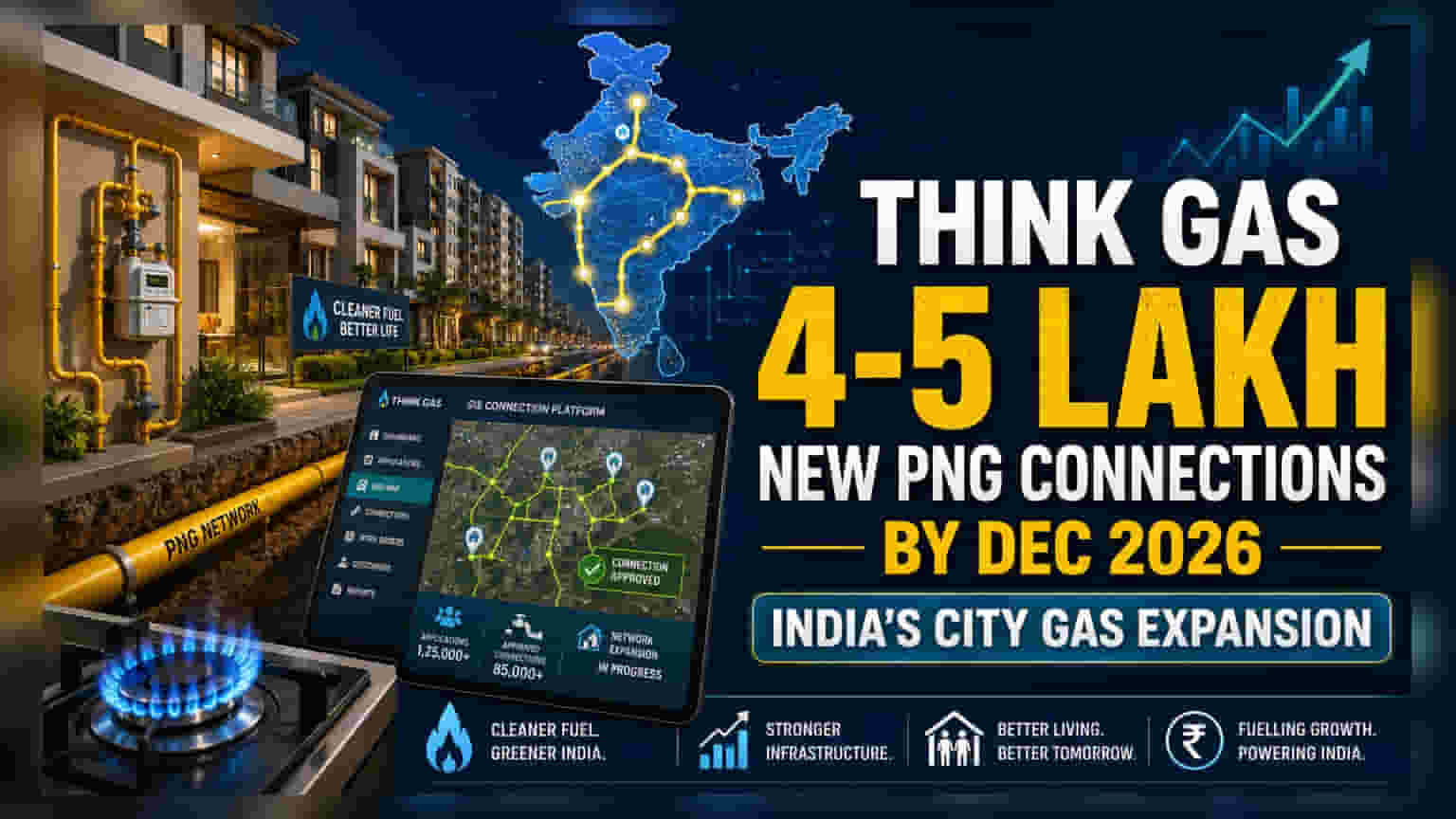
Think Gas plans to onboard up to 500,000 new piped natural gas (PNG) consumers by December 2026. The move leverages government policy to shift households from LPG to PNG amid global fuel supply shifts. This expansion highlights the growing reach of the city gas distribution (CGD) sector in India, an area of focus for several listed energy companies.
What Happened
Think Gas has announced an ambitious target to add between 400,000 and 500,000 new piped natural gas (PNG) connections by December 2026. This plan is part of a broader push to encourage Indian households to switch from liquefied petroleum gas (LPG) to PNG, a cleaner and more convenient fuel alternative. The company has introduced a new GIS-enabled platform to help customers quickly check if PNG is available in their area and apply for a connection. This initiative is supported by the Petroleum and Natural Gas Regulatory Board (PNGRB) and recent government policies designed to conserve LPG by increasing the use of natural gas.
Why This Matters For The CGD Sector
While Think Gas is a private company, its aggressive expansion plan provides useful insights into the broader city gas distribution (CGD) industry in India. The sector has been experiencing a push from the government to increase PNG penetration, especially given the geopolitical tensions in West Asia that have impacted global fuel supply chains. When private players or state-backed entities ramp up their infrastructure and consumer reach, it often signals wider growth trends in the industry. For investors in listed CGD companies, this indicates that the shift toward natural gas is gaining speed, which could benefit the entire sector in the long run.
The Scale Of The Expansion
To meet its goal, the company has built a large infrastructure network. As of May 2026, it operates over 17,781 inch-kilometers of steel pipelines and nearly 24,000 inch-kilometers of Medium Density Polyethylene (MDPE) pipelines. This network covers 49 districts across 10 states and reaches an estimated 18 million households. This extensive pipeline setup is the backbone that allows the company to connect new consumers. The company noted that while the current customer base is growing, there is significant room for better utilisation of this infrastructure as more households transition to PNG.
The Risks To Watch
Expansion in the gas sector comes with specific challenges. One risk is the uncertainty regarding global gas prices and supply. Since India imports a significant portion of its natural gas, high prices or supply disruptions can pressure the profit margins of CGD companies. Additionally, there is the risk of execution delay. Installing pipes to homes and achieving high consumer adoption rates requires coordination with local authorities, timely permissions, and effective supply chain management for materials. Any delay in these areas could affect the company’s ability to meet its targets.
What Investors Should Track Next
For those tracking the CGD sector, the key monitorable is the pace of consumer adoption. Investors should look for updates on how many connections are actually being activated versus just registered. Additionally, changes in government policy regarding gas allocation and pricing will play a major role in the profitability of all companies in this space. Market participants may also watch how other large players in the sector manage their infrastructure spending and consumer growth in the coming quarters.