 Whalesbook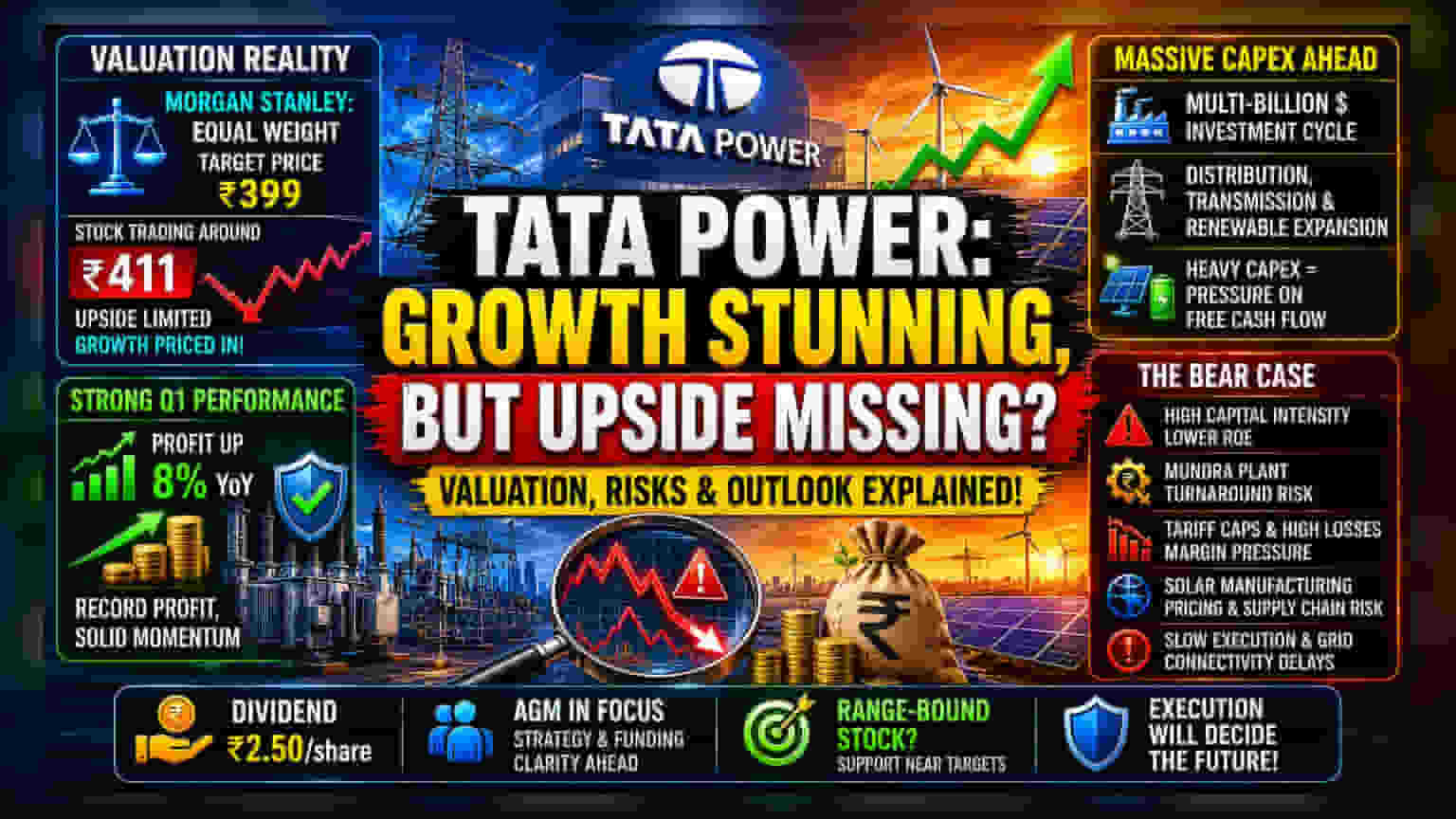


The Valuation Gap
Morgan Stanley’s decision to maintain an Equal Weight rating with a target price of Rs 399 suggests that current market sentiment may have outpaced the company’s near-term earnings potential. With shares trading around Rs 411, the firm effectively signals a lack of immediate upside, implying that the robust 8% year-on-year growth in quarterly profit is already priced into the equity. This disconnect between record-breaking performance and conservative analyst sentiment highlights the market’s focus on the heavy capital intensity of Tata Power’s future roadmap rather than its trailing financial successes.
Scaling Infrastructure Risks
The company faces a massive deployment challenge, necessitating a multi-billion dollar capital expenditure cycle over the next two years. Allocations spanning distribution, transmission, and renewable capacity expansion put significant pressure on free cash flow generation. While management emphasizes the strategic importance of capturing market share through land acquisition and next-generation solar manufacturing, the reliance on high-cost capital investment creates a structural drag on return on equity. Unlike regional competitors who maintain lighter balance sheets, Tata Power remains tethered to the slow-moving, asset-heavy recovery of its distribution networks and the long-gestation periods associated with pumped storage and battery energy projects.
The Forensic Bear Case
From a institutional risk perspective, the primary concern lies in the execution of the Mundra plant’s turnaround and the ability to convert distribution network privatization into sustained margin expansion. Historical data indicates that the power sector often struggles to convert top-line growth into meaningful bottom-line returns when faced with high interest rates and regulatory caps on utility tariffs. Furthermore, the reliance on solar module manufacturing exposes the firm to global supply chain volatility and aggressive pricing competition from regional rivals. Investors should remain wary of the potential for extended delays in grid connectivity and the persistent challenge of reducing high transmission and collection losses, which remain elevated relative to industry best practices.
Future Outlook and Analyst Consensus
While the company continues to reward shareholders with a dividend of Rs 2.50 per share, the broader outlook remains tempered by the scale of required infrastructure spending. Market observers are closely watching the upcoming Annual General Meeting for further clarity on how management intends to balance shareholder returns with the massive financing needs of its transition to a green-energy powerhouse. Until the company demonstrates a clear path to improving its operational efficiency ratios and lowering its debt-to-equity profile, the stock is likely to remain range-bound, testing support levels near the analyst-derived targets.