

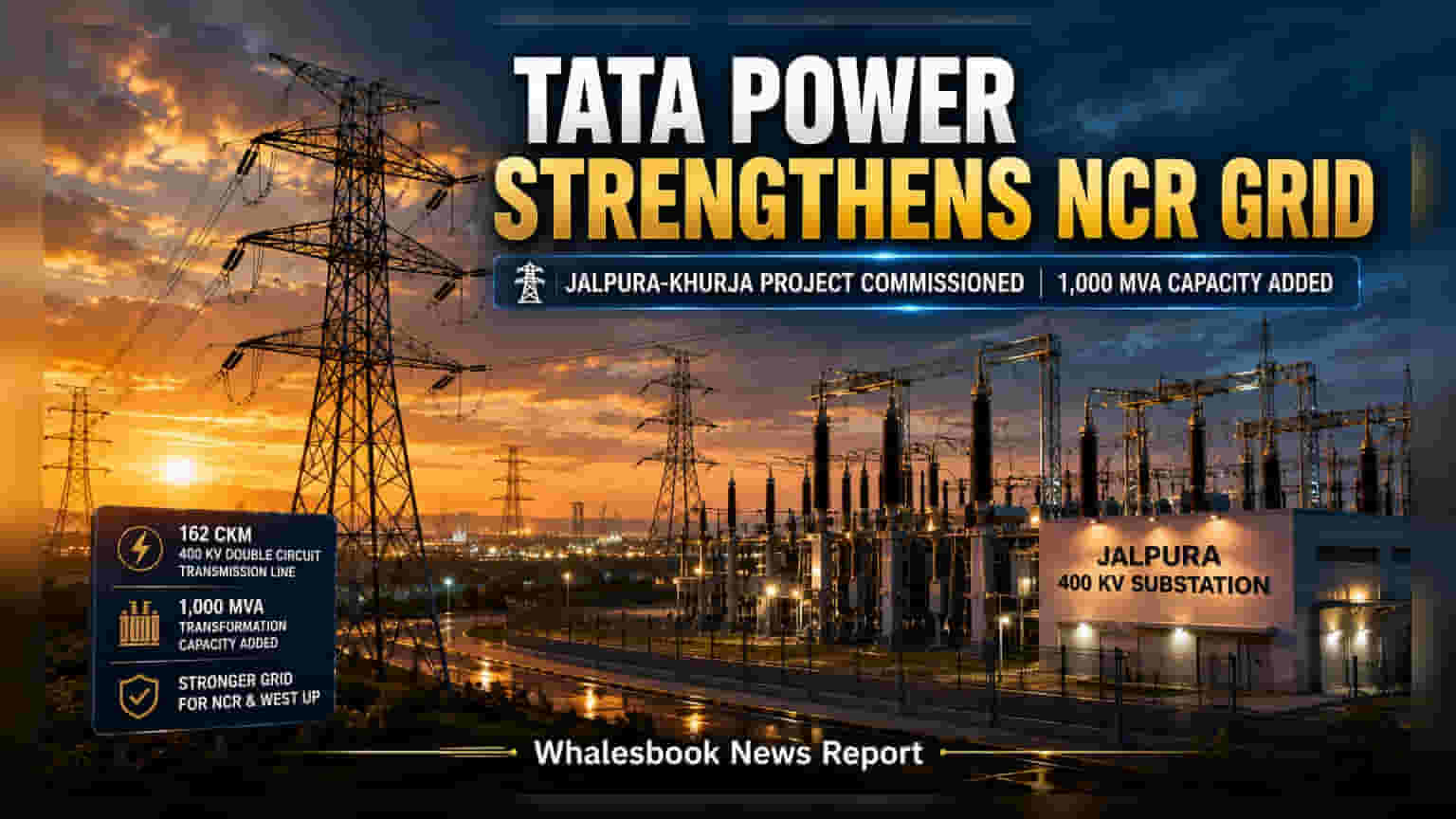
Tata Power has commissioned the second element of the Jalpura-Khurja transmission project in Uttar Pradesh, adding 1,000 MVA of capacity. The new infrastructure is designed to stabilize power supply for the National Capital Region. Shares of the company traded 1.21% higher following the announcement, though investors are keeping an eye on the company’s debt levels and a large pending legal liability.
Tata Power has officially commissioned the second part of its Jalpura-Khurja transmission project in Uttar Pradesh. This infrastructure upgrade involves a 162-circuit-kilometer, 400 kV double-circuit transmission line and a new gas-insulated switchgear substation at Jalpura. With this, the company has added 1,000 MVA of transformation capacity to the regional power grid.
Boosting NCR Grid Stability
This project is part of a larger plan to address the rising electricity demand in the National Capital Region (NCR) and Western Uttar Pradesh. By improving the connection between the Khurja power node and the new Jalpura substation, the company aims to ensure a more stable and reliable power supply for the area. The project was executed through its wholly owned subsidiary, TP Jalpura Khurja Power Transmission Limited, and contributes to the company's total transmission portfolio, which now stands at 7,900 circuit kilometers.
Market Reaction and Financial Context
Following the announcement on September 3, 2026, Tata Power's stock price moved up by approximately 1.21%. While the expansion is a positive step for operations, investors also track the company's broader financial and legal standing. Like many utility companies with extensive infrastructure projects, Tata Power carries high debt levels relative to its equity, which remains a key area of focus for market analysts.
Key Risks to Monitor
Beyond the operational success of new transmission lines, there are specific risks that stakeholders often evaluate. The company is currently managing a significant potential legal liability of approximately $650 million, including interest and related costs, stemming from an ongoing arbitration case with Kleros Capital. Any negative outcome in this legal matter could impact the company's financial position. Furthermore, the business is sensitive to regulatory changes regarding power purchase agreements and tariff revisions, which directly influence profitability. Investors may also track whether potential volatility in fuel costs or delays in other large-scale project executions put pressure on operating margins.
Moving forward, the primary areas for investors to watch include the company’s ability to manage its debt-to-equity ratio, updates on the Kleros Capital arbitration case, and the continued execution timeline of its remaining transmission and distribution projects.