

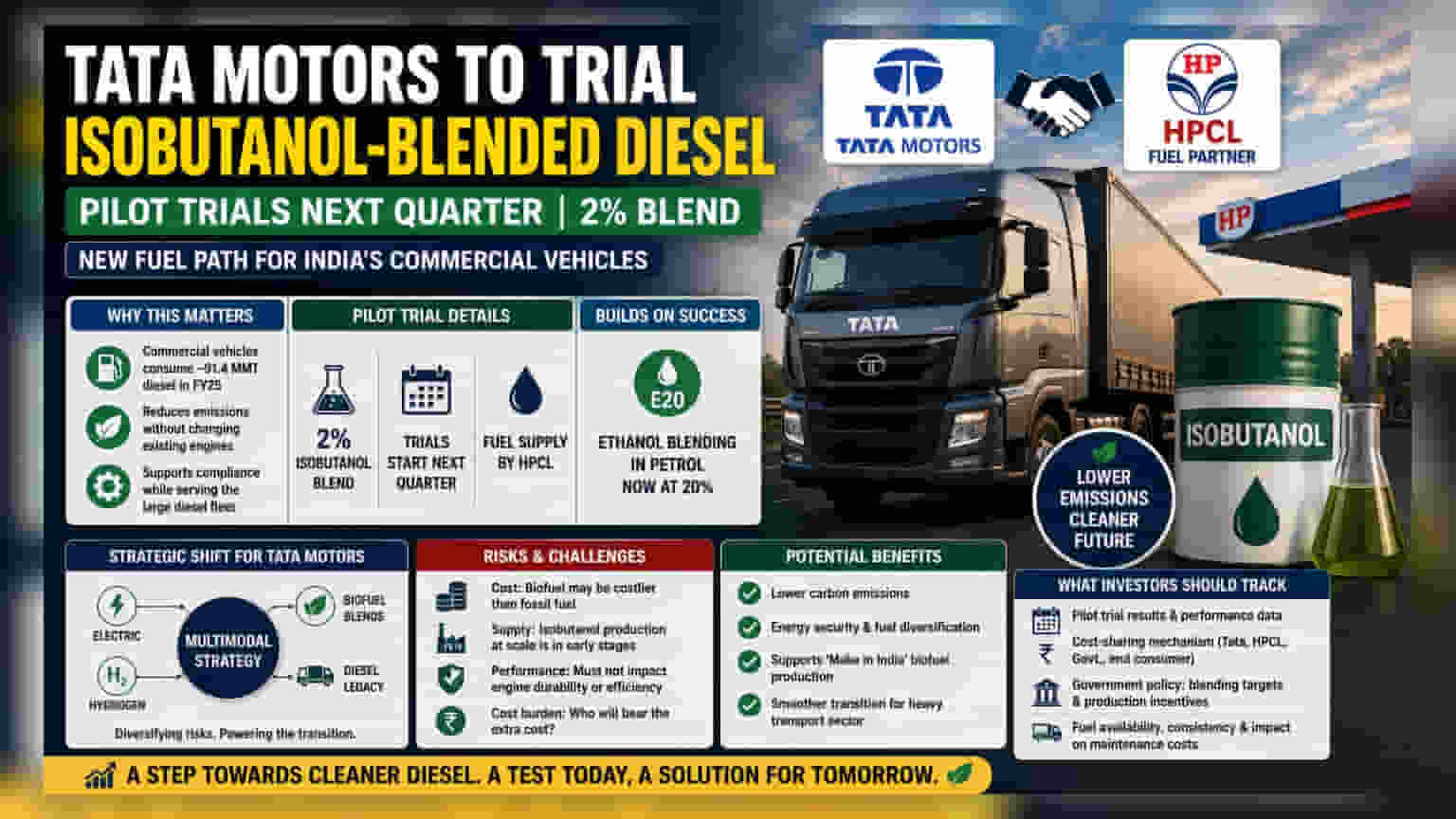
Tata Motors plans to start pilot trials for isobutanol-blended diesel in partnership with HPCL next quarter. The move aligns with the government’s goal to cut crude oil imports and emissions. Investors are looking at how this strategy impacts operational costs, fuel supply chains, and the company's long-term commercial vehicle roadmap.
What Happened
In a move to diversify fuel options for India's heavy vehicle sector, the government is looking to introduce isobutanol blending in diesel. Tata Motors, the country's largest commercial vehicle manufacturer, has announced plans to begin pilot trials for isobutanol-blended diesel starting next quarter. The company will collaborate with Hindustan Petroleum Corporation Limited (HPCL) to supply the fuel for these trials, which will initially test a 2 percent blending ratio. This initiative follows the government's successful push for ethanol blending in petrol, which has reached a 20 percent target.
Why Investors Are Watching
The commercial vehicle industry is the primary consumer of diesel in India, with consumption reaching approximately 91.4 million tonnes in FY25. For investors, this move is significant because it suggests a multi-pronged approach to energy efficiency. While electric and natural gas vehicles are growing, diesel engines remain the backbone of long-haul logistics. By testing biofuel blends, companies can potentially reduce carbon footprints without requiring fundamental changes to existing engine architectures. This allows manufacturers to continue servicing the massive legacy diesel fleet while complying with stricter environmental regulations.
Strategic Shift for Tata Motors
For Tata Motors, this trial is part of a broader "multimodal" strategy. By investing in various technologies—including electric, hydrogen, and now biofuel-blended diesel—the company is reducing its dependence on any single energy source. This helps the manufacturer hedge against risks associated with fluctuating crude oil prices and the slower-than-expected adoption of electric vehicles in the heavy-duty segment. However, the move also indicates that Tata Motors is not pivoting entirely away from internal combustion engines, which remain a key revenue driver.
Risks and Execution Challenges
While the technology aims to lower emissions, there are several practical hurdles to consider. The first is cost: biofuel production can sometimes be more expensive than fossil fuel, and it remains to be seen who will bear the additional cost—the manufacturer, the oil marketing companies, or the end consumer. Second, the success of this program depends on the large-scale availability of isobutanol. Unlike ethanol, which has a well-established supply chain in India, isobutanol production at a massive scale is in its early stages. Furthermore, any new fuel blend must prove it does not harm engine performance or longevity over long periods, a critical factor for fleet operators who prioritize the durability of their vehicles.
What Investors Should Track Next
The most important monitorables are the pilot results and the government’s policy timeline. Investors will look for details on the cost-sharing mechanism between the company, oil partners like HPCL, and the government. Additionally, any updates on mandatory blending targets or production incentives for isobutanol will determine whether this becomes a commercially viable, large-scale program or remains a niche test case. The consistency of fuel supply and the potential impact on maintenance costs for commercial operators will be the next key updates to watch.