 Whalesbook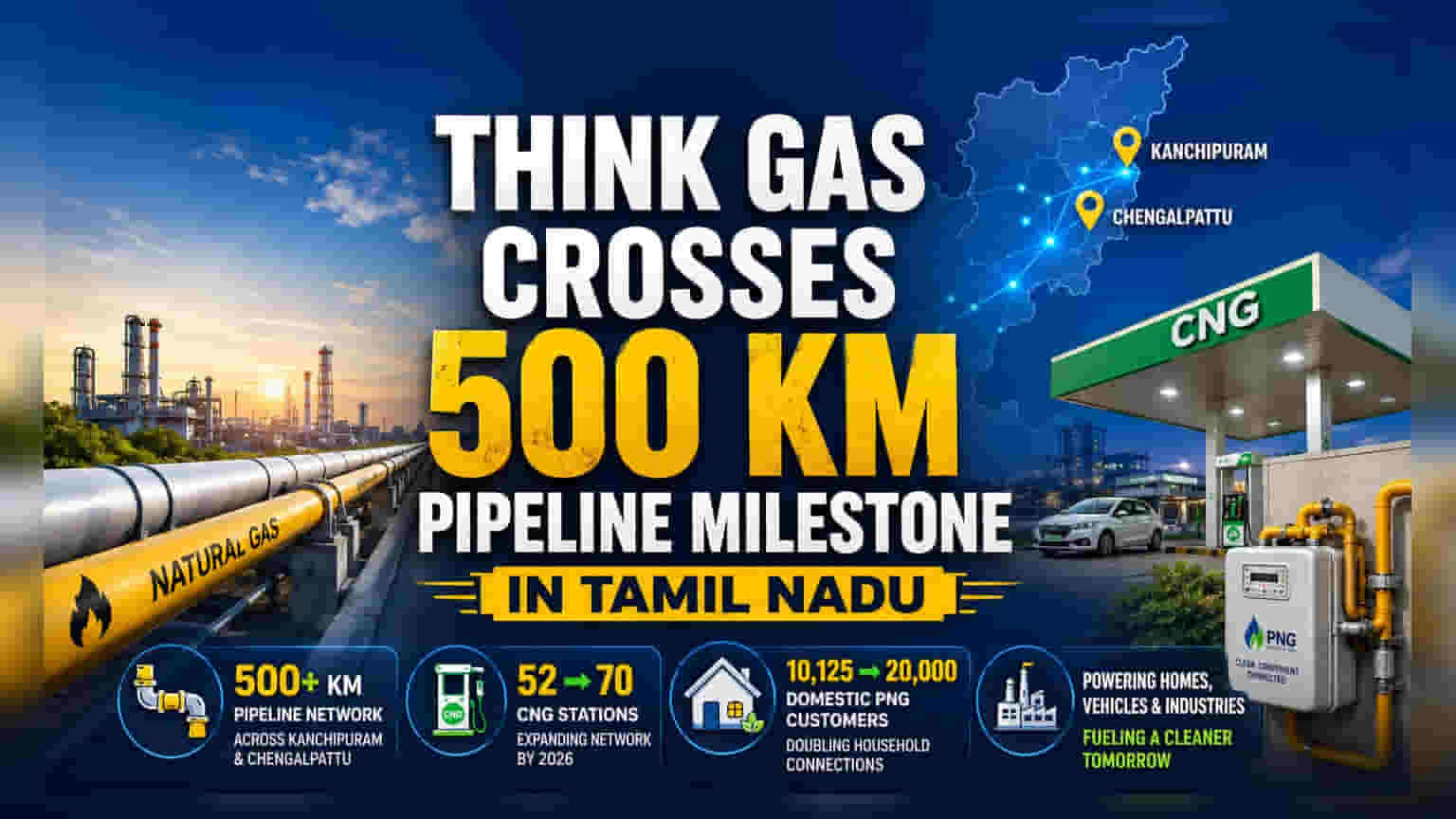


What Happened
City Gas Distribution (CGD) player THINK Gas has expanded its pipeline network in Tamil Nadu, hitting the 500-kilometer mark across the Kanchipuram and Chengalpattu regions. The infrastructure, which includes both steel and polyethylene pipelines, is designed to supply natural gas to residential, commercial, and industrial customers. Looking ahead, the company has set a target to expand its network to over 550 kilometers by 2026. Alongside this pipeline expansion, the company plans to increase its compressed natural gas (CNG) station network from 52 to 70 and aims to double its domestic piped natural gas (DPNG) customer base from approximately 10,125 households to 20,000.
Why The CGD Sector Matters
City Gas Distribution is a capital-intensive business. Companies in this sector must spend heavily upfront—often referred to as capital spending—to lay pipelines and set up stations before they start earning steady, long-term revenue from gas sales. The expansion by THINK Gas reflects a broader trend in India where energy companies are rapidly building out infrastructure to capture demand from industries moving toward cleaner fuel sources and households shifting to piped gas. For investors tracking listed energy companies, these infrastructure developments are significant because they indicate the level of competitive intensity in specific geographical areas (often called Geographical Areas or GAs).
The Business Model
At the core of the CGD business model is the transition from high initial spending to recurring cash flow. Once a pipeline network is laid, the company earns revenue by supplying gas to vehicles (CNG) and households (PNG). The profitability of this business generally depends on three factors: the price at which the company buys natural gas (sourcing costs), the price at which it sells to consumers (pricing power), and the volume of gas sold. As the network expands and more households connect to the pipeline, the revenue from gas sales typically becomes more stable, though it requires continuous operational maintenance.
Competitive Landscape in Tamil Nadu
While THINK Gas is a private equity-backed company and not a publicly traded stock, its operations in Tamil Nadu provide useful context for the regional market. The state has seen various CGD players competing to secure consumers in industrial corridors like Kanchipuram and Chengalpattu. When private players or state-owned entities expand their footprint, it impacts the market share and potential volume growth for other listed energy firms operating in similar regions. Investors in the energy sector often compare the execution speed and customer addition rates of different players to understand who is gaining a better foothold in high-demand industrial belts.
What Investors Should Track
For investors following the City Gas Distribution space, the key to evaluating performance is not just the length of the pipeline, but how quickly those pipelines are utilized. Key monitorables include the rate of new household connections, the volume of gas sold per station, and how companies manage their margins against fluctuating global gas prices. Furthermore, tracking regulatory updates regarding gas allocation policies is vital, as these rules determine the cost at which companies can procure natural gas. Future updates on how quickly these new assets turn into revenue-generating connections will be the most important factor in determining the long-term success of such infrastructure projects.