

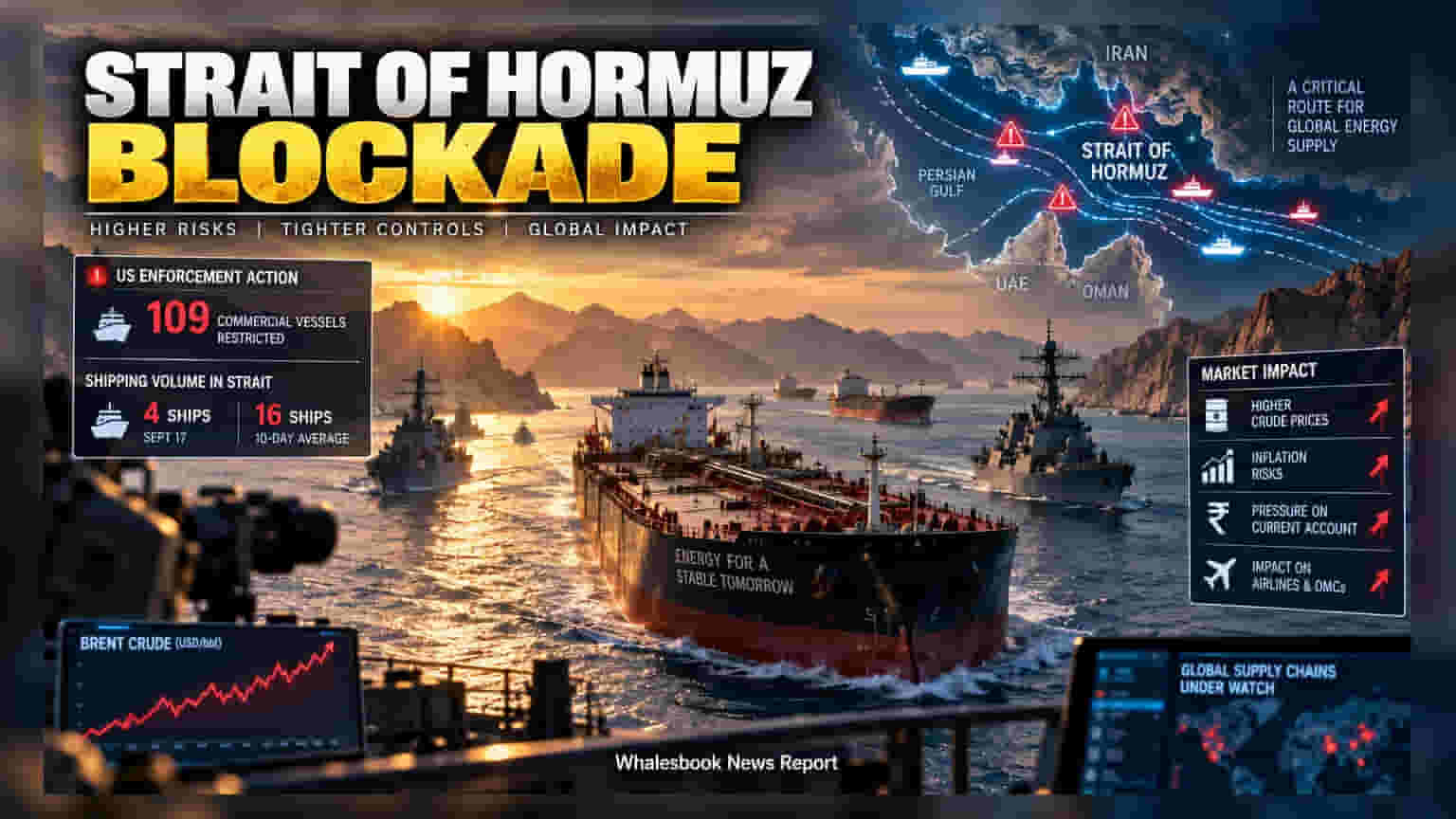
The US Navy has redirected 109 commercial ships in the Strait of Hormuz, sharply reducing shipping activity in a vital global energy transit route. For Indian investors, this escalation poses a risk of rising crude oil prices, which could impact inflation and profitability for sectors dependent on fuel, such as aviation and oil marketing companies.
The US Central Command has restricted the movement of 109 commercial vessels in the Strait of Hormuz as part of intensified maritime enforcement operations. This action has significantly reduced shipping volume in the region, with data indicating that only four commodity vessels navigated the strait on September 17, compared to a recent 10-day average of 16 ships. The Strait of Hormuz is a critical artery for global energy markets, and any disruption to the flow of goods through this passage creates immediate concern for supply chain stability.
For Indian investors, the primary risk involves the potential impact on global crude oil prices. As India relies heavily on imports to meet its energy requirements, price spikes in the international market can have a direct ripple effect on the domestic economy. Higher crude oil costs often contribute to inflationary pressure and can strain the country's current account, which is the difference between the money a country earns from exports and the money it spends on imports.
Specific sectors in the Indian stock market are particularly sensitive to these energy price fluctuations. Oil marketing companies, such as Indian Oil Corporation, Bharat Petroleum, and Hindustan Petroleum, may face pressure on their profit margins if they are unable to pass on increased input costs to consumers. Furthermore, the airline industry, including players like InterGlobe Aviation, remains vulnerable to higher fuel prices, as aviation turbine fuel represents a significant portion of their operational expenses.
While reports suggest that diplomatic channels involving Qatari mediators are being utilized to discuss terms for de-escalation, the situation remains fluid. Investors should monitor international crude oil benchmarks, such as Brent Crude, to gauge the severity of the market reaction. Sustained volatility in energy prices could influence domestic equity market sentiment, particularly for sectors that are high consumers of fuel. Any further updates regarding the duration of the naval blockade or changes in the diplomatic stance will be the next important factors for market participants to track.