

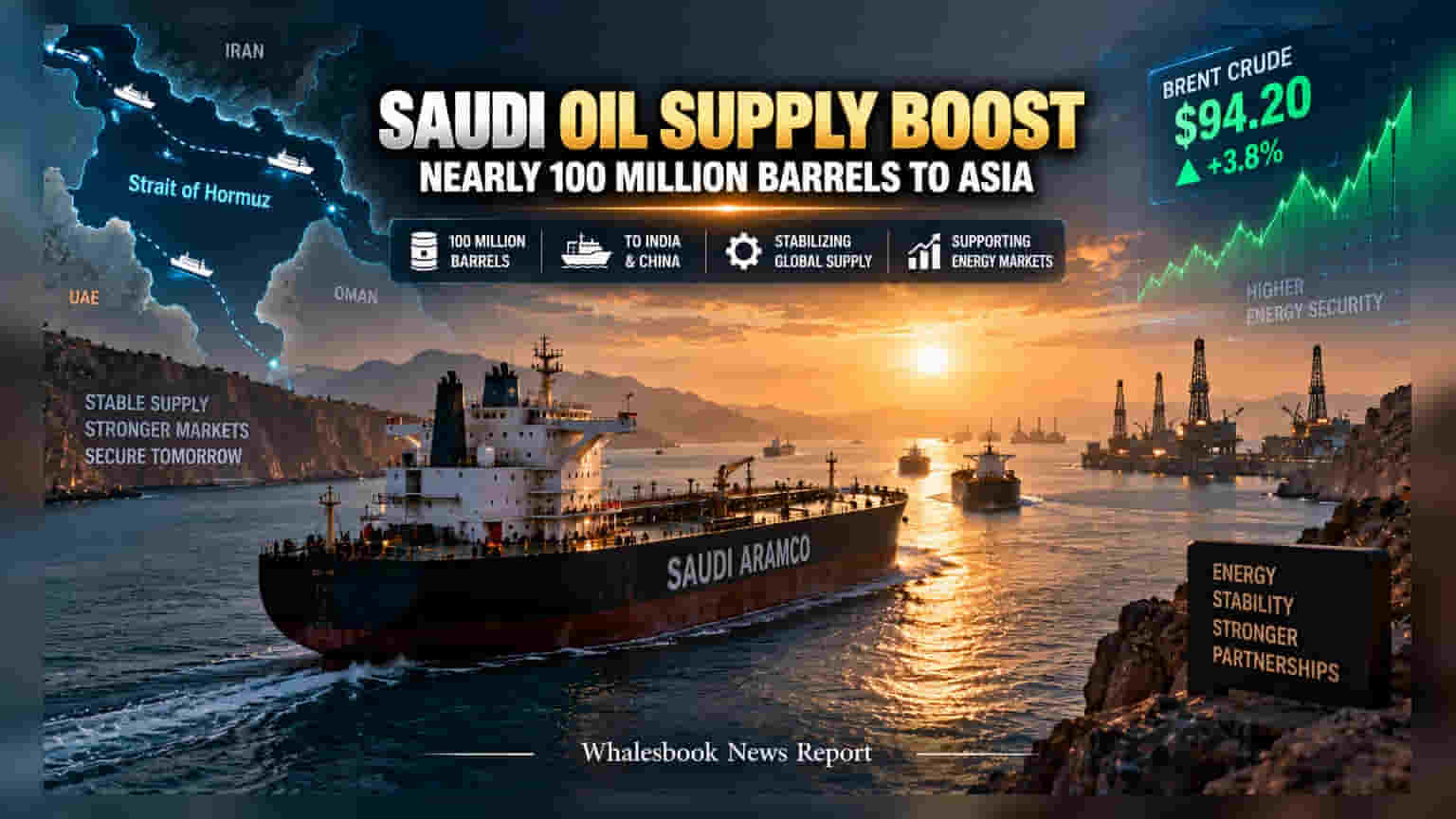
Saudi Aramco is shipping 100 million barrels of crude to Asia, including India, to secure energy flows. By handling logistics directly, the state oil giant aims to stabilize supply for refiners facing disruption. This development is crucial for maintaining steady operations for Indian refiners amidst ongoing regional tensions.
Saudi Arabia has initiated a significant supply operation, shipping nearly 100 million barrels of crude oil to Asian markets, including India and China, for the October and November period. This large volume increase is designed to stabilize the energy market as regional tensions continue to affect global fuel flows. The intervention provides a critical buffer for major importers, ensuring that refinery runs can continue without the disruption caused by the recent tightening of global supplies.
The logistics of this movement mark a notable change in how Saudi Aramco serves its Asian customers. The state oil giant is managing the shipping and delivery directly, moving away from standard free-on-board agreements where buyers were typically responsible for transport. By assuming the logistics and the associated transit risks, Saudi Aramco is supporting refiners who were becoming hesitant to secure their own shipments through high-risk maritime routes. Global energy traders, including TotalEnergies, Vitol, and Trafigura, are also involved in facilitating these shipments to ensure that Asian processing volumes remain stable.
This supply shift is largely a response to the September 10 attack on the critical East-West pipeline. This pipeline is essential for energy security, as it allows crude to be transported directly to the Red Sea, bypassing the volatile Strait of Hormuz. While the pipeline is currently operating at reduced capacity, Saudi Aramco is working to restore full functionality, with meaningful progress expected by Saturday. The ongoing, forced reliance on the Strait of Hormuz remains a central concern for energy security across Asia.
For Indian investors, the stable flow of crude is essential for Oil Marketing Companies like Indian Oil Corporation, BPCL, and HPCL, as well as private refiners like Reliance Industries. When global supply chains remain reliable, these companies can maintain consistent refinery operations without facing sudden shortages or spikes in procurement costs. The stability of feedstocks directly impacts the operational margins of these refining businesses.
Despite this immediate supply increase, the heavy reliance on the Strait of Hormuz continues to be a structural risk for global energy transport. Investors and market participants will monitor whether the East-West pipeline restoration is completed on schedule this weekend and whether these high supply levels can be sustained if regional tensions escalate further. The timeline for the pipeline repair and future management commentary on supply logistics will be key updates for stakeholders.