

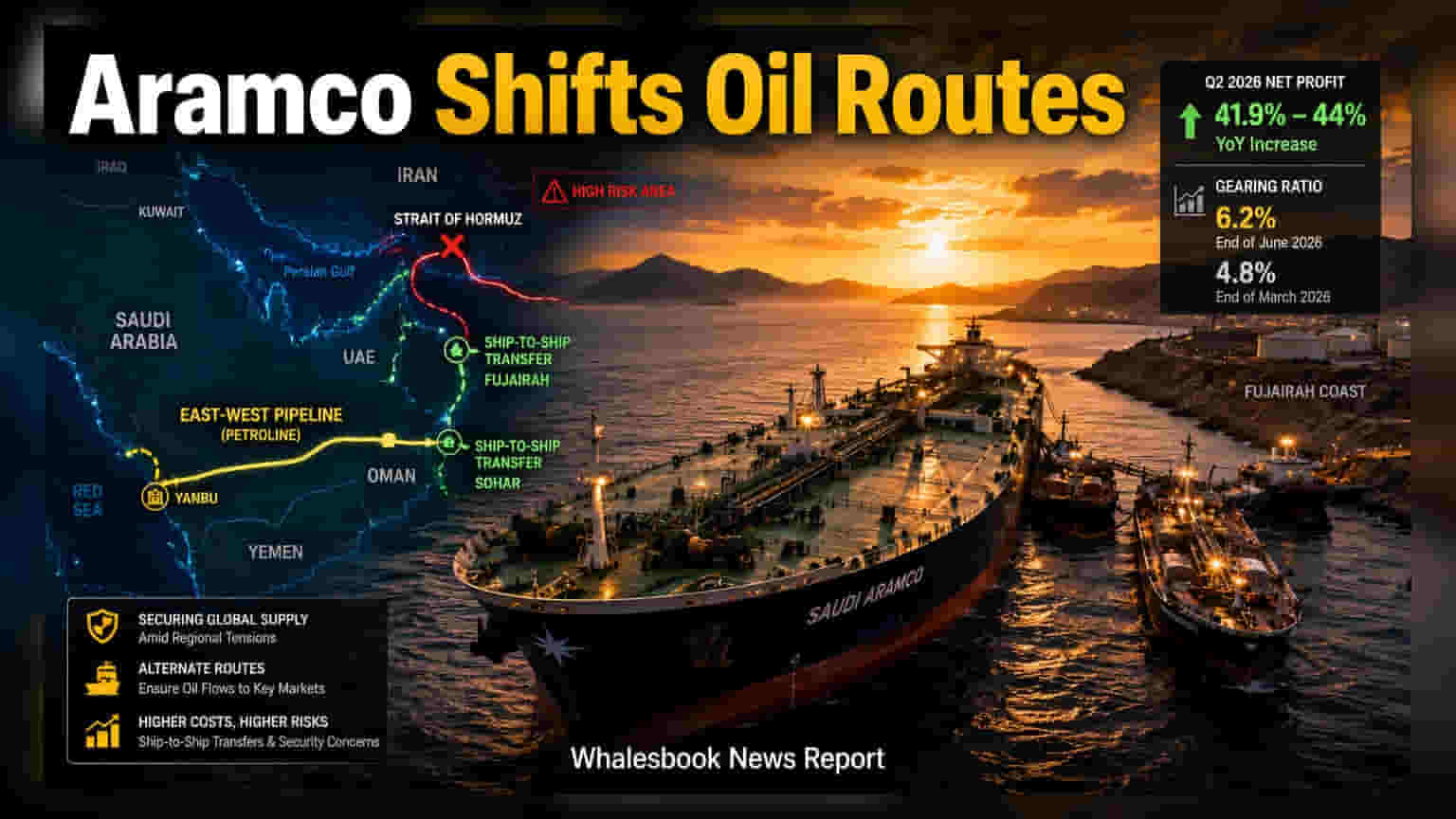
Saudi Aramco is increasing oil exports from ports outside the Strait of Hormuz to manage regional security risks. This move comes as the company navigates ongoing supply chain hurdles while posting a significant 41.9% to 44% year-on-year profit rise for the second quarter of 2026.
Saudi Aramco is taking new steps to keep oil flowing to global markets, including key customers in China, by bypassing the Strait of Hormuz. Due to ongoing regional tensions that have persisted since the conflict in early 2026, the company has ramped up crude exports from alternate locations in the United Arab Emirates and Oman.
Instead of relying solely on the traditional maritime route, the company is utilizing ship-to-ship transfers off the coast of Fujairah and Sohar. Additionally, it is maximizing the use of its East-West Pipeline, also known as the Petroline, to transport crude directly to the Red Sea port of Yanbu. These logistical workarounds are designed to ensure that oil can reach international buyers even when transit through the strait becomes risky.
Financially, the company has shown resilience during this period. In the second quarter of 2026, Saudi Aramco reported a 41.9% to 44% rise in net profit compared to the previous year. This growth was driven primarily by higher realized oil prices, which helped offset the reduction in total sales volumes caused by these supply chain disruptions. Investors are observing the balance sheet closely, as the company’s gearing ratio—a measure of how much debt it uses relative to its equity—rose to 6.2% by the end of June, up from 4.8% at the end of March 2026.
These logistical changes carry specific risks and costs. Ship-to-ship transfers are more complex and expensive to manage than standard port loading operations. There are also persistent security concerns, including the potential for physical attacks on maritime infrastructure or tankers. Reports have noted that some vessels involved in these routes have occasionally disabled tracking systems to avoid interception, which increases operational uncertainty. The effectiveness of these alternative routes also faces limitations, as refining and logistical bottlenecks could develop if the regional situation remains unstable for an extended period.
For investors, the key monitorable is the sustainability of these supply routes and their impact on future profit margins. The market will likely look for updates on how these operational workarounds influence the company's ability to maintain high export volumes to major markets like China, and whether the higher logistical costs put pressure on operational efficiency in the coming quarters.