

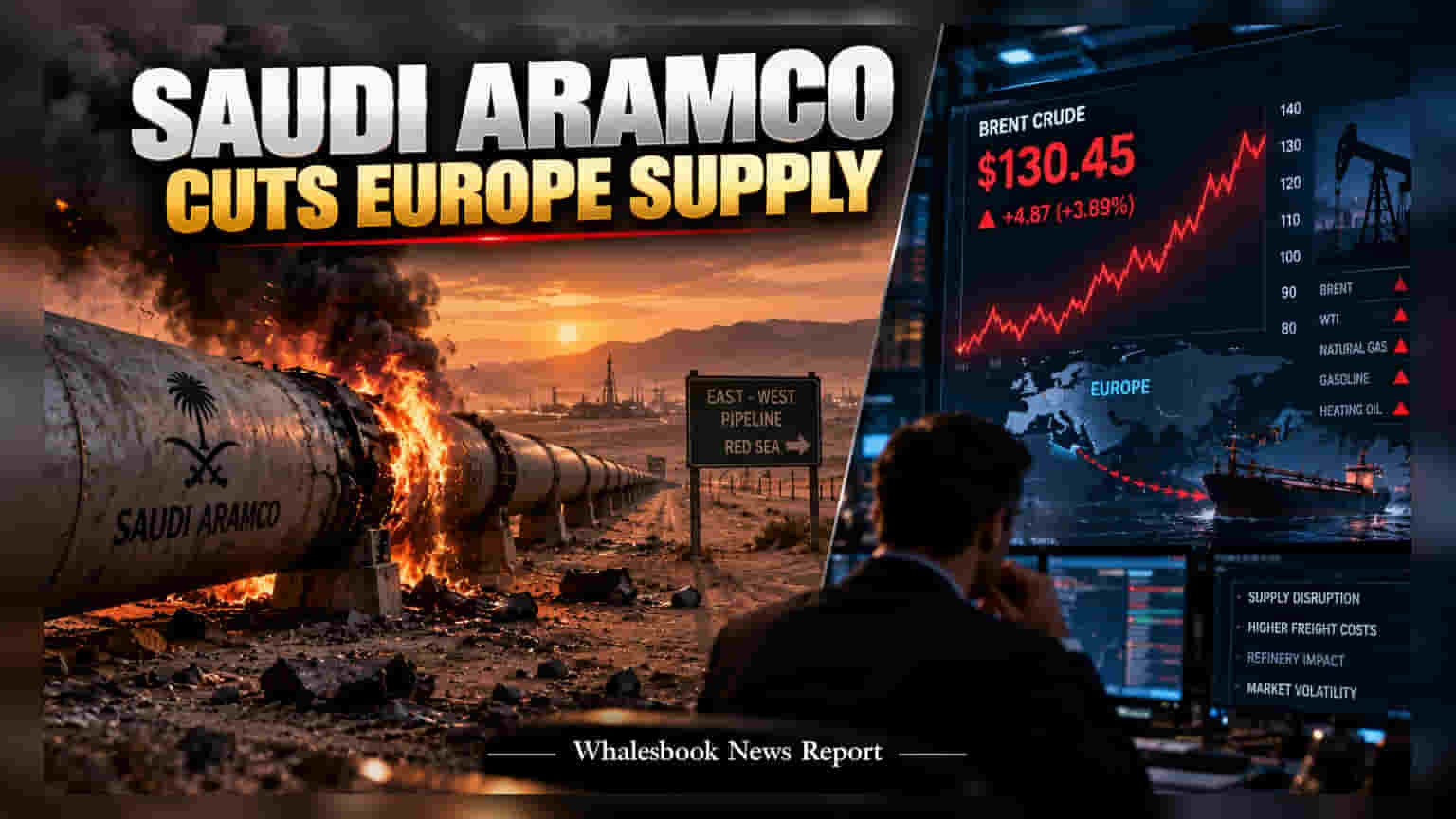
Saudi Aramco has suspended some crude oil allocations to European refiners following a drone attack on its East-West pipeline. The disruption is forcing buyers to find alternative supplies in a volatile market where Brent crude prices have crossed $130 per barrel. Investors are tracking how this supply constraint affects global oil prices and refinery input costs.
Saudi Aramco has informed select European refinery customers that their planned crude oil shipments for the upcoming month are being cancelled. This decision follows a drone attack on the kingdom's East-West pipeline, a key infrastructure asset that allows oil to be transported to the Red Sea, effectively bypassing the Strait of Hormuz. The company has indicated that while it is working to resume partial operations within days, a full return to normal pipeline capacity could take up to six weeks.
For European energy markets, the timing of this disruption is challenging. Brent crude prices have recently moved above $130 per barrel, reflecting growing uncertainty in global energy supplies. European refiners, such as Poland's Orlen SA, are now entering the spot market to secure alternative cargoes, which typically comes at a higher cost and adds volatility to regional energy prices.
The logistical complexity of the situation is a primary concern for the energy sector. The East-West pipeline was designed to provide a secure exit for Saudi oil when maritime transit through the Persian Gulf or Strait of Hormuz is considered high-risk. With this route currently limited, Aramco is rerouting logistics. However, moving oil from the Persian Gulf to Europe involves significant challenges, including navigating the Red Sea, where shipping lanes face ongoing security threats, or undertaking a much longer, more expensive voyage around the African continent.
For investors tracking the energy sector, the key monitorable is the duration of the pipeline repair and the subsequent stabilization of global supply chains. Sustained logistical issues or a prolonged shutdown may result in increased input costs for refiners, which could squeeze profit margins if companies cannot pass these higher costs on to end consumers. Additionally, market participants will likely watch for any official updates regarding security measures or capacity restoration schedules from the company, as global oil markets remain highly sensitive to geopolitical developments in the Middle East.