

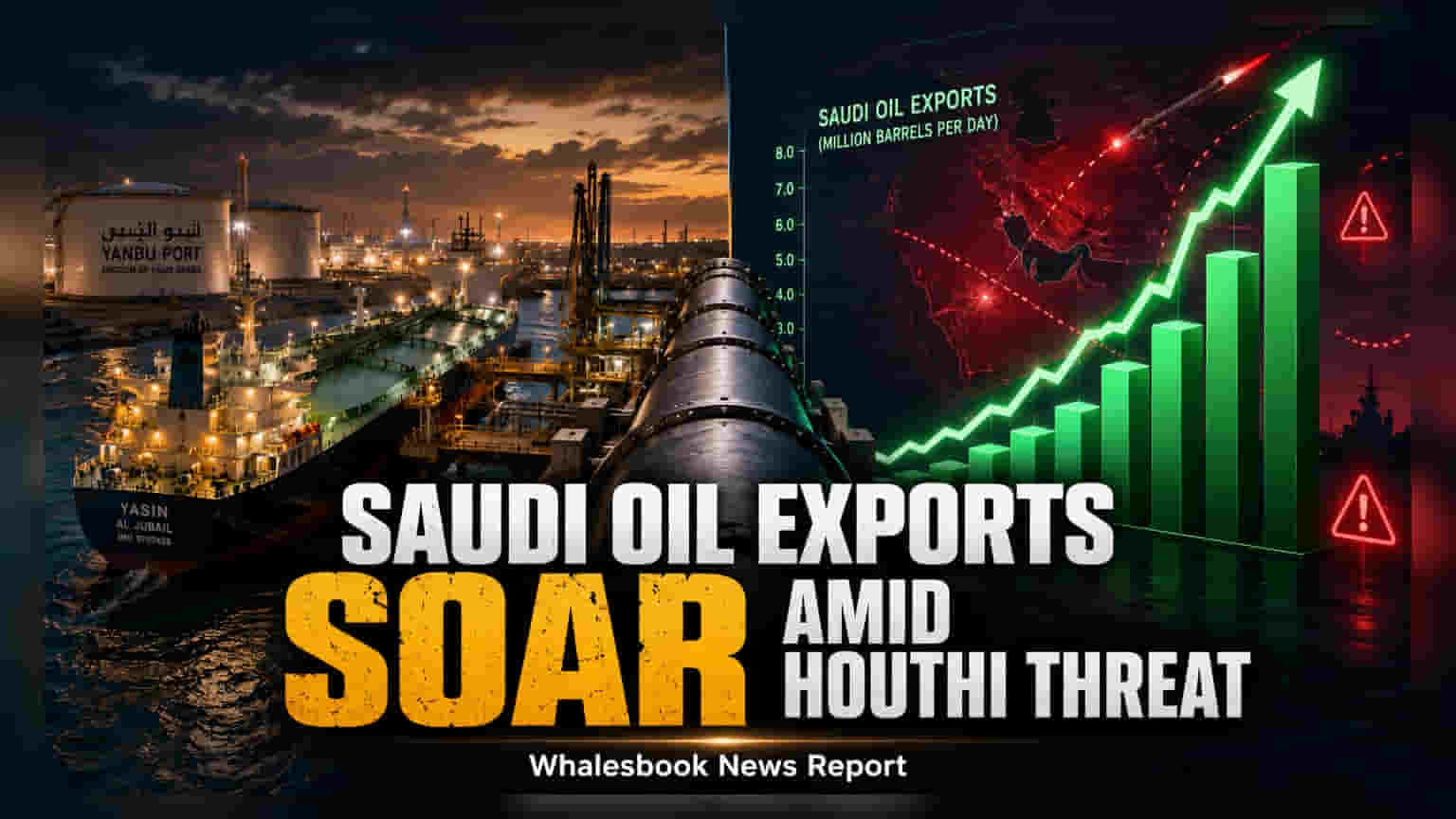
Saudi Arabia has ramped up daily crude oil shipments from its Yanbu port to approximately 4.7 million barrels, nearly reaching maximum capacity. This strategic shift aims to bypass the Strait of Hormuz amid rising regional security tensions. Investors should track whether this increased reliance on the Red Sea terminal impacts operational costs or creates new supply chain vulnerabilities.
Saudi Arabia is significantly shifting its oil export strategy by increasing daily crude shipments from the Yanbu port on the Red Sea coast. Recent data indicates that daily loadings at this terminal climbed to approximately 4.7 million barrels as of July 13, 2026. This is a sharp rise from the 3.36 million barrels per day recorded only a few days prior and significantly higher than the average daily volume of roughly 973,000 barrels seen during the same period last year. By maximizing throughput at Yanbu, the kingdom is attempting to secure alternative export routes.
The core objective of this surge is to reduce dependence on the Strait of Hormuz. The Strait is a vital global chokepoint for energy supplies, but it has become increasingly vulnerable due to ongoing regional conflicts and shipping disruptions. By diverting more volume to its western coast, Saudi Arabia is effectively creating a buffer against potential blockages in the Gulf. To support this long-term strategy, there are reports that the kingdom is evaluating the expansion of oil pipeline infrastructure to the Red Sea, though Saudi Aramco has not officially commented on these specific expansion plans.
While the increase in Yanbu’s activity offers a hedge against regional instability, it also introduces new security risks. The Yanbu region has previously faced external security threats, including a notable incident in March where a refinery near the port was targeted in an attack. Industry observers are concerned that as Yanbu becomes a more critical node for global oil supply, it may face higher security risks from regional groups such as the Houthi militia, who have recently engaged in missile activities that threaten the stability of the area.
For energy markets, the shift reflects the ongoing challenges of maintaining consistent global oil flows in a volatile geopolitical environment. Higher utilization of the Yanbu terminal may lead to operational pressure on port infrastructure and logistics. Investors and market watchers should monitor whether these security concerns lead to increased insurance premiums for tankers operating out of the Red Sea or if the reliance on this single terminal creates bottlenecks that could affect the cost of exporting crude. The sustainability of these high export volumes will ultimately depend on both the security of the Red Sea corridor and the ability of the existing pipeline network to maintain such high capacity over an extended period.