

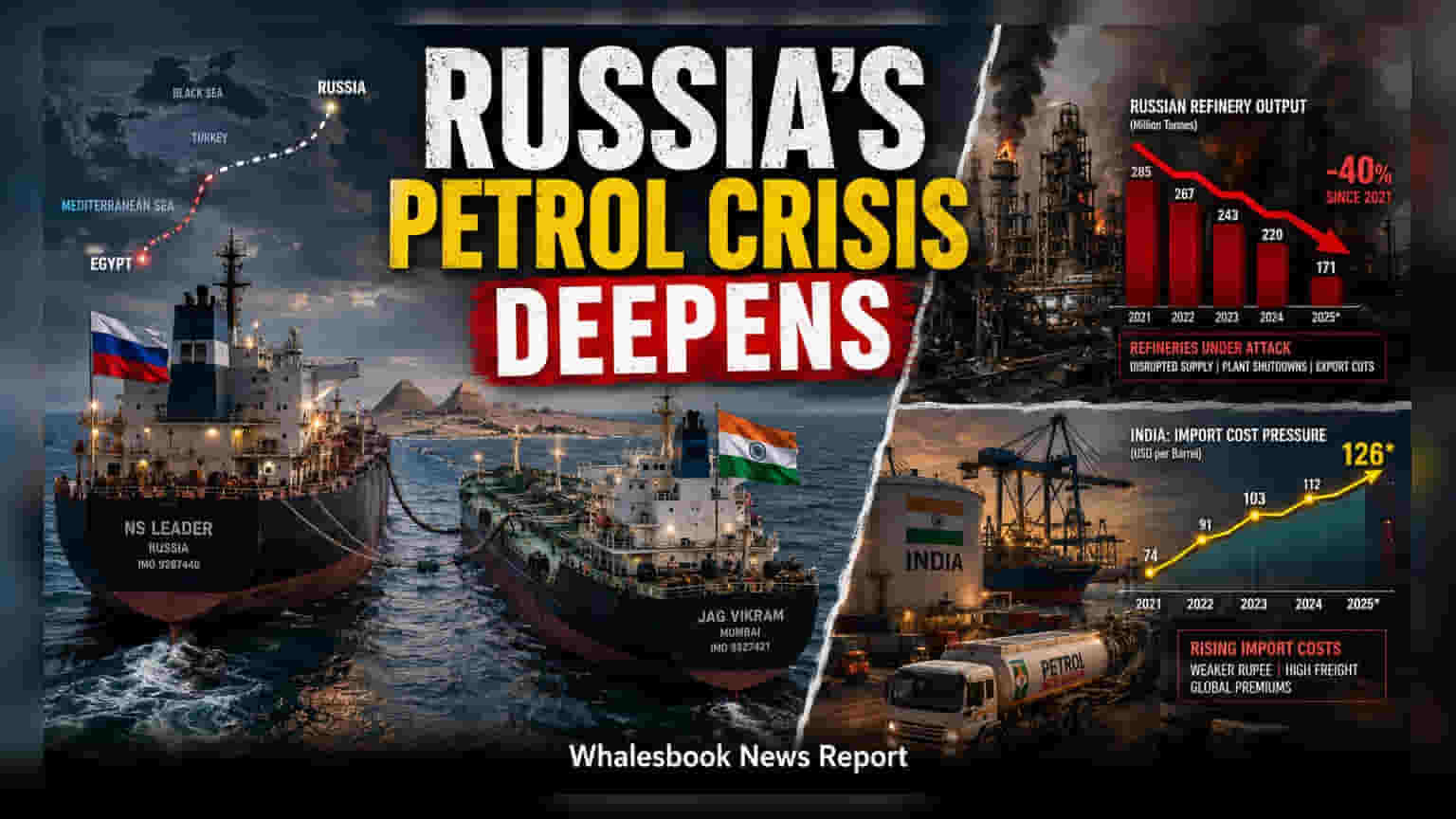
Russia has started importing petrol from India for the first time, driven by fuel shortages from persistent Ukrainian drone attacks on its refineries. Nayara Energy is the key supplier for these shipments, which require complex logistical routes and government subsidies to remain viable.
Russia has officially started importing petrol from India, a historical shift for a country that has traditionally been a major global energy exporter. The first shipment arrived on August 5, 2026, marking a new chapter in global fuel trade flows as Russia seeks to stabilize its domestic energy supply.
This move comes as Russia faces a severe fuel shortage caused by sustained Ukrainian drone attacks on its domestic oil refineries. These strikes have forced a reduction in refinery operations, leaving the country with a need to source fuel from external markets. To manage the high costs of this unexpected trade, the Russian government has reportedly introduced a subsidy tied directly to Indian petrol prices.
Role of Nayara Energy and Complex Logistics
Nayara Energy Ltd., which is 49.13% owned by Russia’s state-controlled Rosneft PJSC, has been identified as the key supplier for these cargoes. Because of existing international trade restrictions, the transportation process is complex. The fuel is moved using a fleet of tankers that often conduct ship-to-ship transfers off the coast of Egypt before reaching their final destination in Russia.
This route is designed to maintain trade continuity under the current global regulatory environment. While Russia typically exports oil and fuel, the current deficit in domestic refining capacity—which has fallen significantly below seasonal norms—has inverted these traditional trade routes.
Risks and Market Implications
The viability of this supply chain faces several challenges. Continued drone strikes on energy infrastructure remain a primary risk, as any further disruption to refining capacity could deepen the shortage and increase the reliance on expensive imports. Additionally, the reliance on dark-fleet tankers and third-party logistics adds significant operational costs to every shipment.
Market observers are tracking how long this reliance on Indian imports will last and whether the Russian government’s subsidy mechanism can effectively stabilize retail fuel prices despite the high cost of logistics. Any increase in global trade scrutiny or further tightening of international sanctions could create additional hurdles for these logistical operations. For the Indian energy sector, this represents a unique, albeit complex, export opportunity that depends on the ongoing balance of global trade compliance and logistical efficiency.