

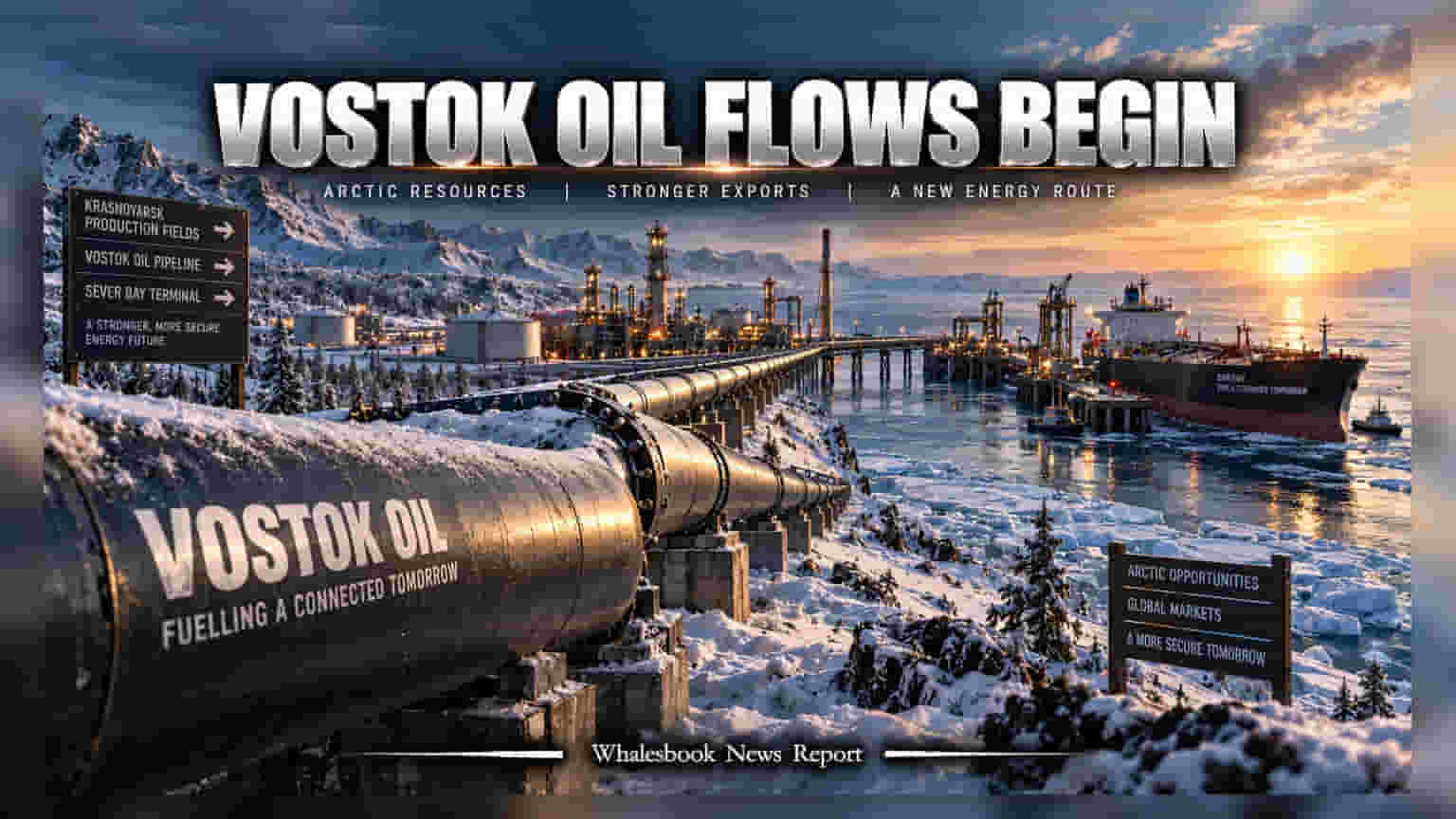
Rosneft has commenced oil transport through its major Vostok Oil pipeline, connecting Siberian production fields to the Sever Bay terminal. The infrastructure aims to support a 30-million-tonne annual export capacity via the Northern Sea Route. This move marks a significant operational step for the energy company, though it faces ongoing challenges regarding sanctions and Arctic logistics.
Rosneft has officially activated the primary pipeline for its Vostok Oil project, marking the start of crude oil movement from production fields in the Krasnoyarsk region to the Sever Bay terminal. This development represents a long-term strategic initiative for the company to increase its export capacity through the Northern Sea Route, a passage aimed at redirecting energy flows toward new markets.
The Vostok Oil project is a significant capital investment for Rosneft, designed with an initial phase capacity of 30 million tonnes of oil annually. The pipeline infrastructure connects remote Arctic fields to the coast, enabling the use of large-scale tanker shipments. By establishing this link, the company is attempting to secure a consistent supply chain for its Arctic assets, which have been a priority for its operational expansion.
Financial and operational context for the company remains a key factor for investors to consider. In its financial results for the first half of 2026, Rosneft reported an EBITDA of RUB 1,296 billion and a net income of RUB 200 billion. The Vostok Oil project is a major component of the company's capital spending, and its successful operation is intended to influence future production output. However, the project involves complex engineering, including building and maintaining infrastructure across challenging Arctic terrain, such as areas prone to permafrost instability.
Investors should also note the broader environment affecting this project. The company faces ongoing operational hurdles, including the need to maintain reliable tanker shipments in harsh weather conditions. Furthermore, international geopolitical pressures and existing sanctions on Russian energy exports create significant regulatory and logistical risks. These factors can influence the company's ability to access international shipping insurance and technical services, which are critical for the efficient operation of remote export terminals.
The future performance of the Vostok Oil project will depend on several variables, including the company's ability to scale throughput volumes at the Sever Bay terminal consistently. Market observers will likely track the actual export volumes achieved in the coming months, as well as the company’s ability to manage the high maintenance costs associated with Arctic infrastructure. Whether the project can sustain stable production and shipping cycles through the winter season will be an important indicator for the company's long-term export capability.