 Whalesbook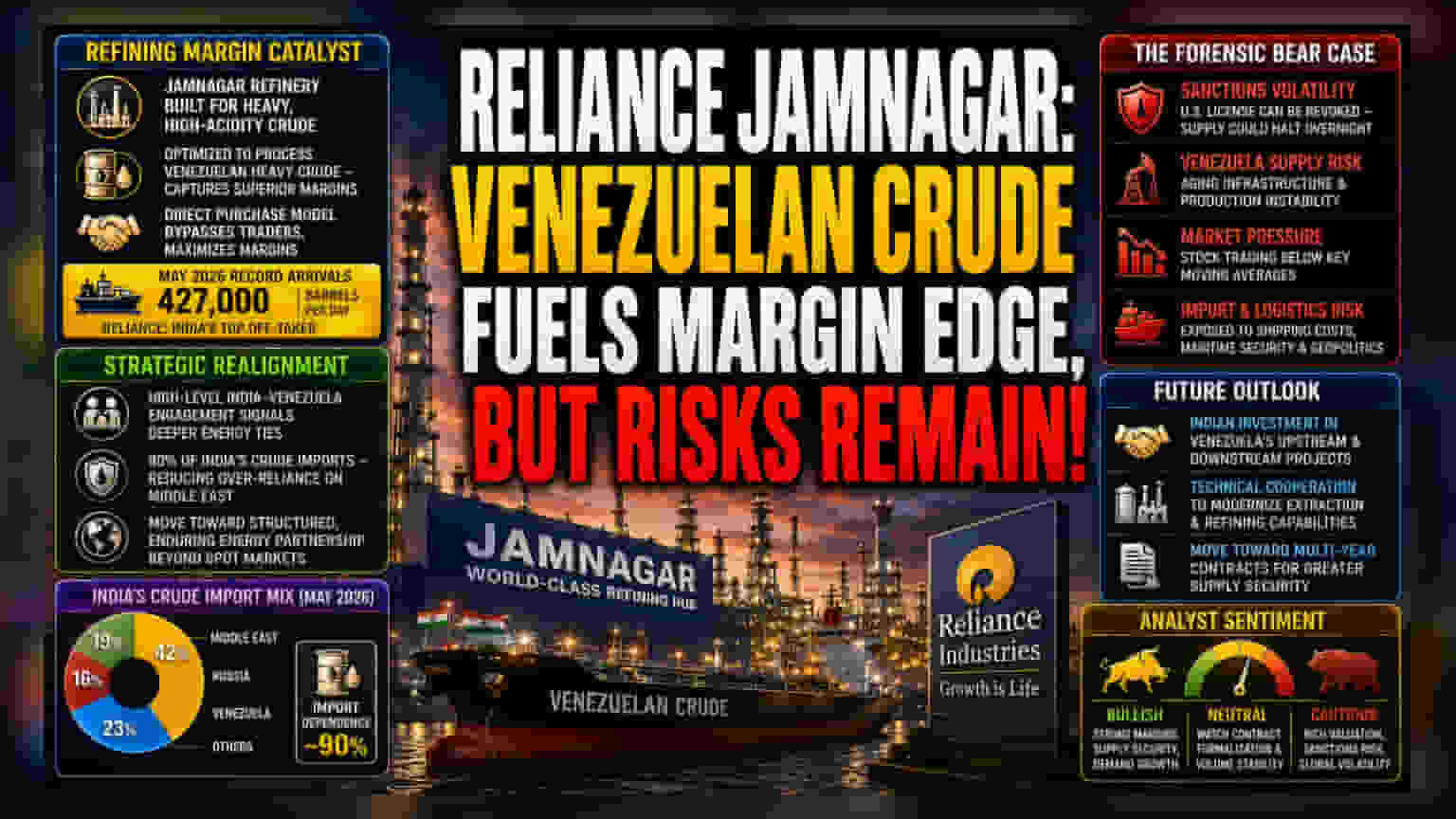


The Refining Margin Catalyst
Reliance Industries' Jamnagar refinery has emerged as the linchpin in India's response to volatile energy supply chains. By utilizing a sophisticated configuration of cracking and hydrocracking units, the facility is uniquely optimized to process heavy, high-acidity Venezuelan crude. This technical flexibility allows Reliance to capture significant cost advantages that simpler refineries cannot access. Since securing a U.S. general license in early 2026, the company has pivoted away from relying solely on traders, opting for a direct-purchase model that bypasses intermediaries and maximizes margin efficiency. In May 2026, Venezuelan crude arrivals reached a record 427,000 barrels per day, with Reliance acting as the primary domestic off-taker, effectively cementing India’s role as the largest global destination for Venezuelan energy exports.
Strategic Realignment Amid Macro Volatility
The recent diplomatic engagement between Indian leadership and Venezuelan officials follows a period of structural instability in energy markets, notably triggered by disruptions along the Strait of Hormuz. With India importing approximately 90% of its crude requirements, the reliance on Middle Eastern transit corridors has become a vulnerability. The current state-level focus on energy complementarity is not merely a diplomatic gesture but a calculated shift toward supply security. While no formal long-term purchasing agreements were signed during the visit, the presence of a high-level ministerial delegation from Caracas underscores a clear intent to move beyond spot-market reliance into a more structured, enduring energy partnership. This mirrors broader efforts by Indian refiners to diversify their feedstock slate, mitigating the risks associated with geopolitical shocks in the Gulf.
The Forensic Bear Case: Geopolitical and Operational Risks
Despite the clear margin benefits, investors should remain cognizant of the underlying risks. The trade remains tethered to the volatility of international sanctions frameworks. Should the current U.S. licensing permissions for direct purchases be rescinded or altered, Reliance’s primary source of discounted heavy crude would face immediate, if not total, obstruction. Furthermore, the operational state of Venezuela’s oil infrastructure has been described by industry observers as inconsistent, raising concerns regarding the reliability of long-term supply volumes. Reliance is also contending with a cautious broader market sentiment; the stock has faced downward pressure, trading below key moving averages in recent sessions. Unlike competitors with more geographically dispersed or domestically sheltered supply chains, Reliance's heavy reliance on imported crude—even when discounted—exposes it to significant logistics and maritime security premiums.
Future Outlook and Market Consensus
The path forward for India-Venezuela energy relations centers on the potential for Indian corporate participation in Venezuela’s upstream and downstream projects. With Venezuela’s oil sector undergoing a fundamental transition, technical cooperation in extraction and refining modernization could serve as the next phase of this partnership. Brokerage and analyst sentiment remains focused on whether Reliance can maintain its margin expansion as Venezuelan supply volumes normalize. Market participants are expected to watch for any formalization of these energy ties into multi-year contracts, which would provide more visibility into future feedstock costs.