 Whalesbook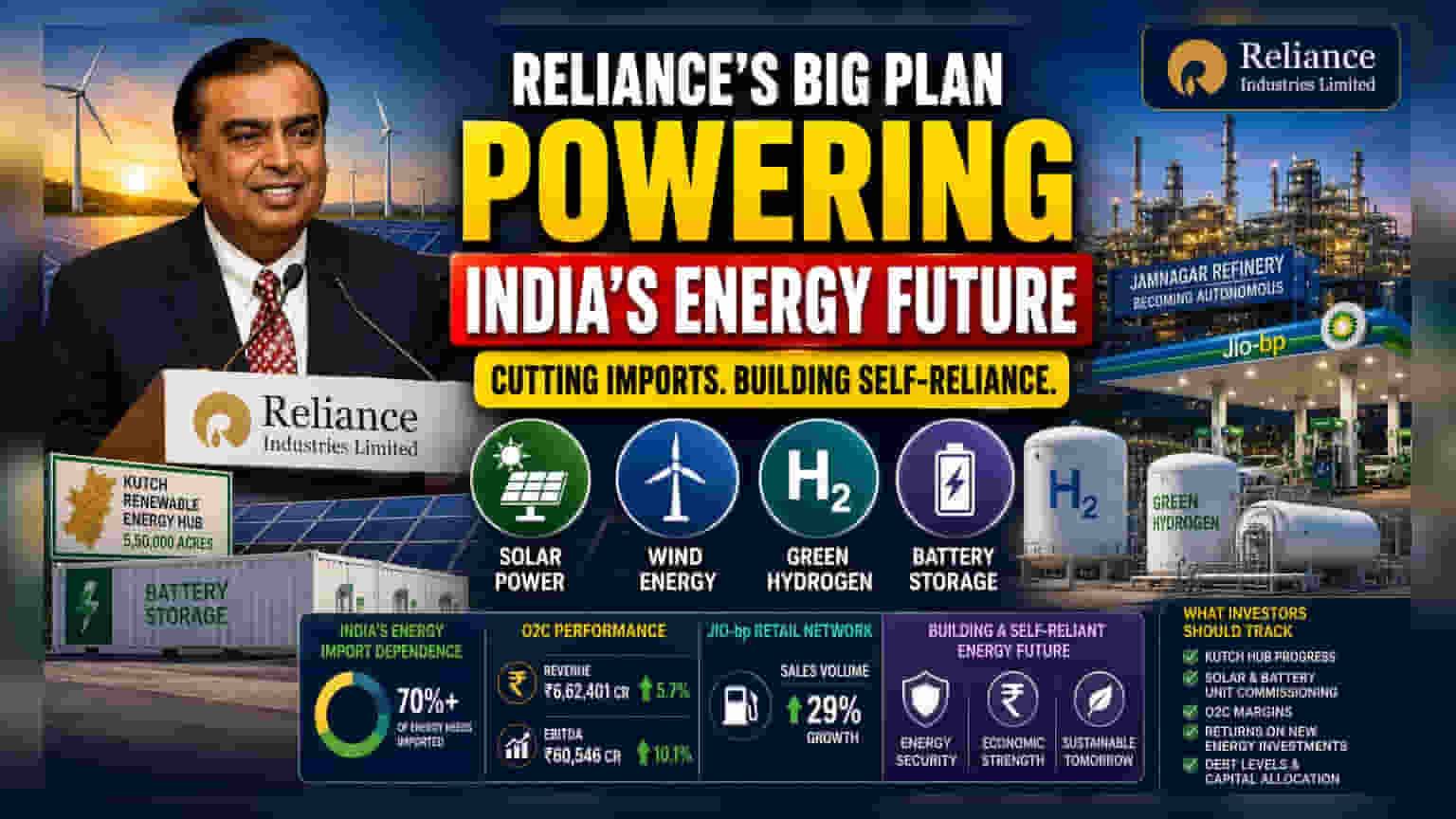
At the 2026 annual general meeting, Reliance Industries unveiled an expansive energy plan aimed at lowering India's reliance on imported energy. By scaling up investments in solar, wind, hydrogen, and batteries, the company is pivoting toward a green energy future. Investors are monitoring how the company balances its cash-generating oil business with massive capital spending on these new long-term energy projects.
What Happened
At the annual general meeting held on June 19, 2026, Reliance Industries Chairman Mukesh Ambani laid out a comprehensive strategy to reduce India's dependence on energy imports. The company announced a major push into domestic renewable energy sources, targeting solar, wind, green hydrogen, and battery storage. This move is designed to address the nation’s high import requirements, which currently cover over 70% of its energy needs. The company also highlighted its operational resilience during recent geopolitical events, noting that its domestic gas assets and increased LPG supplies helped stabilize local supply chains.
The Shift to Green Energy
Reliance is undertaking one of the largest energy transitions in the country. A key focus is the renewable energy hub in Kutch, which spans 5,50,000 acres. This facility is expected to generate a substantial portion of India's electricity requirements. Beyond generation, the company is setting up manufacturing capacities for solar modules and battery storage. This represents a long-term strategic shift to reduce the company's dependency on traditional oil and gas markets by building a vertically integrated green energy business.
Financial Context and Performance
While the company is aggressively expanding into new energy, its traditional Oil-to-Chemicals (O2C) business remains a significant financial contributor. For the fiscal year 2026, the O2C segment reported revenue of ₹6,62,401 crore, marking a 5.7% increase. The segment's EBITDA rose by 10.1% to ₹60,546 crore. Additionally, the company is upgrading its Jamnagar refinery into an autonomous facility, aimed at improving global refining efficiency. The expansion of the Jio-bp fuel retail network also shows a 29% growth in sales volumes, indicating that the company continues to focus on its retail energy footprint alongside its green investments.
How Investors May Read This
Investors are evaluating how the company manages its capital. Large-scale renewable energy projects require heavy upfront spending. The key question for shareholders is how effectively the company can balance the steady cash flow from its existing oil and chemical business to fund these capital-intensive energy projects. While renewable energy is a long-term growth driver, the immediate financial impact will depend on the speed of implementation and the return on capital generated by these new assets.
Risks and Execution Challenges
Investors should consider the risks inherent in such massive infrastructure projects. Building a renewable energy ecosystem involves significant execution challenges, including technology changes, supply chain management, and the ability to maintain profitability as new capacity comes online. There is also the pressure of global competition and the need for consistent policy support. Any delay in project commissioning or cost overruns could affect the company’s financial flexibility. Additionally, the move toward green hydrogen and battery manufacturing involves new technologies where cost-efficiency is still evolving.
What Investors Should Track
Moving forward, shareholders will monitor the progress of the Kutch renewable energy hub and the commissioning timelines for the new solar and battery manufacturing units. It will also be important to watch the profit margins in the O2C segment, as these earnings are crucial for funding the company's energy transition. Management commentary regarding the return on investment for new energy projects and updates on debt levels will provide further clarity on the company’s long-term financial health.