

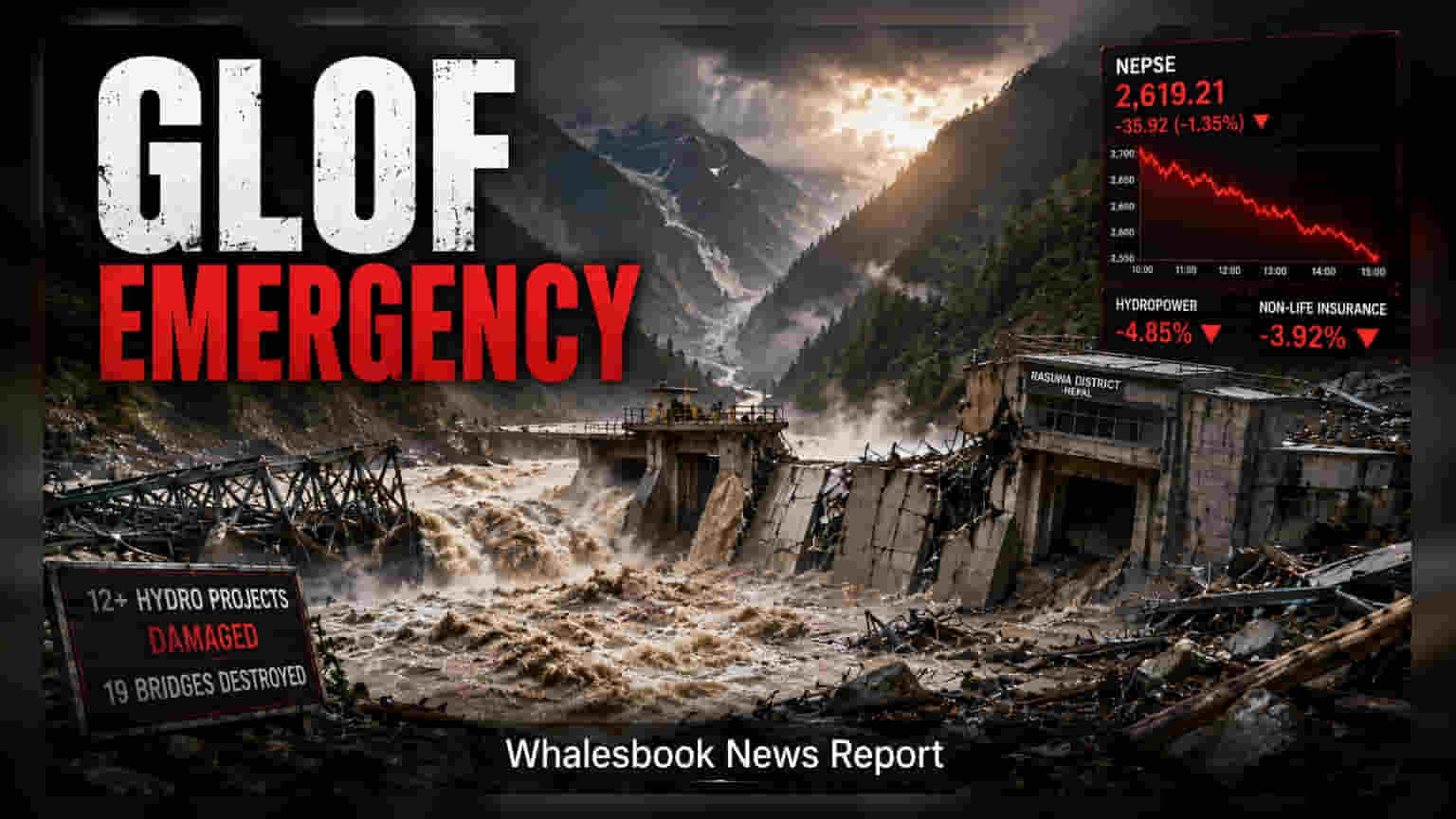
A flash flood in Nepal’s Rasuwa district on August 26, 2026, damaged at least 12 hydropower projects, triggering a sharp sell-off in the regional market. The disaster, likely caused by an ice-rock avalanche, has raised concerns for investors regarding asset risks in mountain-based energy projects and potential claims for non-life insurers.
A devastating flash flood struck Nepal’s Rasuwa district on August 26, 2026, causing significant damage to regional infrastructure and triggering a notable decline in equity markets. The disaster, which experts currently attribute to an ice-rock avalanche in the Lhende Khola rather than typical rainfall, has severely impacted at least 12 hydropower projects and destroyed approximately 19 bridges in the border region.
The market reaction was swift, with the Nepal Stock Exchange (NEPSE) falling by 35.92 points on the day of the event. The most significant impact was felt by the hydropower and non-life insurance sectors, as investors weighed the potential for long-term revenue loss and insurance liabilities. Specific stocks, including Rasuwagadhi Hydropower and Mailung Khola Hydropower, faced heavy selling pressure, with several shares hitting the 15% lower circuit limit.
For investors, the event highlights the specific risks associated with energy projects located in the Hindu Kush Himalaya region. These assets are increasingly vulnerable to climate-driven geological hazards, such as Glacial Lake Outburst Floods (GLOFs) and high-altitude avalanches. Unlike standard operational risks, these geological threats can cause sudden and total damage to physical infrastructure, leading to prolonged project shutdowns and revenue disruption.
The insurance sector also faces a direct challenge from this event. Non-life insurance companies operating in the region are now preparing for a surge in claims related to property, infrastructure, and business interruption damages. Investors often monitor how such catastrophic events impact the profitability and solvency ratios of insurance firms, especially when multiple assets are damaged in a single geological incident.
This disaster follows a pattern of high-impact events in the Himalayan region, including past incidents in the Rishi Ganga and Teesta river basins, which also resulted in significant infrastructure damage. These recurring events are forcing engineers, government planners, and investors to reassess the risk premiums and safety buffers required for mountain-based power projects. The physical safety of these dams and plants, and their ability to withstand sudden geological shifts, has become a key concern for long-term project viability.
Moving forward, the primary monitorables for investors will be the status of the damaged power plants and the total estimated value of insurance claims. Market participants will also watch for any official reports on the stability of upstream areas, as authorities have warned of potential secondary floods due to remaining blockages. Management commentary regarding repair timelines and the adequacy of insurance coverage for these specific types of disasters will likely be critical in the coming weeks.