 Whalesbook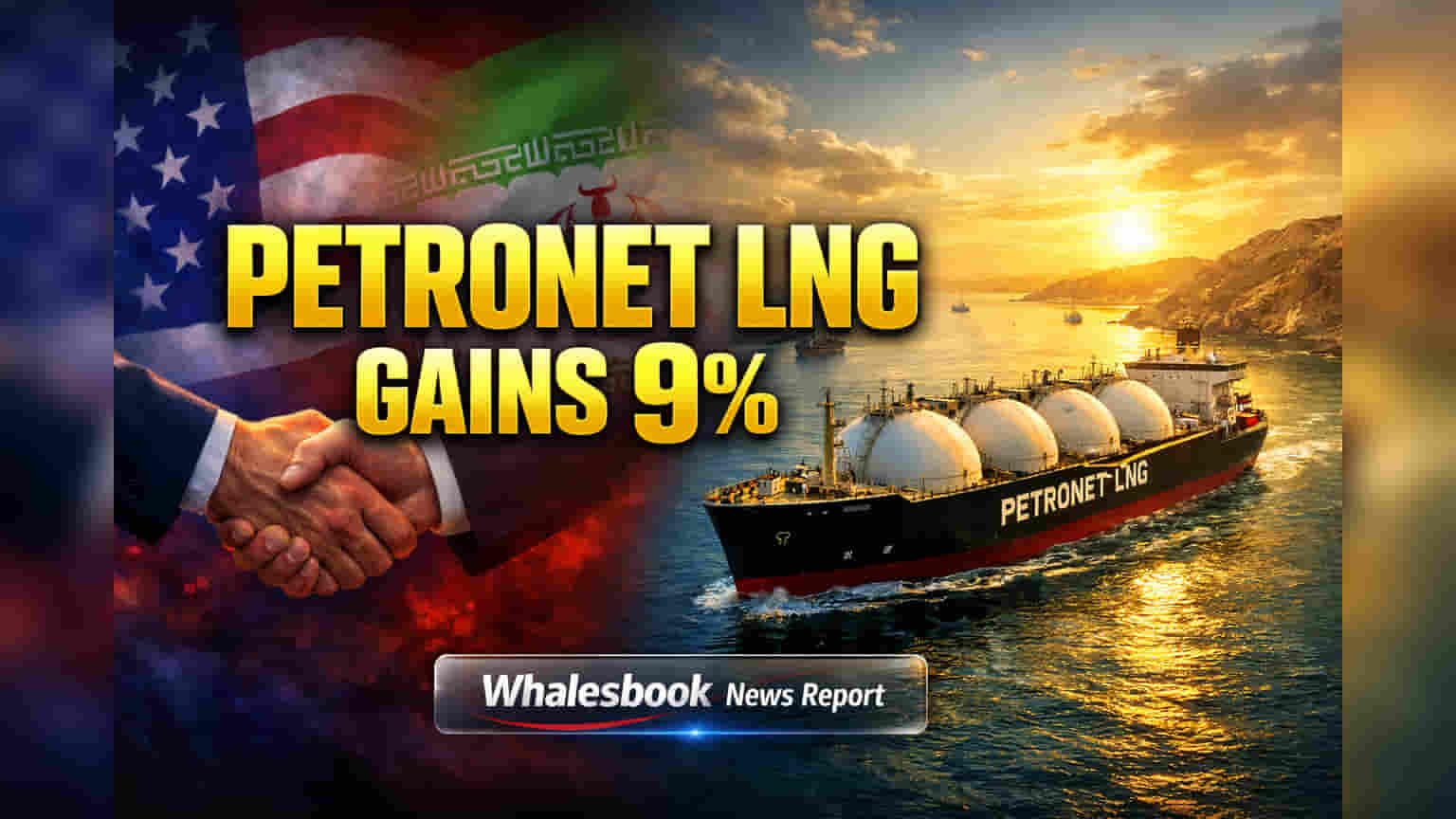


Geopolitical Risk and Petronet's Stock
The stock price of Petronet LNG is closely tied to the safety of major energy shipping routes like the Strait of Hormuz. The recent US-Iran ceasefire agreement significantly lowered the perceived risk for energy transport. This development is expected to lead to better long-term operating costs for the company and improve its comparative valuation against other energy firms.
Stock Surge Driven by Hormuz Ceasefire
On April 8, 2026, Petronet LNG's shares climbed as much as 9.13% to ₹278.39, before closing the day at ₹269.15, a 5.52% gain. This surge occurred alongside a 3.19% rise in the benchmark NSE Nifty50 index. The primary catalyst was the announcement of a US-Iran ceasefire that allows safe passage through the vital Strait of Hormuz. This news helps reduce the extra cost investors typically add due to shipping risks in the region. The stock has now recovered 18.28% from its March 23, 2026, low of ₹235.35.
Analysis: Impact on Petronet and Peers
Petronet LNG plays a crucial role in India's liquefied natural gas (LNG) supply chain. Reduced tensions in West Asia can lower shipping and insurance costs for LNG imports into India. Competitors involved in energy infrastructure and distribution, such as GAIL (India) Ltd and Indian Oil Corporation Ltd, may also see indirect benefits from a more stable energy import environment. Petronet's Price-to-Earnings (P/E) ratio stands at 18.50 with a market capitalization of $8.5 billion. In comparison, GAIL has a P/E of 14.20 and a market cap of $6 billion, suggesting Petronet may trade at a higher valuation. Analysts generally view Petronet positively due to its essential role in India's energy security and its established infrastructure. Past regional tensions, like those in late 2025, led to temporary stock dips for similar companies, but they typically recovered. While the overall market is up, Petronet's specific jump highlights the direct effect of the Hormuz news. Stable Brent crude oil prices are also anticipated, which could lower energy cost fluctuations for buyers and indirectly support LNG demand.
Potential Risks Remain
Despite the positive market reaction, significant risks persist. The current US-Iran agreement is a two-week ceasefire, meaning any renewal of conflict could quickly reverse these gains and reintroduce considerable market volatility. Petronet LNG remains exposed to disruptions if diplomatic efforts falter or if retaliatory actions occur. Furthermore, the company's reliance on imported LNG means it can still be affected by global price swings, even if shipping lanes are secure. India's long-term natural gas demand, while growing, faces competition from renewable energy sources. Changes in regulations or government energy policy could also be challenges.
Looking Ahead
Petronet LNG's short-term outlook appears positive, supported by lower geopolitical tensions in West Asia. Safer passage through the Strait of Hormuz is expected to lead to steadier operating costs and possibly increased business volumes. While the company has not released specific future targets, analysts generally rate the stock as neutral to positive, anticipating continued demand for LNG as India aims to use a wider mix of energy sources. Observers will watch if the ceasefire holds and how it impacts global energy prices and shipping. These factors will shape Petronet LNG's performance in the coming months.