

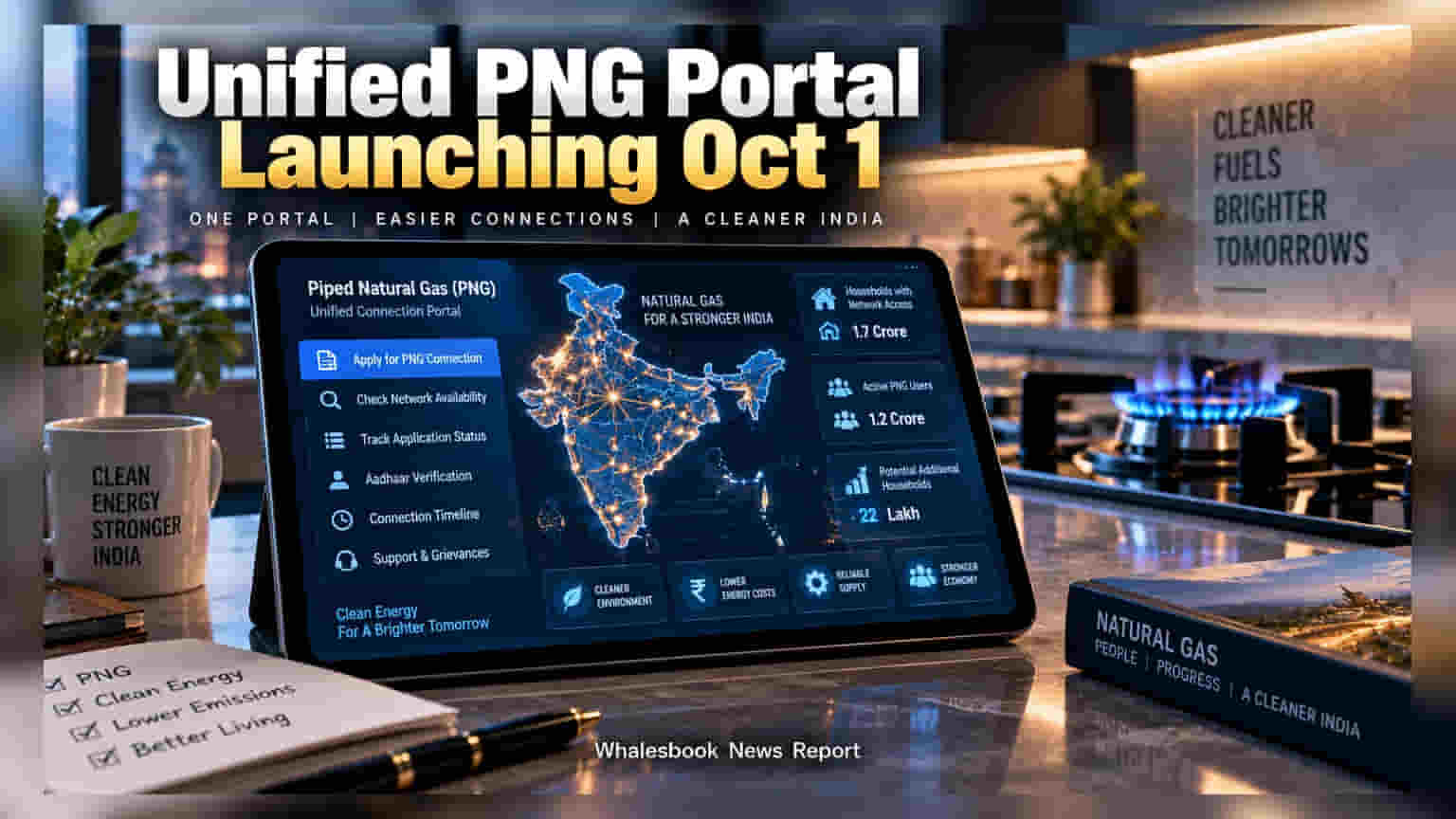
The Petroleum and Natural Gas Regulatory Board will launch a unified portal on October 1 to simplify piped natural gas (PNG) applications. This initiative is designed to increase connection speeds and improve infrastructure utilization. Listed city gas distribution (CGD) companies may benefit if the portal effectively converts the gap between potential and active users.
The Petroleum and Natural Gas Regulatory Board (PNGRB) will launch a centralized, unified portal on October 1, 2026, aimed at simplifying how households and businesses apply for piped natural gas (PNG) connections. Currently, consumers often face a fragmented experience, having to navigate separate websites for different city gas distribution (CGD) companies. This new digital platform intends to streamline the onboarding process and improve the overall efficiency of the sector.
Impact on City Gas Distribution Companies
For major listed city gas distribution entities such as Indraprastha Gas (IGL), Mahanagar Gas (MGL), Gujarat Gas, and Adani Total Gas, the speed and ease of new customer acquisitions are critical to revenue growth. The current market shows a gap between potential and active usage. While infrastructure exists to reach approximately 1.7 crore households, active usage is limited to 1.2 crore. By standardizing the application process and setting strict timelines for connection activation, the regulator aims to bridge this gap. If successful, this could help CGD companies increase their volume by converting the estimated 22 lakh households that have pipeline access but are not yet using the service.
Accountability and Subsidy Rationalization
The portal is expected to function as an oversight mechanism. It will automatically check for network availability when a user applies, and the regulator will monitor the time taken by CGD companies to activate connections. This is a significant shift from the current process, where bureaucratic delays often hinder the pace of infrastructure utilization. Furthermore, the portal will make Aadhaar linkage mandatory for all new applications. This integration is designed to enforce the existing government rule that households with PNG connections are not eligible for domestic LPG subsidies. By ensuring that customers do not use both subsidized LPG and PNG simultaneously, the regulator aims to direct resources more efficiently.
Sector Context and Risks
While the simplified portal is a positive step for demand, the sector faces several structural risks. CGD companies are sensitive to the price of input natural gas, which can fluctuate based on global trends and government-allocated pricing. When input costs rise, these companies may face pressure on profit margins, as they must balance the need to pass costs to consumers while remaining competitive against LPG and other fuels. Additionally, the high capital spending required to lay pipeline infrastructure remains a core part of the business model. Investors should track whether the new portal leads to a meaningful increase in conversion rates, as this will determine the actual impact on the profitability of CGD players. The next critical monitorable will be the rate of new connection approvals and the reduction in the time lag between application and service activation post-October 1.