 Whalesbook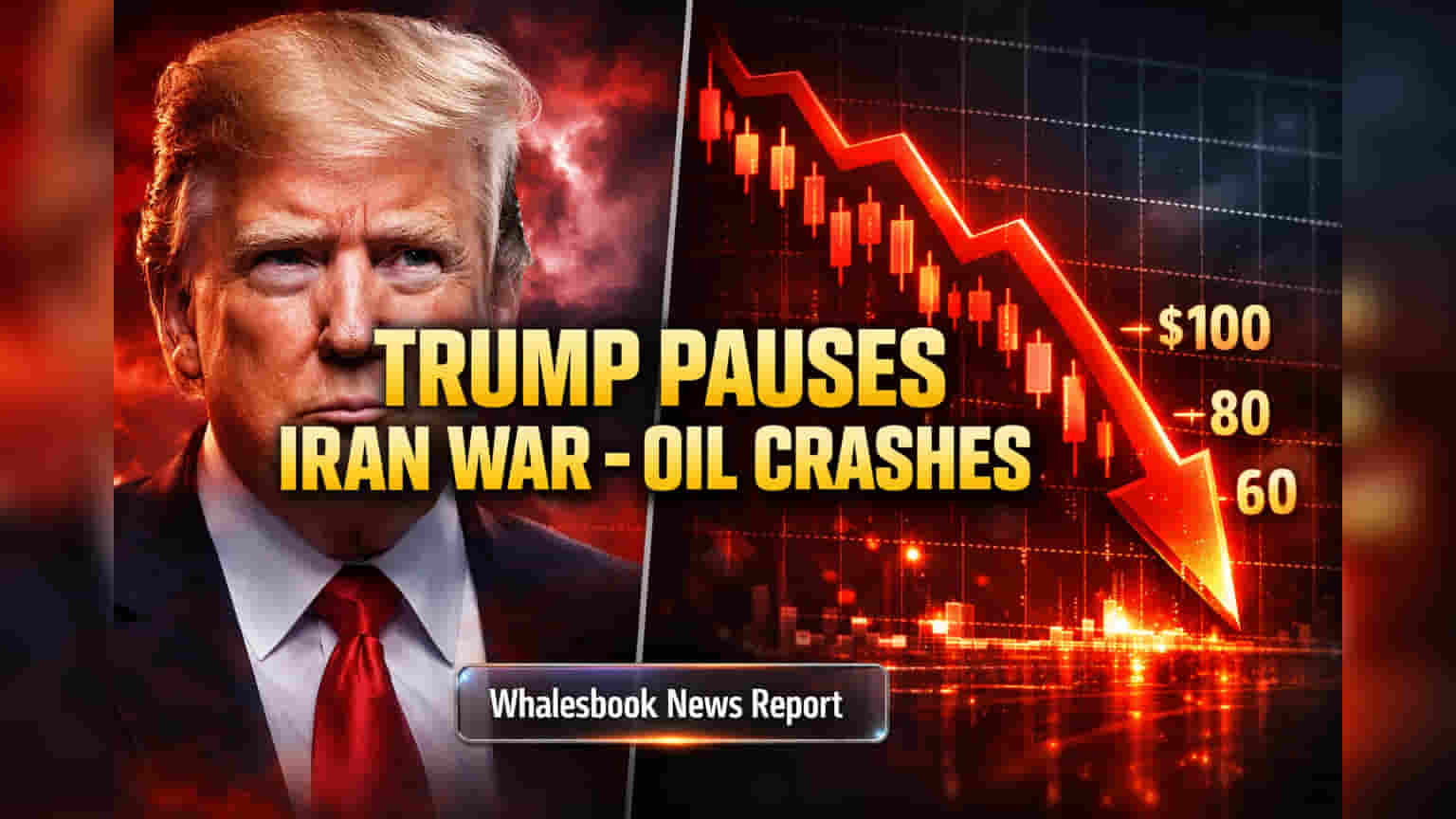


Geopolitical Pause Triggers Oil Price Collapse
Geopolitical tensions surrounding Iran had recently pushed crude oil prices to multi-month highs, with WTI reaching $112.41 and Brent nearing $109.77 per barrel by April 7, 2026. This surge was driven by fears over the Strait of Hormuz, a vital route for global oil supply, and earlier reports of US actions against Iranian energy infrastructure. However, an announcement of a two-week pause in US military operations against Iran, conditional on the Strait's immediate reopening, triggered an immediate and severe market correction. By April 8, 2026, Brent crude had fallen to $94.79, a 13.25% drop, while WTI plunged to $96.17, down 14.45%. This sharp reversal shows how sensitive markets are to geopolitical headlines, suggesting investors quickly adjusted their expectations, preferring a calmer geopolitical outlook over the possibility of continued conflict.
Indian Refiners Gain, Producers Lose on Price Drop
The dramatic price swings have different implications for India's major state-owned oil companies. Downstream refiners are set to benefit as lower crude acquisition costs boost their refining margins and profitability. For every $1 per barrel drop in crude, refiners like HPCL, BPCL, and IOCL could see their EBITDA improve by ₹200 crore to ₹300 crore. This is reflected in their valuations, with IOCL trading at a P/E of approximately 5.53, HPCL around 4.53, and BPCL near 5.54. These low P/E ratios position them as value stocks, potentially benefiting from margin expansion. Conversely, upstream exploration and production companies, notably ONGC, face lower revenues. Each $1 per barrel decrease in crude prices can reduce ONGC's annual revenue by ₹300 crore to ₹400 crore. ONGC's financial metrics show a P/E ratio of approximately 9.53 and a market capitalization of around ₹3.61 trillion as of early April 2026. While its P/E is higher than the refiners, it remains within the value territory. The company's stock, however, has shown resilience, outperforming the broader market year-to-date in 2026.
Risks Remain as Geopolitical Situation Stays Tense
The immediate relief in oil prices may prove temporary. The fundamental geopolitical situation is still tense, with the pause in hostilities being short-term and the condition for its continuation – the reopening of the Strait of Hormuz – depending on ongoing diplomacy. A relapse into conflict or further disruptions would likely reignite price volatility. Analysts had also expressed concerns in March 2026, with UBS downgrading IOCL, HPCL, and BPCL due to surging crude prices and geopolitical tensions, highlighting these risks. Beyond immediate price shocks, the Indian energy sector faces structural challenges. The global energy transition is accelerating, with renewable assets offering better profitability and lower variable costs than thermal power. Seven of India's eight largest power generators reported negative free cash flow in 2025 due to massive, debt-financed investment programs. This reliance on debt, coupled with an underdeveloped domestic bond market, creates financial vulnerabilities. For oil PSUs like ONGC, the long-term viability of offshore assets and starting new projects, such as the Daman Upside shallow water project, are critical, but may face funding scrutiny in this expensive transition. Recent operational issues, like a fire incident at ONGC's SHP Platform in Mumbai High on April 3, 2026, while quickly contained, also highlight inherent operational risks.
Future Outlook: Balancing Market Swings and Energy Transition
As of early April 2026, IOCL's stock price hovered around ₹134.13, reflecting a one-year return of -22% amidst sector pressures, though analysts largely maintain 'Buy' ratings. HPCL and BPCL have also seen recent trading window closures ahead of their FY26 results, a standard practice to prevent insider trading around financial disclosures. The market's reaction to the US-Iran developments highlights how speculative oil price movements are, influenced more by immediate geopolitical headlines than by lasting changes in supply and demand. Investors will need to monitor both the fragile diplomatic situation and the companies' long-term strategies for navigating the energy transition, managing debt, and adapting their asset portfolios. The current environment demands a focus on operational efficiency and strategic resource allocation, rather than solely on short-term commodity price fluctuations.