

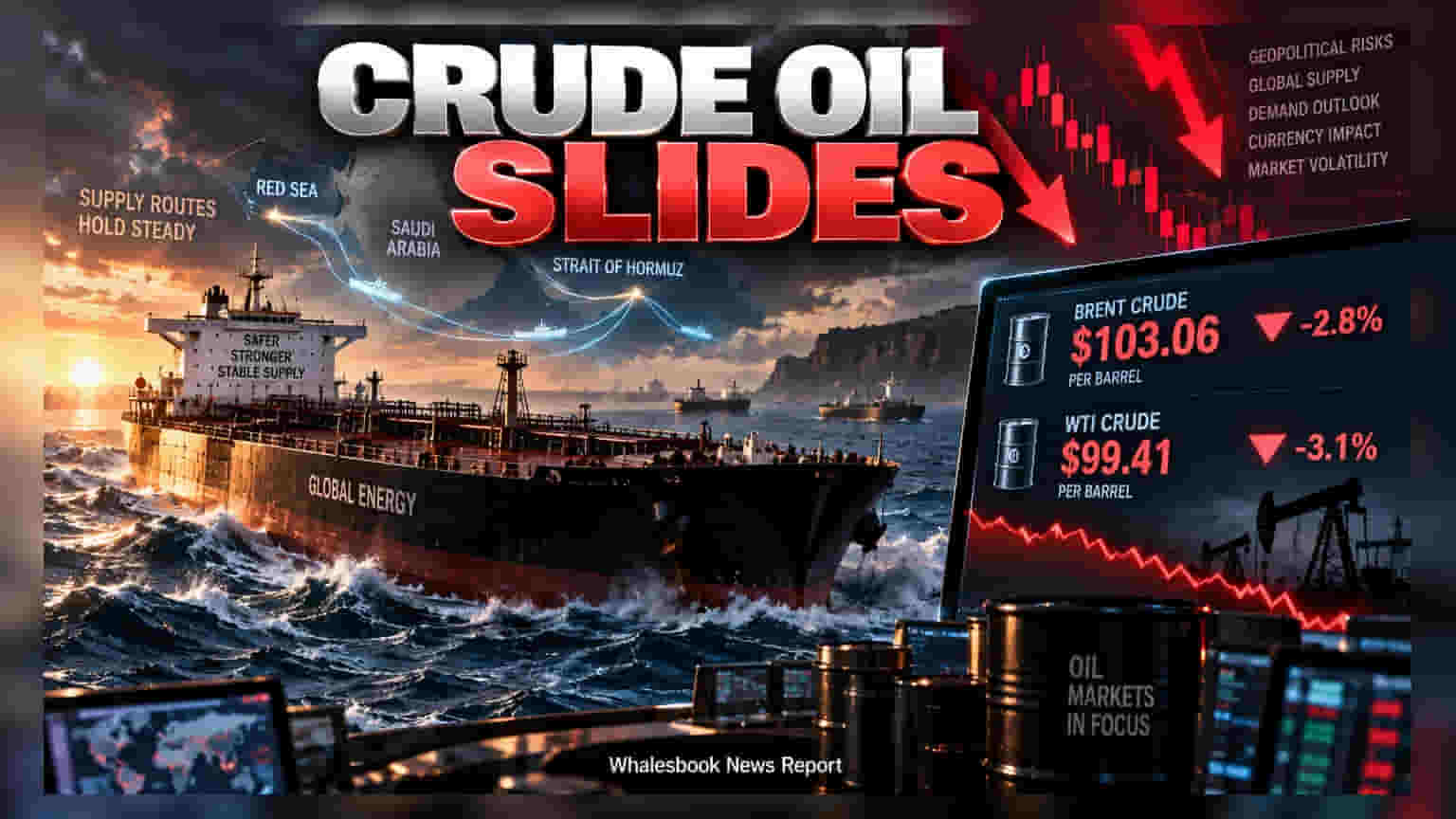
Brent crude prices fell to $103.06 per barrel as Saudi Arabia successfully rerouted oil exports despite security threats. For Indian investors, stable energy prices are crucial as they influence inflation and the margins of oil marketing companies. While supply chains have proven resilient for now, market focus remains on regional geopolitical stability and its impact on the Indian Rupee.
Global crude oil prices moved lower in early trade on Monday, as markets reacted to the resilience of Saudi Arabian export routes. Brent crude futures were trading at $103.06 per barrel, while the US West Texas Intermediate (WTI) benchmark stood at $99.41 per barrel. This dip suggests that traders are prioritizing the stability of global supply chains over the recent regional security concerns near Saudi energy infrastructure.
The recovery in export logistics has been a major factor in calming supply fears. Despite reports of drone strikes on facilities in Yanbu and Riyadh, Saudi Aramco has effectively shifted its export operations through the Strait of Hormuz. Data indicates that export volumes have rebounded to over 4 million barrels per day in September, significantly higher than the 2.4 million barrels recorded in August. This ability to pivot transit routes has helped maintain the flow of oil, preventing a sustained price surge that many had initially expected.
Impact on the Indian Economy
For Indian investors, fluctuations in crude oil prices have a direct and significant effect on the domestic market. India imports a large majority of its crude oil requirements, making the economy sensitive to global price movements. When oil prices rise, it typically puts pressure on the Indian Rupee and increases the cost of imports, which can fuel inflation. For oil marketing companies such as Indian Oil Corporation, Bharat Petroleum, and Hindustan Petroleum, high crude prices often lead to margin pressure if they are unable to pass on the full cost increase to consumers. Consequently, a moderation in crude prices is often viewed as a positive development for these sectors and for broader market sentiment.
Geopolitical Developments and Future Monitorables
While the immediate supply concerns have subsided, the geopolitical environment remains complex. Diplomatic discussions, including potential talks between US and Iranian leadership at the United Nations, are being closely watched for signs of policy shifts. Reports that international pressure is being applied to influence operations in the region add another layer of uncertainty. The primary monitorable for investors going forward remains the stability of key transit hubs like the Red Sea and the Persian Gulf. Any disruption to these critical maritime corridors could quickly reverse current trends, regardless of production capacity. Investors should continue to monitor oil price trends alongside comments from international energy bodies and the potential impact of diplomatic efforts on regional security.