

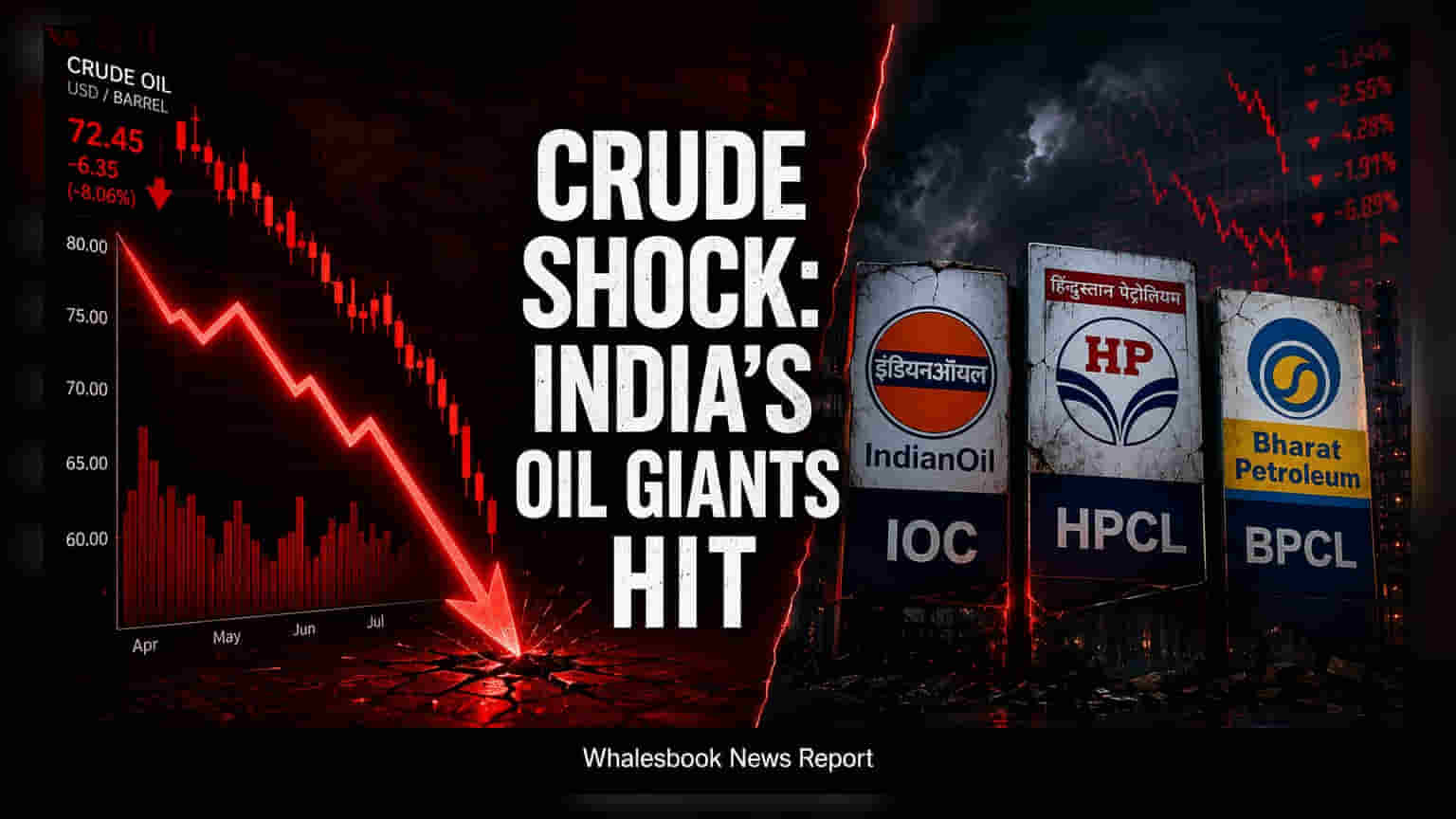
Brent crude reaching $86 per barrel threatens the profit margins of Indian Oil, BPCL, and HPCL. As retail fuel prices remain unchanged, these state-run refiners face a potential combined EBITDA impact of ₹77,000 crore for every $10 rise in crude costs.
A sharp rise in global crude oil prices has brought renewed pressure on India’s public sector oil marketing companies (OMCs). With Brent crude trading near $86 per barrel, concerns are mounting over the profitability of Bharat Petroleum Corporation Limited (BPCL), Hindustan Petroleum Corporation Limited (HPCL), and Indian Oil Corporation (IOC). These companies typically absorb fluctuations in international oil prices to maintain stable retail fuel costs for consumers in India.
Financial Pressure on OMCs
Market analysis from Nomura indicates that for every $10 per barrel increase in crude oil costs, the combined earnings before interest, tax, depreciation, and amortization (EBITDA) of these three OMCs could face a reduction of approximately ₹77,000 crore. This financial strain occurs because the companies cannot immediately pass on increased import costs to retail customers at petrol pumps. The stock performance of these refiners has already reflected these concerns, with shares of HPCL, BPCL, and IOC recording significant declines so far this year.
Geopolitical Impact on Supply Routes
The recent price volatility is linked to heightened geopolitical tensions in West Asia. Reports concerning the Strait of Hormuz and challenges at the Bab al-Mandab strait have created uncertainty regarding global supply routes. Since India relies heavily on imports for its crude requirements, disruptions at these key points pose a direct risk to the steady flow of energy supplies. About half of India's Russian crude oil imports and a large share of supplies from Saudi Arabia transit through these channels, making the domestic energy sector particularly sensitive to these regional developments.
Sector-Wide Challenges
Beyond the state-run refiners, city gas distribution (CGD) companies are also facing a difficult environment. These firms are dealing with the dual burden of higher base prices for imported Liquefied Natural Gas (LNG) and increased shipping costs. As these costs rise, CGD operators may find it challenging to maintain their margins without adjusting the prices charged to industrial and retail gas consumers.
In contrast to the margin pressure faced by OMCs, large integrated energy players like Reliance Industries may be better positioned to navigate these changes due to their refining business model. Investors should continue to monitor oil price trends, the stability of supply routes, and any government policy updates regarding fuel pricing. The upcoming quarterly results for the oil marketing companies will provide the next clear indicator of how these price spikes are impacting their actual cash flows and profit margins.