 Whalesbook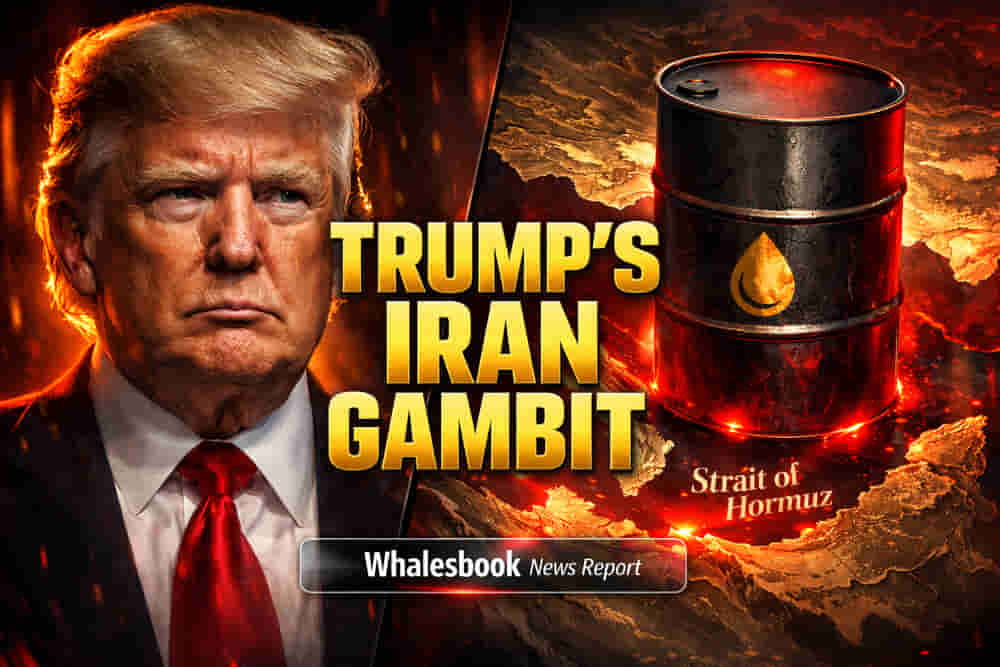


The Geopolitical Tightrope
Oil markets are currently held in a delicate balance, caught between the diplomatic overtures of the United States and Iran and the ever-present shadow of conflict. As a new round of nuclear talks commences in Geneva this week, traders are attempting to price in the probability of a deal versus the potential for heightened tensions. President Trump's rhetoric signals a preference for an agreement but is coupled with stern warnings of severe consequences should negotiations falter. This diplomatic chess match has injected a significant risk premium into crude benchmarks, currently overriding widespread forecasts of a substantial global supply glut projected for 2026. West Texas Intermediate futures have steadied around $66.30 per barrel, with Brent crude hovering near $71.75, reflecting a market acutely sensitive to every diplomatic signal and military posturing in the Middle East.
Shipping Costs Soar Amidst Hormuz Anxiety
While oil prices themselves reflect this geopolitical calculus, the cost of transporting the commodity has reached stratospheric levels. The Strait of Hormuz, a critical chokepoint through which approximately 20% of the world's oil supply transits, remains the focal point of market anxiety. Recent geopolitical escalations and the looming threat of disruption have driven daily charter rates for Very Large Crude Carriers (VLCCs) to exceed $92,000, reaching levels not seen since 1988. This surge in freight costs indicates that market participants are factoring in a significant probability of supply chain interruptions, irrespective of the current balance between global production and demand. The historical precedent of temporary Strait closures causing sharp price spikes, such as a 20% jump in Brent in 2019, underscores the market's sensitivity to this particular risk.
The Bear Case: Discounting the Glut and Overestimating Diplomatic Efficacy
Despite the elevated geopolitical risk premium, a persistent forecast of a global oil supply glut in 2026 looms large. Projections from the International Energy Agency (IEA) suggest a surplus potentially reaching 4 million to 4.5 million barrels per day, driven by robust production growth from non-OPEC+ nations and a more modest demand outlook. Analysts at J.P. Morgan have revised their Brent price forecast downwards for 2026 to $58 per barrel, while the EIA anticipates Brent averaging $58 in 2026. This fundamental oversupply picture suggests that current price levels, heavily influenced by speculative geopolitical factors, may not be sustainable long-term. The risk for investors lies in overestimating the likelihood of a swift diplomatic resolution or underestimating the market's eventual reckoning with physical supply-demand realities. Furthermore, recent US economic data showing slower GDP growth could also weigh on future energy demand expectations.
Future Outlook
The trajectory of oil prices in the coming months will likely remain tethered to the success, or failure, of the US-Iran nuclear negotiations. Should a deal materialize, it could ease the geopolitical risk premium, potentially leading to a price correction downwards towards levels more aligned with fundamental supply-demand forecasts. Conversely, any hardening of rhetoric or perceived escalation of military preparations could send prices higher, further increasing shipping costs and inflation expectations. While the market is currently signaling anxiety through elevated tanker rates, the underlying potential for a significant supply surplus in 2026 suggests a volatile, but potentially range-bound, trading environment dependent on geopolitical headlines.