

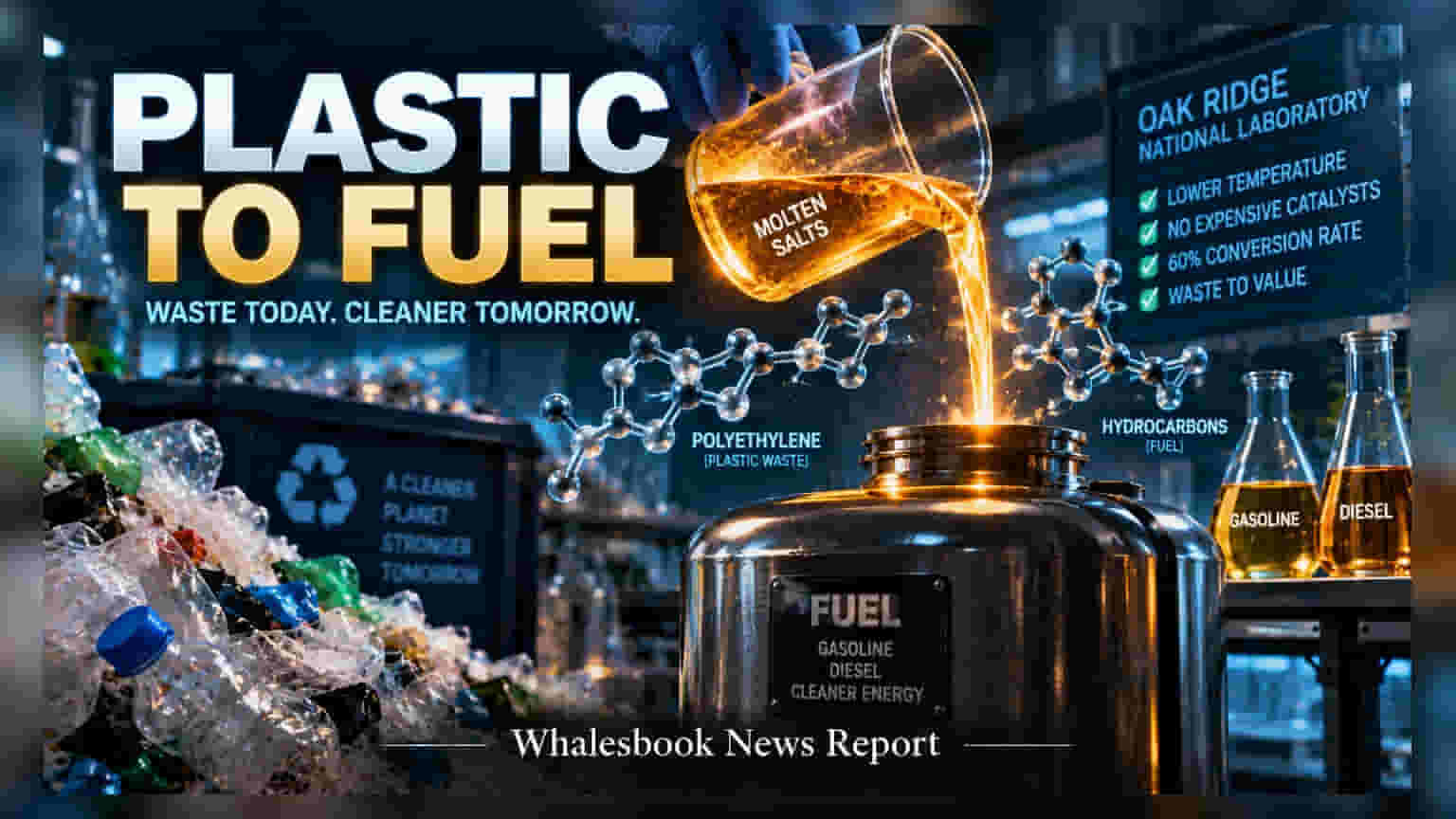
Researchers at Oak Ridge National Laboratory have developed a chemical process to convert polyethylene into gasoline and diesel using molten salts. While the 60% conversion rate at low temperatures is promising, the process currently faces technical hurdles related to moisture sensitivity, meaning industrial-scale viability is yet to be proven.
The development of a new chemical process to convert common plastic waste into gasoline and diesel by researchers at the Department of Energy’s Oak Ridge National Laboratory could mark a shift in how industrial waste is managed. The team successfully converted polyethylene—the polymer used in everyday items like grocery bags and plastic cutting boards—into fuel-grade hydrocarbons using an aluminum-based molten salt process. This approach is designed to simplify the breakdown of polymers by using molten salts that function as both the reaction medium and the catalyst, avoiding the need for traditional energy-intensive methods.
Efficiency Advantages
The primary advantage of this method lies in its operational efficiency compared to existing standards. Traditional plastic-to-fuel technologies typically require extreme heat and expensive noble-metal catalysts to break down the resilient molecular chains of plastics. In contrast, this new approach operates at temperatures below 200 degrees Celsius and does not require external hydrogen or costly additives. By using charged aluminum atoms to attack the molecular structure of the plastic, the researchers achieved a 60% conversion rate, effectively turning waste into smaller, high-value hydrocarbon molecules.
Technical Hurdles and Scaling
Despite the encouraging results, the researchers have identified a significant technical constraint that investors and industry observers should track. The aluminum-based system is hygroscopic, meaning it absorbs moisture from the atmosphere. This tendency threatens the long-term stability of the system, potentially causing the catalyst to degrade during continuous industrial operations. The research team is now working on confinement methods using carbon-based materials to prevent this moisture interference, a step that is essential before the technology can be adapted for large-scale facilities.
Implications for Waste Management
For the broader waste management sector, the economic viability of plastic-to-fuel projects has historically been challenged by high energy consumption and the need for expensive maintenance. While waste-to-energy initiatives are a policy priority in many regions, including India where plastic waste management rules have become increasingly strict, many existing projects struggle to maintain profitability due to the high cost of raw material sorting and the energy required for chemical processing.
If this technology successfully overcomes its current moisture-sensitivity issues, it could theoretically offer a lower-energy alternative for processing plastic waste. However, the transition from laboratory settings to a commercial industrial environment remains a significant gap. Future updates regarding the stability of the catalyst and the ability to operate this process continuously without contamination will be the critical indicators for assessing whether this innovation can move beyond scientific research toward practical, cost-effective industrial application.