 Whalesbook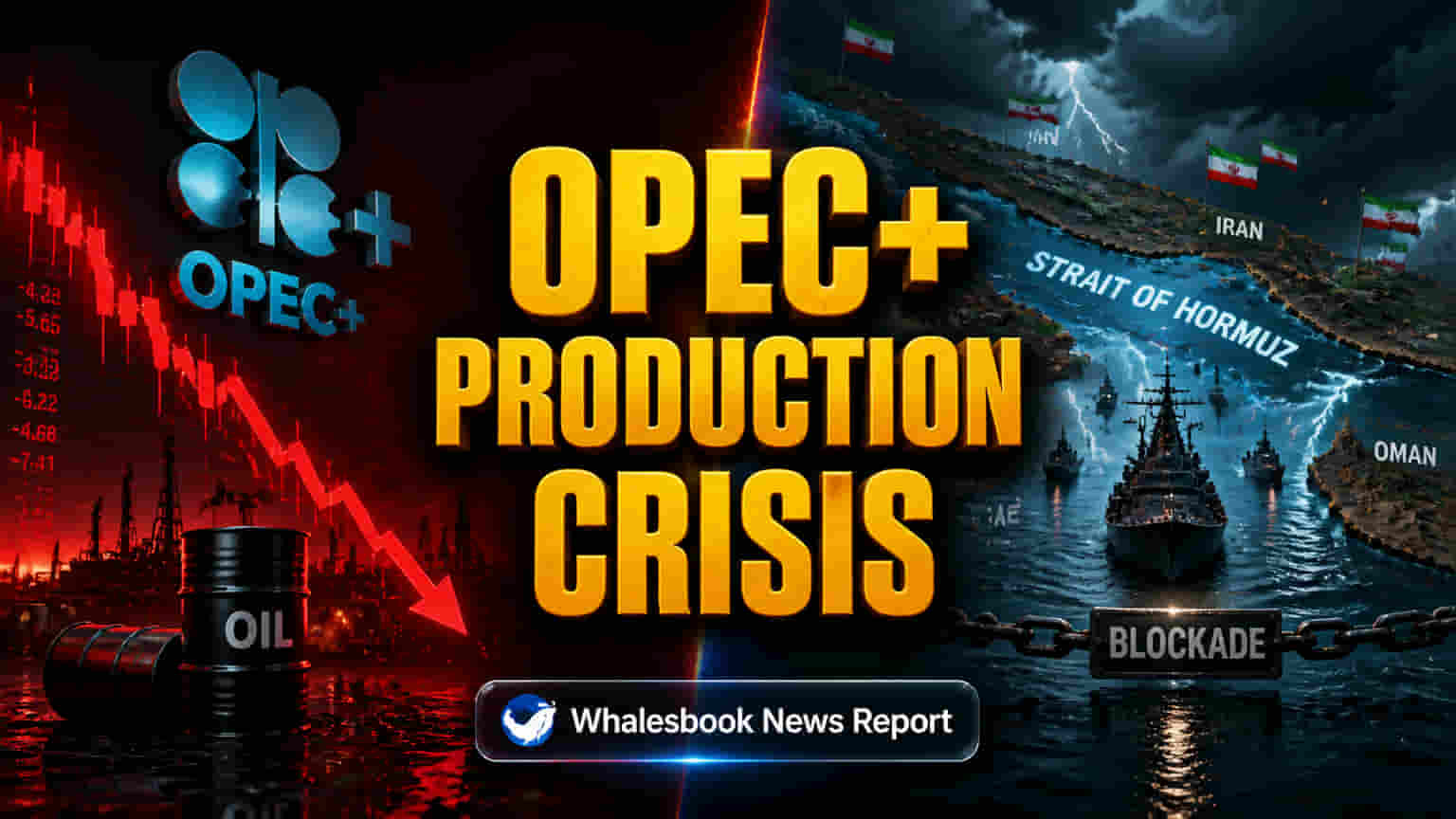


OPEC+ Gathers Amidst Geopolitical Stress
OPEC+ nations met Sunday to discuss oil production quotas, facing a challenging period marked by the United Arab Emirates' departure and ongoing global geopolitical tensions. The group is expected to make only minor adjustments to output targets, which seem disconnected from the reality of global supply constraints. Actual oil production worldwide is already far below potential levels due to conflicts and strategic decisions by key producers.
Output Quotas Mask Real Supply Shortfalls
The seven OPEC+ nations meeting on Sunday are expected to agree on a modest increase of 188,000 barrels per day. However, this figure is seen as mostly symbolic. Actual OPEC+ production in March was significantly under its target, at 27.68 million barrels per day versus a goal of 36.73 million. This gap of roughly 9 million barrels daily is mainly due to disruptions from conflicts and logistical issues, especially impacting exports via the Strait of Hormuz. Current oil prices, with Brent crude near $85 per barrel and WTI around $82, reflect these supply concerns more than OPEC+'s output management. Major players like Saudi Aramco, valued at about $2.2 trillion with a P/E ratio near 20x, and Russia's Rosneft, worth about $70 billion with a P/E of 5x, operate under a complex geopolitical landscape that heavily influences supply.
UAE Exit Weakens OPEC+ Market Influence
The UAE's departure from OPEC+ deals a major blow to the group's ability to manage the market. The UAE has significant unused production capacity and major expansion plans, with ADNOC aiming to increase output by 5 million barrels per day by 2027. This makes the UAE an increasingly independent producer, unlike previous departures by Qatar and Angola. The UAE's exit removes a key member that could help balance the market. Additionally, Iran's ongoing blockade of the Strait of Hormuz, linked to regional conflicts, continues to hinder oil exports from Gulf nations like Iraq, Kuwait, and Saudi Arabia, further challenging supply stability.
Geopolitics Dictate Supply, Not Quotas
The war in Ukraine is still affecting Russia's capacity to meet its oil production targets, even with high global energy prices. Meanwhile, U.S. actions against Iran, which is an OPEC+ member not adhering to quotas, add further complexity. The market is in a difficult position: official quotas are being debated, but actual production capability and export routes are heavily restricted by external geopolitical factors. This imbalance between supply and demand is driven by forces outside OPEC+'s direct influence. Historically, oil prices often fluctuate after major OPEC+ disputes or member exits, but the UAE's size and strategic importance make its departure particularly significant.
Fragmentation Risks Market Stability
The growing divisions within OPEC+ represent a significant risk to market stability. The group could see more members leave. Countries like Iraq and Kazakhstan have faced accusations of producing over their quotas, weakening the group's unity and authority. Russia's production levels are strained by its ongoing conflict and international sanctions. The UAE's substantial future production capacity, now outside OPEC+ limits, adds a new factor that could alter market-sharing strategies favored by Saudi Arabia and other key members. As OPEC+'s influence weakens, supply disruptions from geopolitical hotspots, such as conflicts in the Middle East and Ukraine, are likely to have a greater impact on oil prices, potentially causing more price swings than usual.
Outlook: Volatility Expected as OPEC+ Influence Wanes
Experts are increasingly concerned about ongoing price volatility in the oil market. As OPEC+'s ability to independently manage global supply weakens due to internal disagreements and external geopolitical pressures, market watchers expect crude oil prices to remain highly reactive to events in conflict areas and critical shipping routes like the Strait of Hormuz. The group's future ability to stabilize the market is uncertain, with many anticipating a period dominated by unpredictable supply disruptions.