

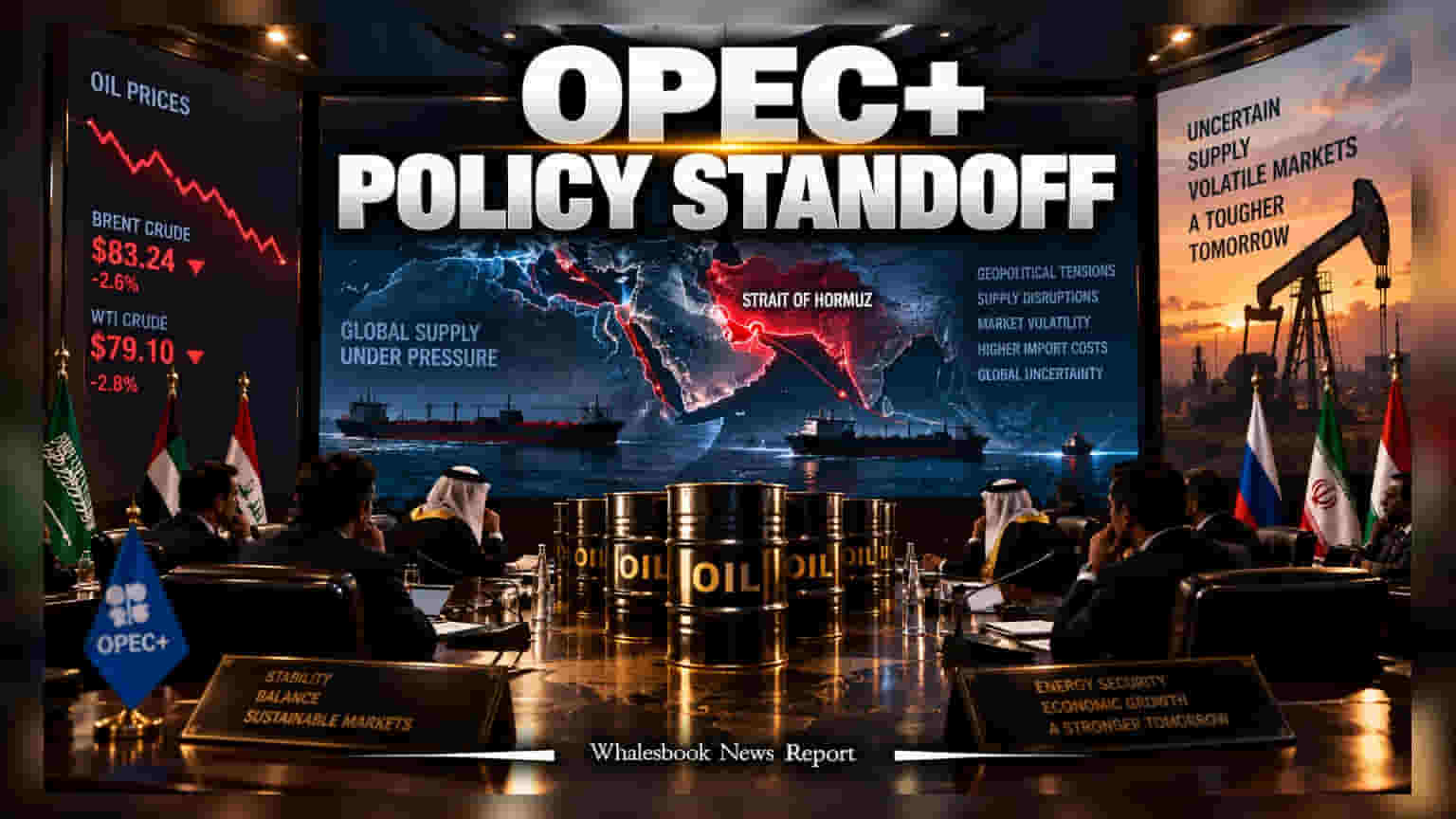
OPEC+ has decided to maintain its current oil production policy through October 2026, shifting focus to 2027 capacity reviews. The group’s influence remains constrained as the ongoing US-Iran conflict disrupts shipping through the Strait of Hormuz. For Indian investors, this persistent supply uncertainty keeps global oil prices volatile, which can impact the margins of domestic oil marketing companies and broader import costs.
OPEC+ members held an online meeting on Sunday, September 6, 2026, and decided to keep their current oil production levels unchanged through October. This decision follows the recent completion of the group's phased rollback of 1.65 million barrels per day in voluntary production cuts. The alliance is now prioritizing a detailed review of member nations' production capacities, a critical step toward establishing new output baselines for 2027.
This decision reflects a complex energy market where policy announcements may have limited impact on physical supply. Ongoing geopolitical conflict between the US and Iran has severely disrupted shipping through the Strait of Hormuz, which serves as a major transit route for global oil exports. With energy shipments facing constant security threats, the actual production volumes from some member nations are falling short of their established targets. This creates a disconnect between the group's official quotas and the actual oil reaching global buyers.
For Indian market participants, these supply chain issues carry significant weight. India is one of the world's largest oil importers, and fluctuations in global crude prices have a direct effect on the economy. Volatility in oil prices often impacts the operating margins of Indian Oil Marketing Companies (OMCs) such as Indian Oil Corporation, Bharat Petroleum, and Hindustan Petroleum. When global prices rise due to supply concerns, these companies may face pressure on their profitability, and the broader Indian economy may deal with higher import costs, which can influence domestic inflation.
Looking ahead, the alliance is focused on a technical process to evaluate how much oil each member can genuinely produce. This review is essential for setting the rules for 2027. However, the risk remains that even if the group adjusts its theoretical targets, the physical reality of regional conflict will continue to block exports. As long as shipping routes in the Strait of Hormuz remain under threat, the actual supply reaching the market may stay tight, regardless of the group's official policy stance.
Investors may monitor the next OPEC+ meeting, which is scheduled for October 4, 2026. Market attention will likely focus on any updates regarding 2027 capacity reviews and further commentary on the security of global energy supply routes, as these factors will continue to shape the outlook for global oil prices.