 Whalesbook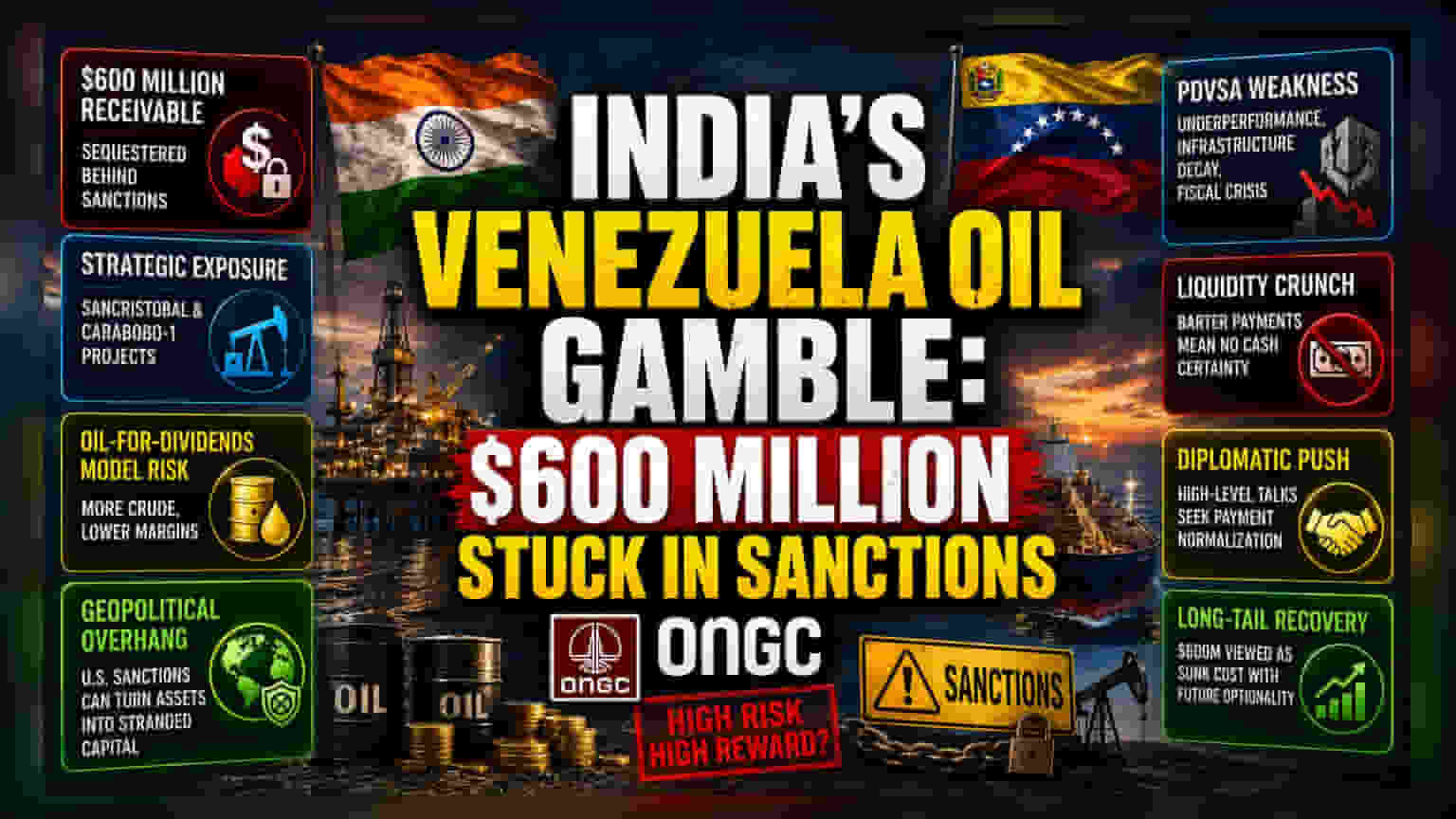


The Geopolitical Friction Point
The strategic pivot toward Venezuelan crude, which now accounts for a significant portion of India’s import basket, masks an ongoing financial impasse. Oil and Natural Gas Corporation (ONGC) remains in a precarious position, effectively carrying the weight of a $600 million receivable that has been sequestered behind the iron curtain of international sanctions. While the recent diplomatic dialogue in Caracas highlights an intent to normalize these energy flows, the underlying tension rests on whether Venezuela can circumvent monetary restrictions to satisfy Indian stakeholders without triggering secondary sanctions or further inflating the country's existing fiscal instability.
Valuation and Operational Exposure
ONGC’s exposure in the Sancristobal and Carabobo-1 projects represents more than just a balance sheet entry; it serves as a barometer for India’s upstream risk tolerance in Latin America. Unlike Western oil majors that largely retreated from Venezuela following the 2019 sanctions, ONGC maintained its participation, opting to wait out the volatility. The market now questions the efficacy of the current recovery path. Previous arrangements, where Petróleos de Venezuela, S.A. (PdVSA) settled debts through crude shipments rather than hard currency, created logistical overheads and price risk for ONGC. If the current diplomatic push results in a formalization of this 'oil-for-dividends' model, it could compress ONGC’s net margins, as the company must then manage the refining or resale of high-sulfur heavy crude in a global market that is increasingly favoring lighter, sweeter grades.
The Forensic Bear Case
The optimism surrounding the India-Venezuela energy corridor overlooks the structural frailty of the counterparty. PdVSA has a long, well-documented history of production underperformance and deferred maintenance, which limits the upside potential of these joint ventures. From a risk-management perspective, ONGC is essentially a subordinated creditor in an economy plagued by hyperinflation and acute infrastructure decay. Any further tightening of U.S. policy regarding Venezuelan oil exports could turn these existing assets into stranded capital overnight. Furthermore, the reliance on barter-style repayments suggests that liquidity remains non-existent, leaving ONGC vulnerable to the opaque accounting practices often associated with state-run entities in sanctioned regimes.
Future Outlook and Sector Implications
Market consensus remains cautious regarding the immediate financial impact of these diplomatic efforts on ONGC’s quarterly earnings. Analysts are watching for any signaling from the Ministry of External Affairs regarding credit guarantees or specific payment windows. While the deepening partnership provides a buffer against volatility in Middle Eastern oil supply, the financial burden of the Venezuelan assets will likely persist as a overhang on the company’s valuation until a transparent, cash-settled mechanism is established. Investors are pricing in a long-tail recovery, viewing the $600 million as a sunk cost that provides long-term optionality rather than immediate cash flow.