

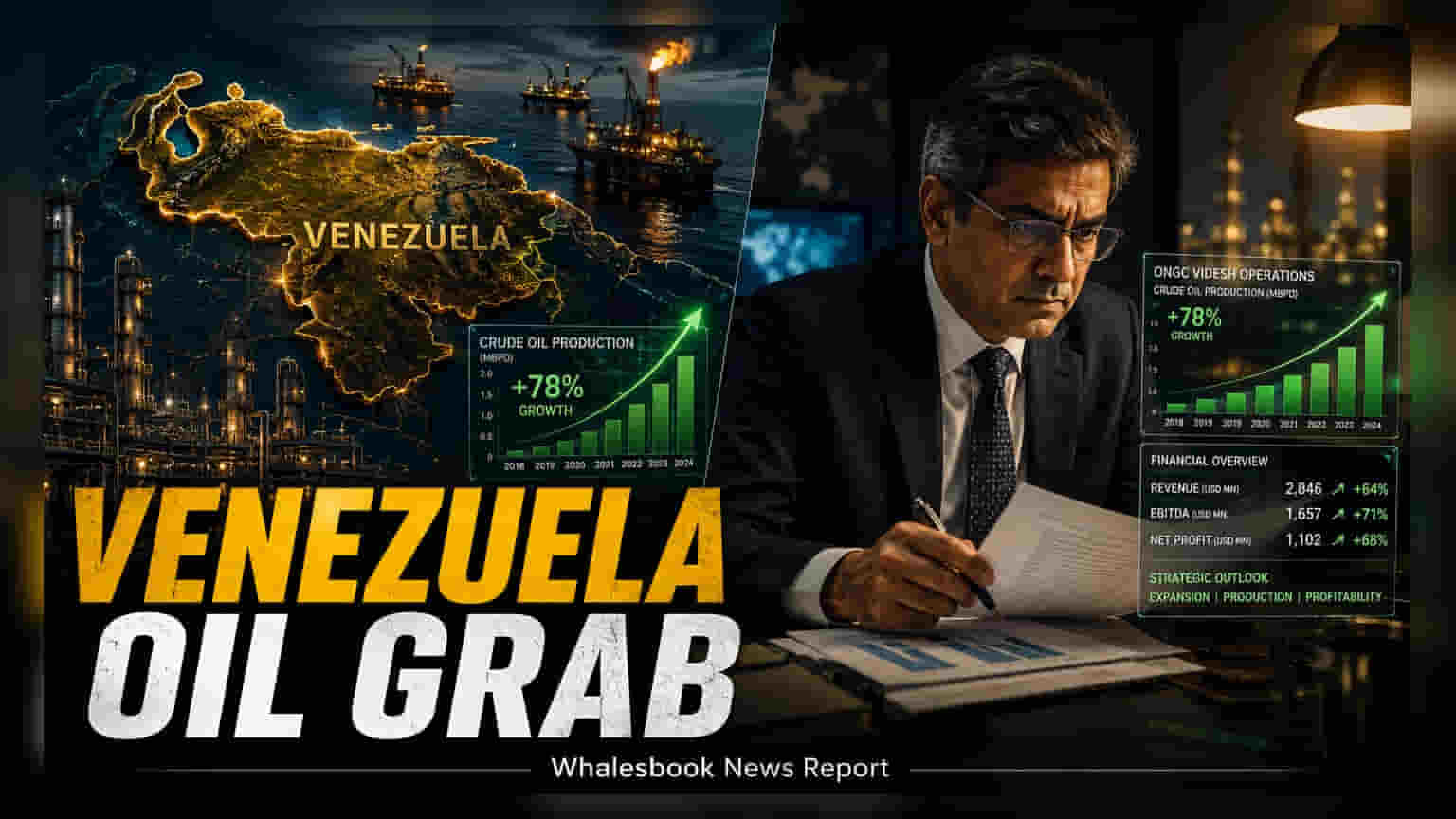
ONGC Videsh (OVL) is seeking to take operational control of two Venezuelan oil projects following a new US license. The firm aims to double production to 30,000 barrels per day and unlock nearly $600 million in stuck dividends. While this offers growth potential, investors should monitor geopolitical and sanction-related risks that could impact execution.
ONGC Videsh Ltd. (OVL), the international investment arm of state-owned Oil & Natural Gas Corp (ONGC), is preparing to take direct operational control of its oil assets in Venezuela. This development follows the company’s recent receipt of a license from the U.S. Office of Foreign Assets Control (OFAC), which allows it to pursue an expanded role in the South American country.
Currently, OVL holds a 40% stake in the San Cristobal field and an 11% stake in the Carabobo-1 block. These fields are currently managed by PDVSA, the state-run Venezuelan oil company. By seeking operatorship, OVL aims to bring its own management and technical expertise to these projects, moving away from a passive investor role to one where it actively runs field operations.
During the company’s first-quarter earnings call for FY27, Chief Financial Officer Anupam Agarwal stated that the company is looking to increase production from these assets. The stated goal is to raise output from the current 12,000 to 15,000 barrels per day to 30,000 barrels per day within a year. This move is also a strategic step toward recovering approximately $600 million in dividends that have remained trapped in Venezuela due to years of international sanctions.
ONGC, the parent company, recently reported a strong start to the fiscal year, with a 112% year-on-year increase in standalone net profit, reaching ₹17,034 crore for the quarter ended June 2026. This financial health provides the company with the flexibility to fund potential investments required to upgrade infrastructure in the Venezuelan fields, which have suffered from years of underinvestment.
However, the move comes with significant challenges. The primary risk for investors is the volatile nature of U.S. sanctions on Venezuela. Any deterioration in political conditions could lead to the re-imposition or tightening of sanctions, which would hamper operations. Additionally, the company faces execution risks, as local infrastructure requires substantial work to restore production efficiency. Furthermore, the recovery of long-pending dividend dues is not guaranteed, as Venezuelan authorities may prioritize fresh capital spending over the payout of historical debts.
The company’s ability to successfully transition to an operator role and increase production will be a key monitorable in the coming quarters. Investors will likely look for updates on the actual signing of new agreements with PDVSA and the pace at which the production targets are met.