

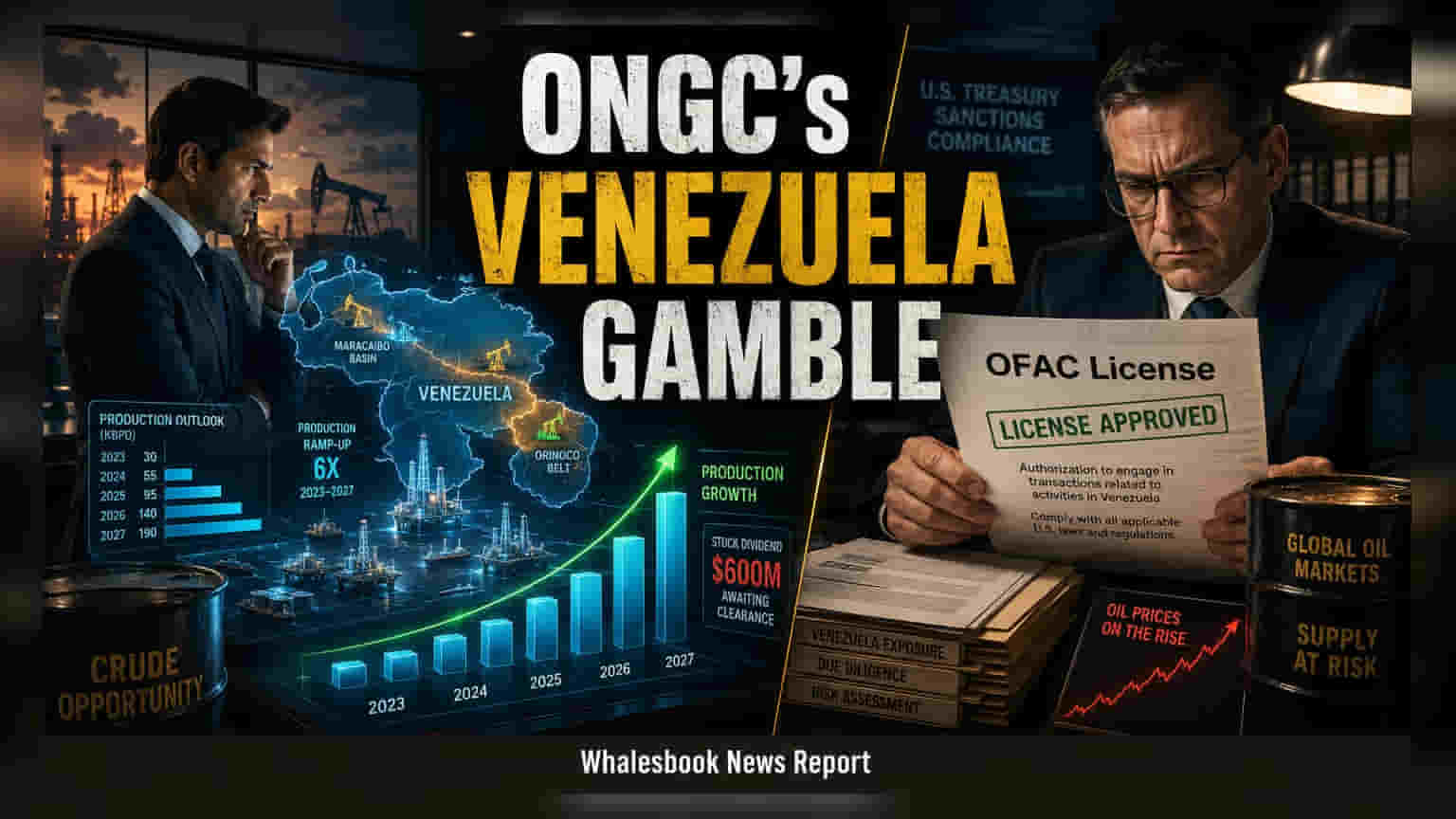
ONGC Videsh has secured a crucial license from the US Treasury’s OFAC to operate fully in Venezuela. This allows the company to target a production increase to 30,000 barrels per day and pursue the recovery of approximately $600 million in stuck dividends. Investors will now watch for the pace of production ramp-up and the actual return of these funds.
State-owned Oil and Natural Gas Corporation’s (ONGC) overseas arm, ONGC Videsh Ltd (OVL), has received a license from the US Treasury’s Office of Foreign Assets Control (OFAC). This approval is a significant step, as it grants the company the freedom to manage its oil assets in Venezuela without the threat of sanctions-related restrictions that had previously hindered operations.
Targeting Dividend Recovery and Production Growth
The primary focus for the company is to unlock value from its existing projects in the South American nation. OVL holds a 40 per cent stake in the San Cristobal project and an 11 per cent interest in the Carabobo project. Due to US sanctions, the company had been unable to repatriate profits, leading to a build-up of approximately $600 million in unpaid dividends. With this new license, the company plans to engage with local partners to recover these funds. Additionally, the company aims to ramp up its production from the current levels of 12,000–15,000 barrels per day to 30,000 barrels per day within a year. Achieving this target depends on the company’s ability to take over operatorship of these fields, a move that would shift control from Venezuela’s state oil company, PDVSA, to OVL.
Financial Context and Operational Ambitions
This development comes at a time when ONGC is reporting strong financial growth. In its latest quarterly results for the first quarter of fiscal year 2027, the company reported a 112 per cent year-on-year increase in standalone net profit, reaching ₹17,034 crore. This robust financial position provides the necessary backing for potential investments in its overseas portfolio. Management has indicated that the company is looking to apply its experience from managing shallow, onshore fields in Western India to its Venezuelan assets, hoping that the new petroleum laws in the country will create a more stable environment for these projects.
Monitoring Risks and Execution
While the license provides a clear path forward, the road to full implementation involves several challenges. Geopolitical risks remain, as the energy sector in the region is often subject to sudden policy shifts and ongoing volatility. Furthermore, the actual conversion of the pending $600 million in dividends into cash will be a process that requires navigating complex fiscal and procedural hurdles in Venezuela. From an operational standpoint, taking over the day-to-day management of these oil fields from PDVSA is a significant execution task. Investors will likely track the company’s progress in meeting its one-year production ramp-up targets and the specific timelines for the repatriation of the stuck dividends, as these will be the key indicators of whether the license translates into actual financial benefits for shareholders.