

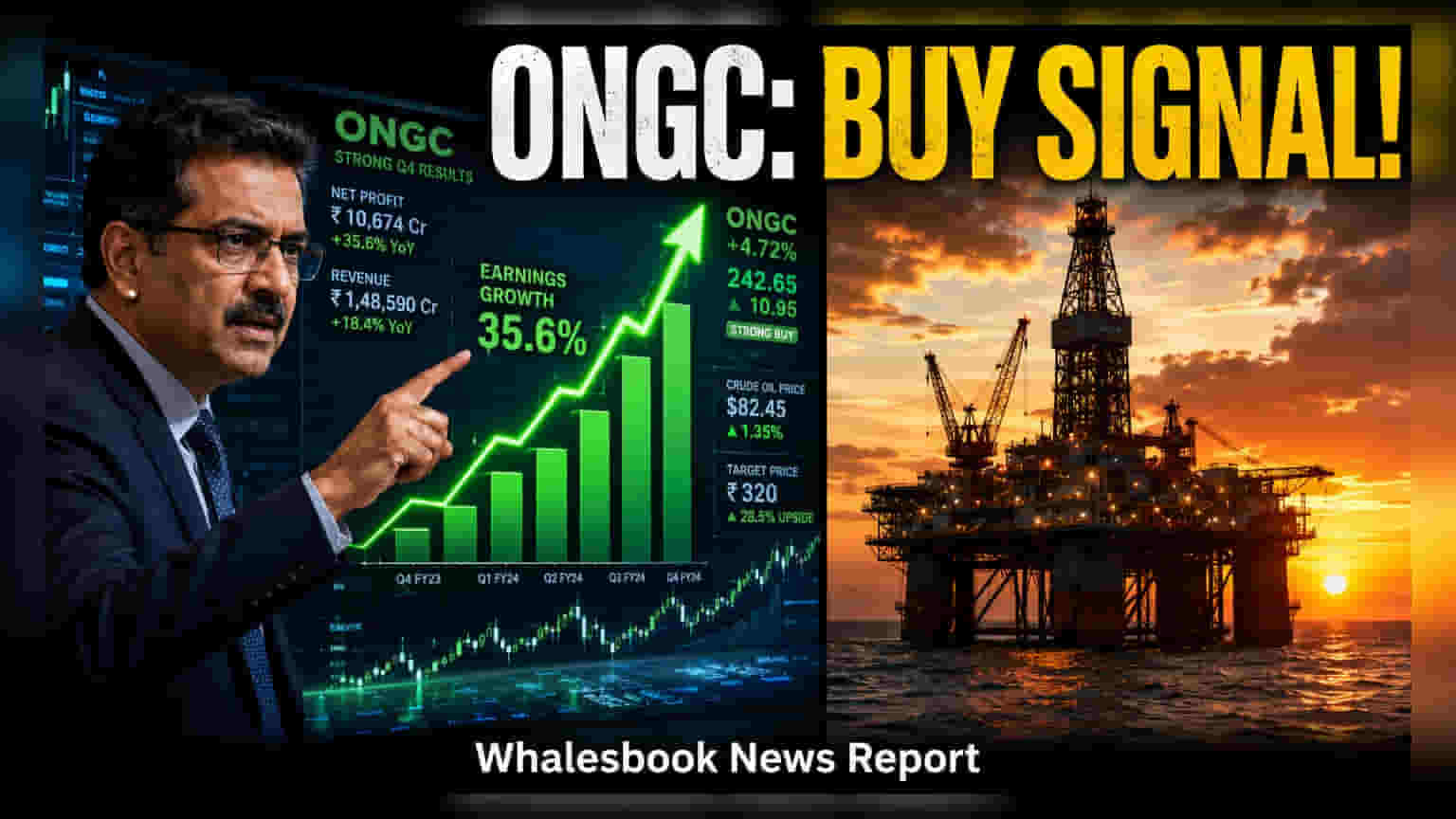
Motilal Oswal has reiterated a 'Buy' rating on ONGC with a target of Rs 290 following the company's strong June quarter results. ONGC reported a 112% increase in standalone net profit, driven by high crude oil realizations despite a dip in production volumes. Investors may focus on the company's production growth plans and the potential impact of global crude price volatility on future earnings.
Oil and Natural Gas Corporation (ONGC) has received a 'Buy' rating from brokerage firm Motilal Oswal, with a target price of Rs 290. This rating follows the state-owned energy giant's strong financial performance for the first quarter of the 2027 fiscal year (Q1 FY27).
ONGC reported a significant 112% year-on-year increase in its standalone net profit, reaching Rs 17,034 crore. Revenue from operations also saw a healthy jump, rising 45.2% compared to the same period last year to Rs 46,460 crore. A major driver for these numbers was the improvement in crude oil realizations, which averaged $99.45 per barrel, a 50.4% increase over the previous year.
While the financial results were strong, the underlying operational data highlights a different story. Crude oil and natural gas production volumes experienced a slight decline during the quarter. The company attributed these drops to reservoir complexities and planned project-related shutdowns. For investors, this creates a situation where profits rose primarily due to higher global energy prices rather than an increase in the volume of oil and gas extracted and sold.
Looking ahead, ONGC management has set a production roadmap to counter these volume challenges. The company aims to ramp up standalone production to 39 million metric tonnes (MMT) in the current fiscal year and reach 40 MMT in the next, supported by ongoing efforts in offshore projects. Motilal Oswal’s valuation of the company factors in these growth expectations, using a 6.5x earnings multiple for its standalone business.
While the brokerage remains positive, investors should be aware of several operational and external risks. First, production growth is not guaranteed. Delays in key projects, such as the KG-DWN-98/2 block, or ongoing technical difficulties in reservoirs could continue to impact volume output. Second, ONGC’s earnings are highly sensitive to global crude oil prices. A sharp drop in oil prices would directly lower the company’s realizations and profit margins.
Finally, investors should keep an eye on the broader consolidated picture. While ONGC’s standalone numbers are strong, its subsidiaries, such as HPCL, can face pressure from under-recoveries, where they may have to sell petroleum products at prices lower than the cost of procurement. This can create a drag on the consolidated financial health of the entire group. Moving forward, the key monitorable for shareholders will be the company’s ability to successfully execute its production growth plans and maintain output stability despite these operational hurdles.