

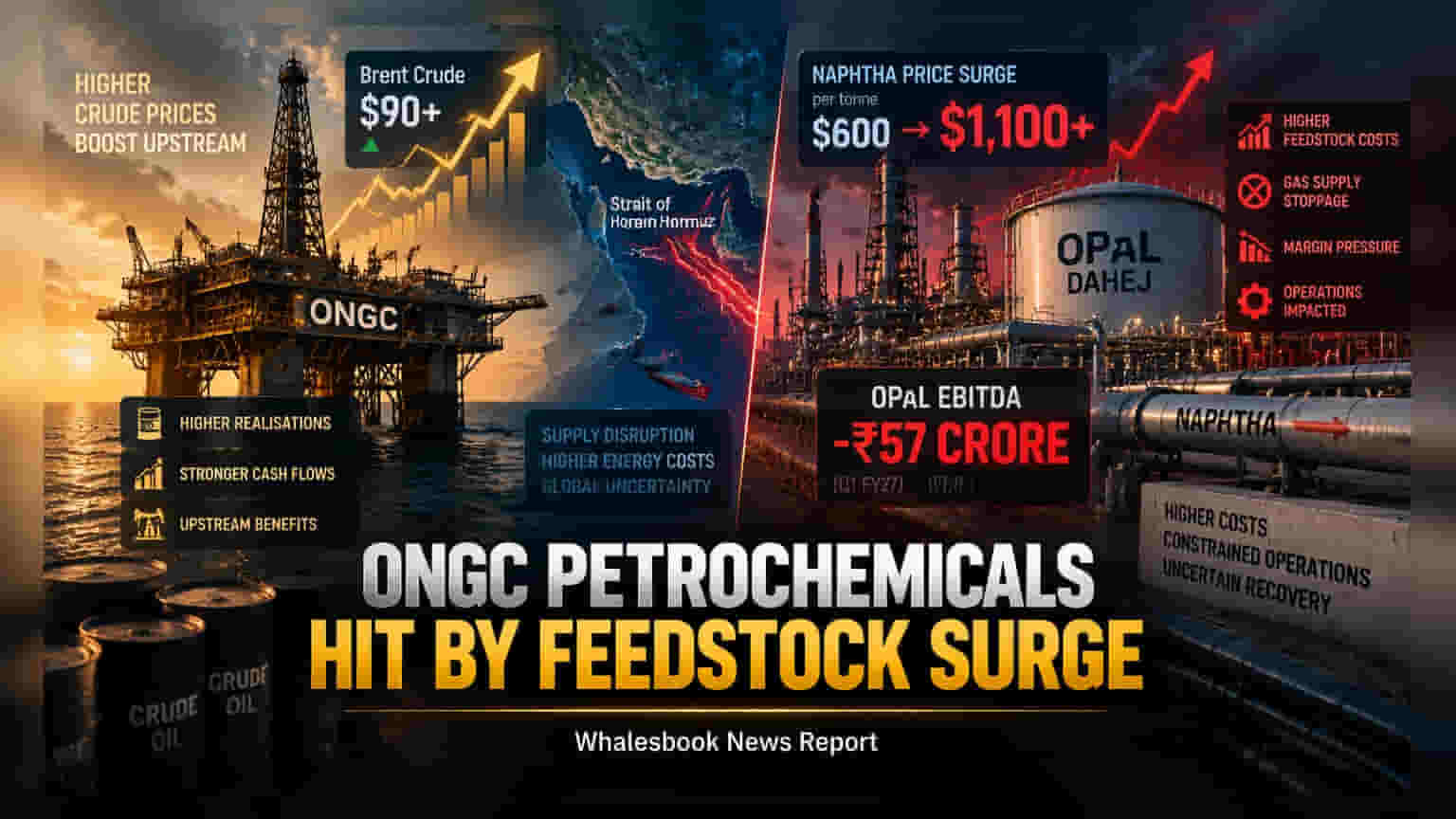
ONGC’s petrochemical subsidiary, OPaL, is facing a severe financial squeeze as naphtha prices climb to over $1,100 per tonne and natural gas supplies to its Dahej plant have halted. The company reported a negative operating profit of ₹57 crore in the June quarter of FY27, creating uncertainty around its annual profit goals.
The petrochemical unit, ONGC Petro additions Limited (OPaL), is currently under significant financial pressure as international feedstock costs soar. Naphtha prices, a key raw material for manufacturing plastics and other chemicals, have climbed from roughly $600 to over $1,100 per tonne. This steep rise has directly squeezed the company's margins, creating a challenging environment for its operations at the Dahej complex.
The situation is compounded by a supply interruption. The Dahej plant has faced a total stoppage of gaseous feed supplies. While management has indicated operations may normalize once these supplies resume, there is currently no set timeline for when the plant will return to full capacity. This uncertainty has created a drag on the company’s financial performance.
In the June quarter of FY27, the company reported a negative operating profit—technically known as EBITDA—of ₹57 crore. This marks a sharp reversal from the ₹1,207 crore operating profit reported in FY26. With an annual operating profit target of ₹2,000 crore previously set by the management, the current feedstock disruption and production halt have made achieving this goal increasingly difficult.
For investors, this situation highlights a key structural difference between OPaL and its major competitors. Large players like Reliance Industries and Indian Oil Corporation are better protected against such price shocks. Reliance benefits from specialized infrastructure that allows for ethane-based manufacturing, which is often more cost-effective. Meanwhile, Indian Oil operates a vast network of refineries, providing it with captive naphtha and reducing the need to buy expensive supplies from the open market. OPaL, by contrast, remains heavily exposed to market-linked naphtha prices, leaving it vulnerable when global prices spike.
To address these challenges, the company is implementing several changes. It is currently working on transitioning its operations from a Special Economic Zone (SEZ) model to a Domestic Tariff Area (DTA) setup, which allows it to sell products more easily within the local Indian market. Furthermore, management is looking for long-term solutions, such as a partnership with Japan’s Mitsui to enable future imports of lower-cost ethane. However, this infrastructure project is expected to be completed only by FY29-30, meaning it will not provide immediate relief.
Investors may monitor the restoration of gaseous feed supplies as a key indicator of production recovery. Additionally, changes in global naphtha prices and the progress of the company’s structural shifts toward the domestic market will be important indicators for future financial health.