

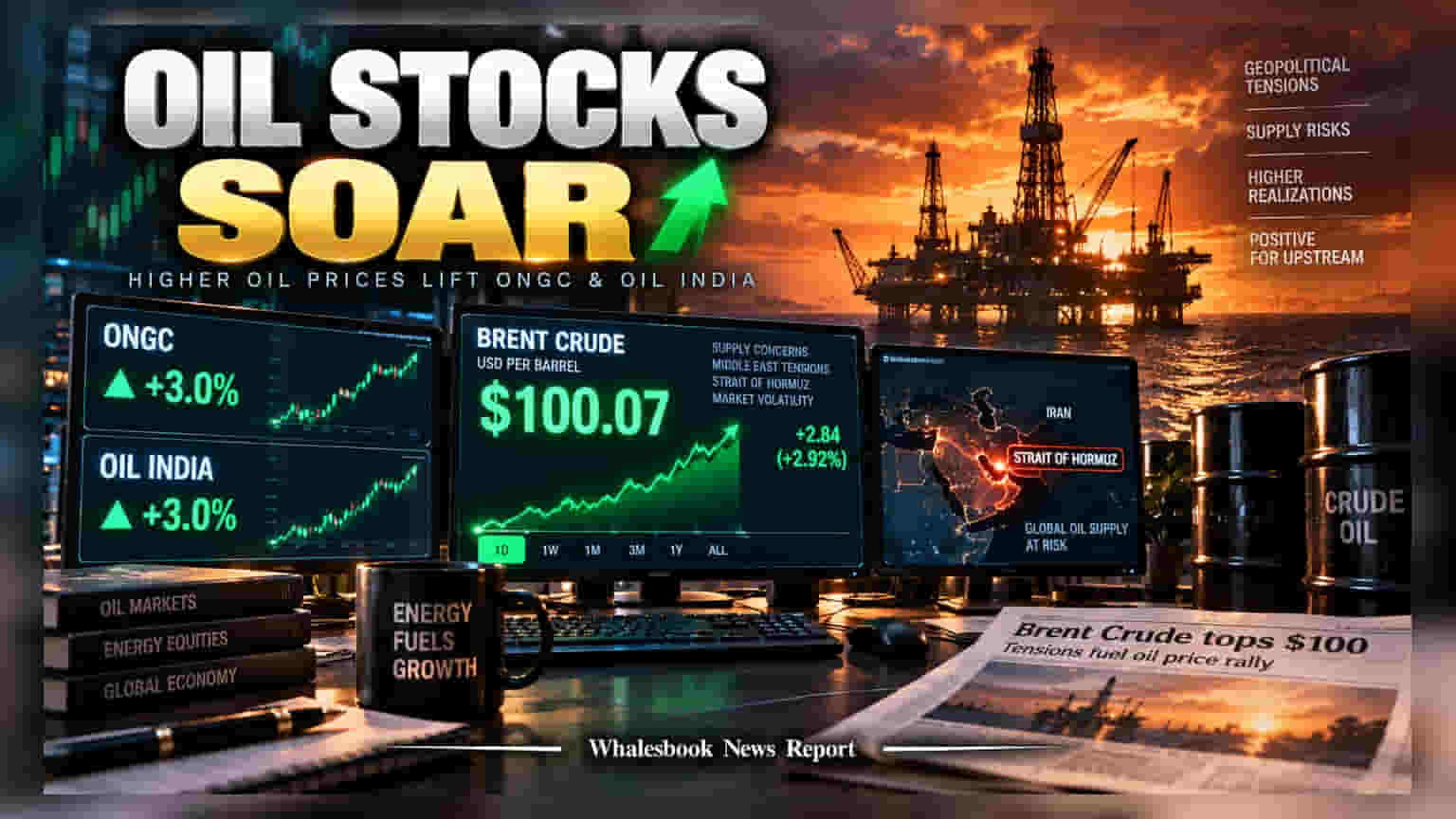
Shares of ONGC and Oil India climbed roughly 3% on September 10 after global Brent crude oil prices breached the $100-per-barrel mark. The surge follows rising tensions between the US and Iran, which have sparked concerns over oil supply. While higher crude prices boost revenue for upstream energy producers, the broader Indian economy faces risks from rising import costs and a weakening rupee.
On September 10, 2026, shares of major Indian upstream energy companies, Oil and Natural Gas Corporation (ONGC) and Oil India, rose by approximately 3% on the stock exchanges. This market movement followed a sharp rally in global oil prices, with Brent crude surpassing the $100-per-barrel threshold for the first time in six weeks. The rise in prices is primarily driven by escalating geopolitical tensions between the United States and Iran, which have heightened anxiety about potential disruptions to oil shipments near the Strait of Hormuz.
For upstream energy producers like ONGC and Oil India, higher global oil prices typically translate into better profit realizations. Because these companies extract and sell crude oil, they generate more revenue when the benchmark price remains elevated. This price increase comes as a potential relief after recent periods where realizations had faced downward pressure. Financial analysts often view these firms as direct beneficiaries when energy prices spike, as their business models rely on the spread between extraction costs and the market price of crude.
However, the situation brings a mixed outlook for the Indian economy and other energy-related companies. The Indian rupee depreciated by 25 paise to 95.33 against the US dollar on the same day, reflecting investor concern over India’s rising oil import bill. As India imports a significant portion of its crude oil requirements, a combination of high oil prices and a weaker rupee can increase the cost of imports, often leading to inflationary pressure.
Investors should also consider the divide between upstream producers and downstream oil marketing companies (OMCs). While upstream firms like ONGC may benefit from the higher price, downstream companies that refine and sell fuel to consumers can face significant profit margin pressure. If the cost of buying crude oil stays high, these marketing companies must decide whether to absorb the costs or pass them on to consumers through higher pump prices. Historically, when oil prices remain high for extended periods, the ability of these companies to pass on costs without facing regulatory or political challenges becomes a critical factor for their profitability.
The next phase for investors will depend heavily on the duration of this geopolitical tension. If the conflict leads to a sustained period of high oil prices, the focus will shift to how the Indian government manages domestic fuel pricing and how it impacts overall inflation. Market participants will likely track upcoming management commentaries from energy firms regarding their production targets and whether they can maintain current profitability if prices fluctuate.