
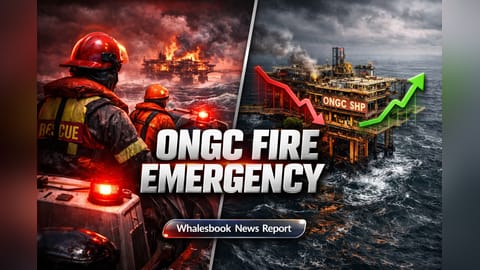
Fire Contained, Focus Shifts to Aging Infrastructure
Despite the quick containment and restoration of operations at ONGC's SHP Platform, the recent fire incident raises questions about the long-term safety and reliability of its aging offshore infrastructure. While the company's emergency protocols proved effective in limiting immediate damage and personnel harm, the event serves as a reminder of the inherent risks in the demanding offshore environment, especially for a company heavily reliant on mature assets.
Valuation and Operational Realities
ONGC's stock, trading around ₹287.20 on April 2, 2026, with a market capitalization of ₹3.61 trillion, shows a trailing P/E ratio of approximately 9.51. This valuation is lower than peers like Oil India (P/E ~12.2-13.40) and Vedanta (P/E ~14.8-19.96). The quick containment of the SHP platform fire suggests the market has largely factored out immediate operational impact, with ONGC reporting prompt normalization of operations. This indicates minimal effect on immediate production capacity, allowing the stock to trade without significant reprisal. ONGC's share price has remained resilient, trading near ₹287.20 with robust volumes, showing sustained investor interest.
Sector Context and Historical Performance
ONGC's valuation discount comes as the Indian energy sector pursues energy security through reforms and exploration, including the 10th OALP round initiated in February 2025. Regulatory changes in late 2025 aim to boost investment with a single petroleum lease framework. However, global crude oil prices are expected to face downward pressure in 2026 due to oversupply, potentially impacting producer margins, though domestic demand growth offers support.
Historically, ONGC's stock has reacted negatively to earnings misses or operational issues, with declines around 2-3% following profit drops. While this fire was contained quickly, past disruptions, like the January 2026 gas leak and fire at the Mori field, show market sensitivity to recurring safety events.
The 2026 energy market faces anticipated crude oil price volatility from geopolitical factors and supply-demand shifts. India's domestic consumption is projected to rise, but reliance on imports makes the economy susceptible to global price swings, underscoring the importance of domestic production stability from mature fields.
Aging Infrastructure Poses Ongoing Risks
The SHP Platform fire at Mumbai High, India's largest offshore oilfield (operational since 1976), highlights the persistent challenges of managing aging infrastructure. The incident underscores the inherent risks in decades-old facilities, where equipment failure is more likely. The fire's cause is under investigation, prompting questions about underlying systemic issues, especially after another incident at the Mori field in early 2026. This pattern suggests a need for deeper scrutiny of safety protocols and asset integrity. While past exploratory cost write-offs have impacted ONGC's profitability, potential repair costs or extended downtime from this incident, though unlikely based on current reports, could add financial strain. Chairman Arun Kumar Singh's rare one-year contract extension in December 2025 also signals a period of transition.
Future Outlook
Analysts maintain a largely positive outlook on ONGC, with a consensus rating of 'Buy' or 'Outperform'. Average 12-month price targets range from ₹295.62 to ₹343.33, with CLSA setting a target of ₹415. The company is pursuing production growth via initiatives like the Daman Upside Development Project and a partnership with BP for the Mumbai High field, which has helped stabilize production decline. These strategic moves, alongside government policies favoring exploration and production, position ONGC to meet future energy demands.